

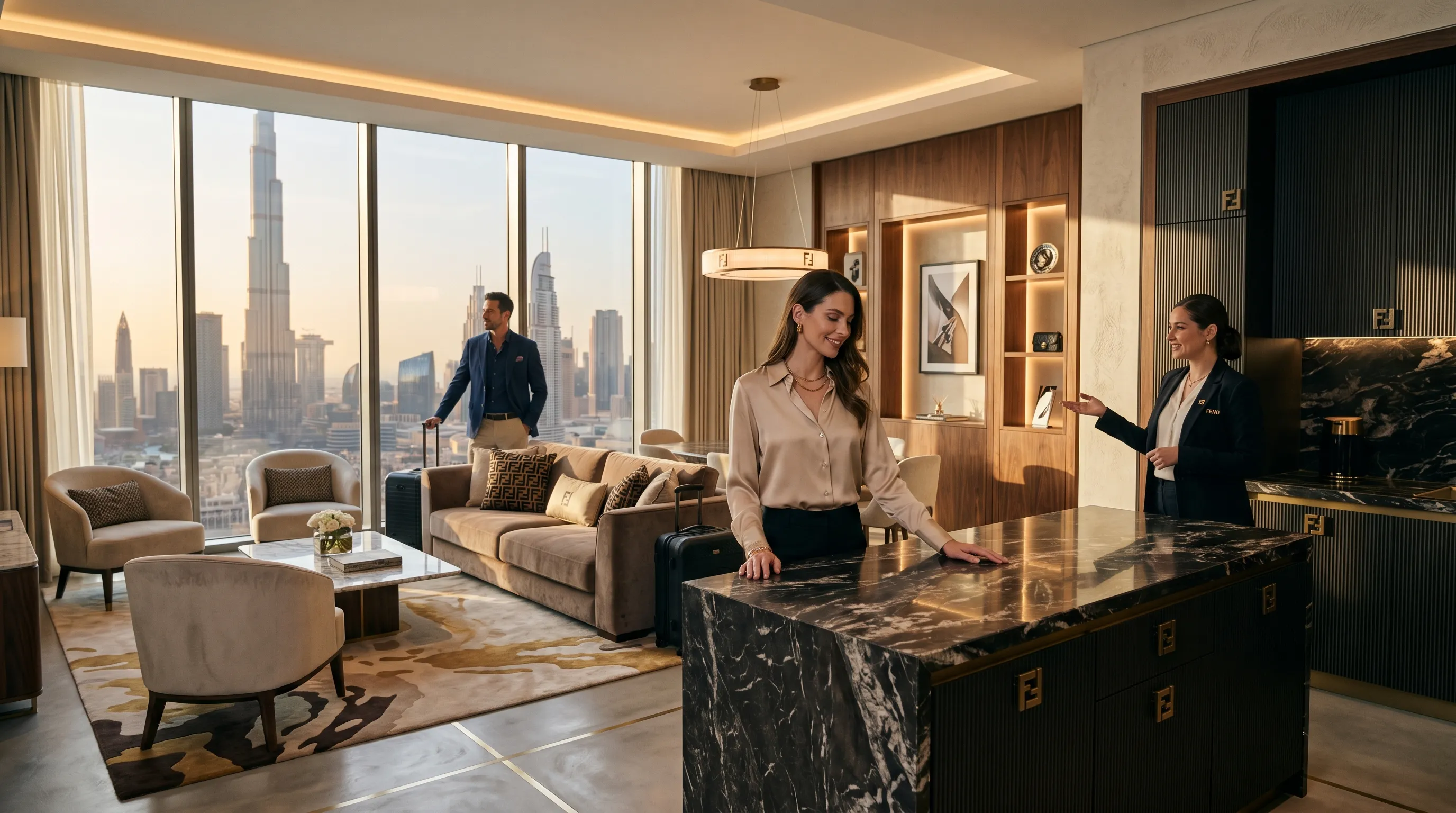
Branded Residences in Dubai: What You Get When You Pay the Premium
Branded residences in Dubai cost a lot more than the apartment next door. Here is what that premium actually buys you.
You must have seen the names: Armani at the Burj Khalifa, Bulgari at its island complex, and Bugatti, Cavalli, Mercedes-Benz, each featured in towers across the skyline. Branded residences are fully integrated into the Dubai scene, and the pricing reflects the same level of brand premium as well.
So, the next logical question: when buying a branded residence in Dubai, are you getting something tangible, or simply a brand name on a plaque in the lobby?
The answer, of course, lies in between: in terms of quality, a branded residence will offer higher-grade finishes, hotel services, and maintenance levels not associated with your average building. Furthermore, it will be priced anywhere from 25% to 35%, sometimes 50% or more, higher than an equivalent property in another location – and whether this brand premium makes sense in your particular case, depends fully on the purpose of your purchase.
This guide is designed to demystify the issue. It will outline what a branded residence really is, since the term itself has somewhat loose definition. Then, we will cover the brands currently active in Dubai. Finally, we will talk about the price of the premium, what it really provides, and where the downside might lie – especially in light of who should be buying such homes.
Dubai is undoubtedly one of the largest branded residence markets in the world; perhaps even the largest. The point is significant enough that you want to think twice before investing an extra million dirhams into a brand name. Thus, let us take a look at exactly what kind of product you get for your money.
What a Branded Residence Actually Is
Cut the glamour for a second. A branded residence is a home sold under the name of a known brand, where that brand sets the design, the service standards, and the way the building is run. The brand is not usually the one building it. A developer does that. The brand licenses its name and its standards and takes a fee.
There are two main types, and the difference matters for what you get.
Hotel-branded homes sit inside or beside a hotel and run on that hotel's service. Think Bulgari, Dorchester, Mandarin Oriental, Six Senses. You get room service, housekeeping, concierge, spa access, the lot. These tend to carry the biggest premium because the service is real and ongoing.
Designer-led towers come from fashion, car, or lifestyle names. Armani, Bugatti, Cavalli, Mercedes-Benz. Here the brand mostly shapes the look and the materials. The service can be strong, but it is not always full hotel grade. The name is doing more of the heavy lifting.
So when someone says "branded residence," ask which kind. A Bulgari apartment with a hotel attached is a very different product from a tower that borrows a fashion logo for the facade and the lobby.
Here is what generally comes baked into a proper branded residence:
- A designed interior, often with furniture and finishes chosen by the brand.
- Service tied to a hotel or a dedicated management team.
- Higher build quality and materials than the surrounding market.
- Amenities like private pools, gyms, valet, and residents' lounges.
- A management company that keeps standards consistent for the brand's sake.
- A name that, in theory, holds its value and helps at resale.
Worth knowing how the deal works underneath. The brand signs a licensing and management agreement with the developer, usually for a fixed term. The brand sets standards, trains staff, and lends its name. The developer pays for that, and so, indirectly, do you. These agreements can be renewed, and they can also lapse. A residence can lose its brand if the agreement ends, which is rare for the big names but not impossible. It is one more reason the track record of the brand matters more than the shine of the logo.
That last point is the one buyers lean on most. It is also the one that deserves the most scrutiny.
The Big Brands Already in Dubai
Dubai did not dabble in branded residences. It went further than anywhere else. Walk through Downtown, Business Bay, or out to the Palm, and you are surrounded by them.
On the fashion and lifestyle side, the headline names are everywhere. Armani Residences sit inside the Burj Khalifa itself, drawing on Giorgio Armani's own design language, which is about as central as Dubai gets. DAMAC has built much of its luxury identity on fashion tie-ups, including towers linked to Roberto Cavalli's fashion house. Binghatti has moved fast and loud, launching Bugatti Residences in Business Bay, Mercedes-Benz Places near Downtown, and a Jacob and Co tower in the same patch.
On the hotel side, the service is the selling point. Bulgari Residences sit on their own island off Jumeirah, built with Meraas. The Dorchester Collection landed in Business Bay through Omniyat. Six Senses brought its wellness brand to the Palm. Baccarat and Mandarin Oriental have planted residences near Downtown. These are the addresses where the brand is not just a logo, it is a full service operation.
Here is a quick map of who is where, roughly by type:
- Armani: inside Burj Khalifa, Downtown. The original Dubai branded address.
- Bulgari: Jumeirah Bay Island, hotel-branded, about as private as it gets.
- Bugatti by Binghatti: Business Bay, car-brand design, hypercar themed.
- Cavalli by DAMAC: fashion-led towers with bold, maximalist interiors.
- Mercedes-Benz Places by Binghatti: Downtown adjacent, engineering-led design.
- Dorchester Collection by Omniyat: Business Bay, full hotel service.
- Six Senses: Palm Jumeirah, wellness and longevity focus.
- Jacob and Co by Binghatti: Business Bay, jewellery-brand styling.
New ones launch constantly, so any list like this is out of date within months. The fastest way to see what is currently selling is the latest property launches page, where the branded projects tend to stand out by price alone.
These towers cluster in a handful of areas for a reason. Downtown carries the prestige and the Burj Khalifa views. Business Bay sits right next door with a bit more space. The Palm offers the beach and the privacy. If you want the full picture of the most central cluster, our Downtown area guide breaks down what is there and what it costs.
What the Premium Actually Costs
Now the money. This is where branded residences stop being a lifestyle question and start being a maths question.
Industry research is fairly consistent on the headline. Knight Frank has put the global branded premium at around 30% over comparable non-branded homes, and Dubai sits right in the thick of that market. You can dig into the underlying numbers in Knight Frank's branded residences research. In practice, in Dubai, the gap swings widely depending on the brand and the building.
We compared branded against non-branded across the things that actually hit your wallet, each on one line:
- Purchase price: a branded unit typically runs 25% to 35% above a similar non-branded apartment in the same area, and top hotel brands can push well past that.
- Service charges: higher per square foot for branded, because the brand standard costs more to maintain year after year.
- Rental income: branded units often command higher rents, though not always enough to close the gap the higher purchase price opens up.
- Rental yield: frequently lower than non-branded, because the price you paid was higher to begin with.
- Resale premium: the strong brands tend to hold their markup, the weaker ones quietly lose it.
- Furnishing: often included in branded, often not in non-branded, which makes a like-for-like comparison trickier than it looks.
Put rough numbers on it. Say a solid non-branded two-bedroom in Business Bay sits at AED 2.5 million. The branded version in a comparable tower might ask AED 3.2 million or more for similar space. That is a AED 700,000 gap before you have paid a single service charge. To justify it, the brand needs to either save you that much in fit-out and hassle, or hand it back at resale and in stronger rent. Sometimes it does. Often the maths is closer than the brochure suggests. Run it for the specific unit, not the category.
The pattern is clear once you see it. A brand can lift your rent and your resale price, but it lifts your entry price first, and usually by more. So the premium is not automatically a good investment. It is a good investment when the brand is strong enough to keep the markup all the way through to resale. The market reports from Savills are another solid place to check the latest figures before you commit.
One more thing the glossy brochures skip. A 30% premium on an AED 3 million apartment is AED 900,000. That is not a finish upgrade. That is a second deposit. Treat it like the serious number it is.
What You Are Actually Paying For
So is the premium just air? No. There is real value behind it. The trick is knowing which parts are real and which parts are just the logo.
Here is what the money genuinely buys, when the brand is doing its job:
- Service you do not have to organise. Concierge, housekeeping, valet, and maintenance, often handled around the clock in hotel-branded buildings.
- Finishes you would pay a fortune to replicate. Branded units come fitted to a standard most owners would never reach on their own.
- Consistent management. The brand has its name on the door, so it has a reason to keep the building sharp for decades, not just at handover.
- Furniture and design included. Many branded homes arrive fully or semi-furnished to the brand's spec, which saves you a six-figure fit-out.
- Hotel perks. Spa, pool, gym, restaurants, and priority access, sometimes at sister properties around the world.
- A built-in rental story. Furnished, serviced, branded units are easier to let to the kind of tenant who pays a premium and does not haggle.
- Bragging rights. Worth nothing on a spreadsheet, worth plenty to some buyers. We are not here to judge.
The serviced angle is the one investors tend to underrate. A branded, furnished, professionally run apartment is close to a turnkey rental. If you are buying to let rather than to live, that matters, because it cuts the hassle that usually eats into returns. Getting the management right is still its own job, though, and our property management team handles exactly that side for owners who would rather not deal with tenants and upkeep themselves.
The finishes point is real too, but with a warning. A finish feels priceless on viewing day and ordinary five years later. Trends move. What looks current in 2026 may read as dated by 2032. The service and the management hold their value better than the wallpaper does.
If you want to see the branded and ultra-prime stock that is actually on the market right now, our exclusive properties page is the closest thing to a shortlist.
Who Branded Residences Make Sense For
Not everyone should pay the premium. Here is how we actually split it when people ask.
They make sense if:
- You want a home you can lock and leave, with someone else handling everything while you are away.
- You are buying at the genuine top of the market, where the brand protects resale among buyers who only shop branded.
- You want a furnished, serviced rental and would rather pay more up front than manage the hassle yourself.
- The brand is strong and hotel-backed, not a logo bolted onto an ordinary tower.
- The price difference is something you can absorb without it being the make or break of the whole purchase.
They probably do not make sense if:
- You are chasing maximum rental yield. The premium usually drags the yield down, not up.
- You are buying mid-market and the branded version is double the service charge for finishes you could fit yourself.
- You plan to flip quickly. Branded resale works best over a longer hold, with the right brand.
- The brand is unproven or the developer has a thin delivery record. A weak brand is the worst of both worlds, a higher price and no lasting premium.
The honest summary is that branded residences reward buyers who value time, service, and a safe address over raw return. They punish buyers who are only counting yield. Most people sit somewhere in between, which is why it pays to be clear about what you actually want before you fall for a lobby.
There is one more group these homes fit well, and it is a big one in Dubai. The overseas buyer who visits a few times a year and wants zero admin in between. For that buyer, a serviced branded apartment that gets cleaned, secured, and even rented out while they are away is worth real money, even at a thinner yield. The premium buys peace of mind, not just square footage. Peace of mind is hard to price and easy to value when you live on another continent.
Whichever way you lean, the buying process itself is the same as any other Dubai purchase, and our property buying service walks through it from search to handover.
What We Would Actually Tell You
The reality of the matter is that branded towers in Dubai are not scams, yet not sure winners. They represent a product—a highly desirable one for the right person, at the right brand. An overly costly venture for the wrong individual.
Were a good friend to inquire about paying a premium, there would be three questions posed: Does the branded building have a hotel affiliation or is it a logo-only offering? Can you afford the premium without financial stress? Would you be buying for the living experience of the apartment, or the profitability on the numbers?
For a reputable brand, sufficient budget, and lifestyle-driven purchaser, the answer would likely be yes. For a questionable brand, inadequate budget, and investment-minded buyer, it makes more sense to go with the adjacent unbranded apartment and save the difference.
What would not happen is for an unknown brand to be bought at a 30% premium because of the hope that its prestige would be retained during the period of ownership. Well-known hotels have been around for decades; a new fashion line certainly does not fit into that category, and the premium would represent a risk that the brand will carry weight by the end of its lifecycle.
Dubai is set to keep launching such towers due to how fast they sell, however, that alone is insufficient justification for purchase. In addition to being selective, the pool of potential buyers would only get larger because of market choices. Pick the brand that will still be around in 2035, in a long-term viable area, and make up for the premium with top-notch services and increased resell ability. Get it wrong, and it would just be a fancy logo.
If you are weighing up a specific branded project and want a straight read on whether the premium stacks up, our agents work these buildings and know which brands hold and which fade. Get in touch and we will take it from there.
Related stories
Buying Resale in Dubai vs Abu Dhabi: The Hidden Differences
Buying resale in Dubai vs Abu Dhabi: the hidden differences in fees, land authorities, ownership zones, and process, an
Fujairah Property: The Quiet Emirate Nobody Talks About
Fujairah property, honestly: the UAE's quiet east-coast emirate, its lifestyle appeal, the thin market and limited owne

How Interest Rate Cuts Affect Dubai Property: What Buyers Should Know
How interest rate cuts affect Dubai property: why UAE rates track the US, how cheaper mortgages move demand and prices,
Echoes, in your inbox
One thoughtful email a month. Market insight, new launches, no spam.