

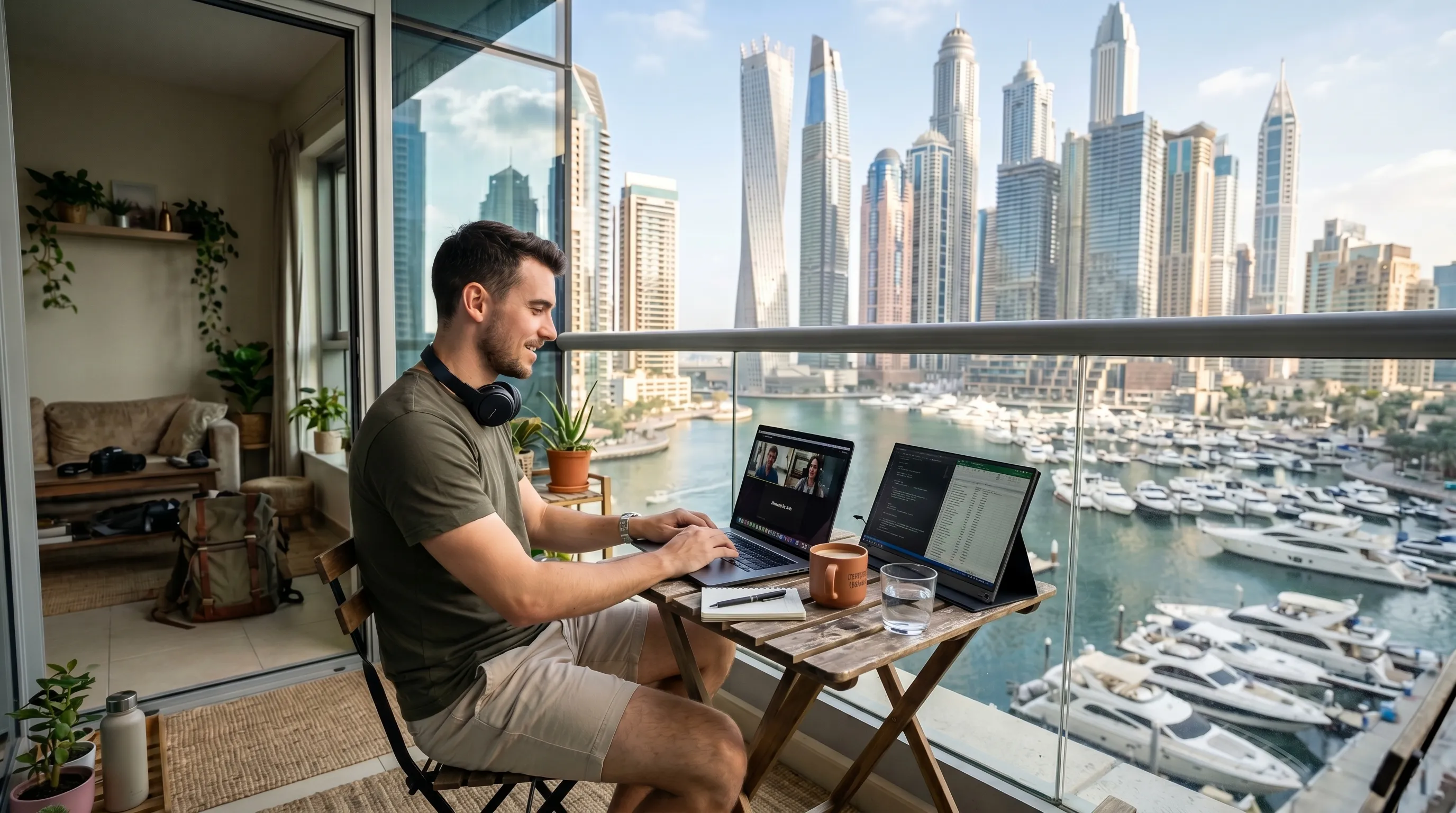
Buying Dubai Property as a Digital Nomad: Visa, Yields, and Lifestyle
Buying Dubai property as a digital nomad? Here's the remote-work visa, realistic yields, and the lifestyle that keeps p
One thing not many people realize is that Dubai has become one of the most favored locations in the world when it comes to remote work bases. Having fast internet access, no income taxes, plenty of sun, a favorable time zone (covering Asia and Europe in one day), and an environment full of people who have similar itineraries as yours, there inevitably comes a moment after staying here for some time - should I buy a property?
This is exactly what we are going to talk about. First of all, buying a property as a digital nomad is different from buying property as someone looking for permanent residence in that you can go anywhere and back anytime, so your home must be flexible enough to serve as accommodation, as an investment, or both. And now let us get into three things that really matter - the visa, considering the uncertainty and confusion in regards to this aspect, the returns, since in most cases your property serves as both accommodation and an investment, and the lifestyle, which defines whether or not you stay long enough to make it worth your time.
First of all, one crucial detail to start off with and avoid further confusions. No, you don’t have to buy a property to stay in Dubai as a remote worker. There is a special type of visa for that. Buying a property is something optional based on your lifestyle or on your investments. This is why we are starting from this point - it completely changes the whole approach to this topic.
First Things First: You Do Not Need to Buy to Live Here
Let's kill the biggest myth straight away. Buying is optional. Plenty of people assume that living in Dubai means buying property or being sponsored by an employer here. Neither is true for a remote worker. Dubai built a visa specifically for people who earn their money from somewhere else, and it does not ask you to own a thing.
That changes the framing completely. You are not buying to unlock residency, because you can get that through the remote work visa while renting. So if you do decide to buy, you are doing it for one of these reasons, and it helps to be clear which:
- To live in, because you have decided Dubai is your base for a good while and you would rather own than rent.
- To invest, because Dubai yields are strong and you want the property working for you whether you are in town or not.
- To do both, living in it for now and letting it out later when you move on.
- To run as a short-term rental, earning while you travel, treating it like a small business.
- To park money somewhere tax-free and tangible, rather than leaving it in a volatile account.
Each of those points you toward a different kind of property, a different area, and a different budget. A home you love to live in is not always the one that rents best, and the flat that earns the most on a holiday-let platform is not always the one you would want to come home to. Mixing those goals up is the most common mistake we see nomads make.
So before anything else, decide what the purchase is for. Get that wrong and you can buy a perfectly good property that is wrong for you. Get it right and everything after, the area, the budget, the strategy, falls into place a lot more easily. The rest of this guide assumes you have at least a rough answer.
The Visa Routes for Nomads Who Want to Stay
There are a few ways to be here legally, and the right one depends on whether you are buying and how much you are spending. Here is the short version of each.
The remote work visa is the starting point for most nomads. Dubai's Virtual Working Programme, set out on the UAE government portal, lets you live here for a year, renewable, while you work for a company based outside the UAE or run your own business abroad. You generally need to show a monthly income of around USD 3,500, roughly AED 12,800, along with an employment contract or proof you own the company, a few months of bank statements, and valid health insurance. No property required. You can rent, work, and live here entirely on this.
Buying property opens up two more routes, depending on the price:
- A property worth around AED 750,000 or more can qualify you for an investor residency visa, typically running two years and renewable.
- A property worth AED 2 million or more puts you in Golden Visa territory, a ten-year residency that has become more flexible and now counts mortgaged and off-plan homes in many cases.
- Below AED 750,000, the property does not unlock a visa on its own, so the remote work visa stays your route to residency.
- If you are buying mainly as an investment and living elsewhere, the visa may not matter to you at all, and that is fine too.
The practical path a lot of nomads take is simple. Arrive on the remote work visa, rent for six months to a year while you work out whether Dubai fits, then buy once you are sure, ideally at a level that upgrades your visa at the same time. That way the property does two jobs, a home or an investment, plus a longer and steadier residency.
As always, the figures and the paperwork get tweaked, so check the current rules before you plan around them. The residency side is handled by Dubai's GDRFA. Read the live version, because visa terms change faster than anything else in this guide.
The Yields: What Dubai Property Actually Returns
This is where Dubai earns its reputation. Compared with most major cities, the rental returns here are high, which is a big part of why nomads end up buying rather than just renting. London, Paris, and Singapore landlords would be thrilled with what is normal in Dubai.
A quick reality check on terms. Gross yield is the annual rent divided by the price, before costs. Net yield is what you actually keep after service charges, management, and the weeks the place sits empty. Brochures quote gross. Plan on net.
We lined up the rough gross yield ranges by area type, each on one line, so you can see the trade-off:
- Affordable apartment areas like JVC, Dubai South, and Dubailand: often the highest gross yields, frequently in the 7 to 9% range.
- Mid-market areas like Business Bay, JLT, and parts of Dubai Marina: typically somewhere around 6 to 7%.
- Prime addresses like Downtown and Palm Jumeirah: lower gross yields, often 4 to 6%, because the purchase price is so high.
- Short-term and holiday lets: higher headline returns, but with far more cost, management, and empty nights to absorb.
- Net, after costs: knock a meaningful chunk off any gross figure, since service charges and management eat into it every year.
- The pattern: cheaper properties usually yield more, prime properties usually appreciate more, and you rarely get both from one unit.
That last line is the one to sit with. If pure income is the goal, the affordable end of the market tends to win on yield. If you want a place you would actually live in and you are happy with steadier growth over raw rent, prime makes more sense. Most nomads buying their first Dubai property are better off being honest that it is an investment first, and choosing for yield, not for the view.
One more thing that shapes the maths for a nomad specifically. Financing. Mortgages are harder to get on a remote work visa or as a non-resident, and where you can get one, expect a bigger deposit, often 25% to 50% rather than the 20% a salaried resident might put down. Rates can run higher too. A lot of nomads end up buying in cash for this reason, which is fine, but it means tying up more capital in one place, so weigh that against keeping your money liquid and mobile.
These ranges move with the market, so treat them as a guide, not gospel. You can sanity-check real rents and sale prices against the official figures from the Dubai Land Department before you commit to any number.
Buy to Live, Buy to Let, or Buy to Airbnb
You sorted the why back at the start. Now the how, because the three main strategies for a nomad play out very differently in practice.
Buy to live is the simplest. You choose for yourself, not for a tenant. Pick the area you want to wake up in, near the cafes and coworking spots you actually use, and accept that the yield is secondary because you are the one living there. The main thing is to not overpay for a lifestyle you might move on from in two years.
Buy to let is the income play. Here you choose like an investor, not a resident. You want a property in an area with strong, steady tenant demand, a sensible service charge, and a price that makes the yield stack up. Long-term lets are lower hassle and lower return. They suit a nomad who wants the property to tick along quietly in the background while they travel.
Buy to run as a short-term rental is the most hands-on, and potentially the most lucrative:
- Higher gross income than a long-term let, especially in tourist-friendly areas near the beach or the main attractions.
- More cost and effort, from furnishing and cleaning to platform fees and guest turnover.
- Licensing to sort, since short-term and holiday rentals are regulated in Dubai and you need to do it properly.
- More empty nights to plan for, because occupancy is never 100% and the quiet season is real.
- A genuine need for management if you are travelling, because you cannot hand over keys and fix an air-conditioner from another continent.
That last point matters most for the way nomads live. If you are going to be moving around, a short-term rental basically has to be managed for you, or it becomes a second job you did not want. Our holiday homes and short-term rental service handles the licensing, the listings, and the guests so the income arrives without you having to be here.
And for a long-term let you want kept simple while you are away, our property management team takes care of the tenants and the upkeep, which is the difference between passive income and a constant headache.
The Lifestyle: Why Nomads Actually Land Here
The numbers get people interested. The lifestyle is what makes them stay, and staying is what makes buying worthwhile in the first place. Here is what keeps remote workers in Dubai once the novelty wears off.
- The time zone. At GMT plus four, you can work with Asia in your morning and Europe in your afternoon, which is rare and genuinely useful for remote work.
- No income tax. Your overseas earnings are not taxed here, which for a lot of nomads is the single biggest financial reason to base themselves in Dubai.
- Fast, reliable internet and a real choice of coworking spaces and laptop-friendly cafes across the city.
- A large, easy-to-join community of other remote workers and founders, so you are not starting your social life from zero.
- Safety and convenience, with almost everything bookable, deliverable, or a short ride away, and a city that simply works.
- Flights everywhere, so visiting clients, family, or your next destination is never more than a direct hop away.
The areas that suit this life tend to share a few traits. Walkable, close to cafes and gyms, with a community feel and decent transport. Dubai Marina is the classic nomad pick for the promenade, the buzz, and the walk-everywhere convenience. For better yields and a gentler price, JVC has become a firm favourite, more residential and better value while still central enough. If a yield-friendly base appeals, our JVC area guide is a useful starting point.
Be honest about the downsides too. The summers are punishing, so plenty of nomads leave for the worst months and treat Dubai as a winter base. The cost of living is not low, even without tax. And life here leans comfortable and convenient rather than gritty or cheap, which suits some people and bores others. None of that is a dealbreaker. It is just worth knowing before you buy somewhere you will only half use.
Whatever strategy you land on, our property buying service can match the right kind of property to the way you actually live and work.
What We Would Actually Do
In essence, the decision-making process can be boiled down to a single question – are you buying a home or an investment. This decision dictates everything – what part of the world, how much money, how to go about it, and what visa to apply for.
If you were giving advice to a friend, you would say go for the remote-work visa first and then rent somewhere for a while because no one buys in a city in which he/she has not spent time. See if it’s either income or a home but not both when one of the two doesn’t come into play. In case you want income, buy somewhere cheap where you can make numbers work and organize your property so that it runs without you having to take active part in it. If you want a home, buy somewhere nice where you want to live and enjoy slower rates.
Regardless of what you decide, try to make the purchase such that the second effect is acquiring a better visa, making the purchase a multi-purpose venture. Save some money too, because the key idea behind being a nomad is freedom. Not having enough money while having something you cannot sell means you lack the freedom that defines you as a nomad. Real estate is a very illiquid asset, thus don’t make this mistake and let all the benefits of this life escape from your hand due to being wise one week.
A nomad that succeeds uses his/her property as yet another element of this mobile lifestyle. A sensible purchase in Dubai will be able to finance your travels as well as give you something to come back to after a while. An unwise one will lock your money and your choices up.
If you want a straight read on which areas and which strategy fit the way you live and work, we do this every day with people in exactly your position. Get in touch and we will take it from there.
Related stories
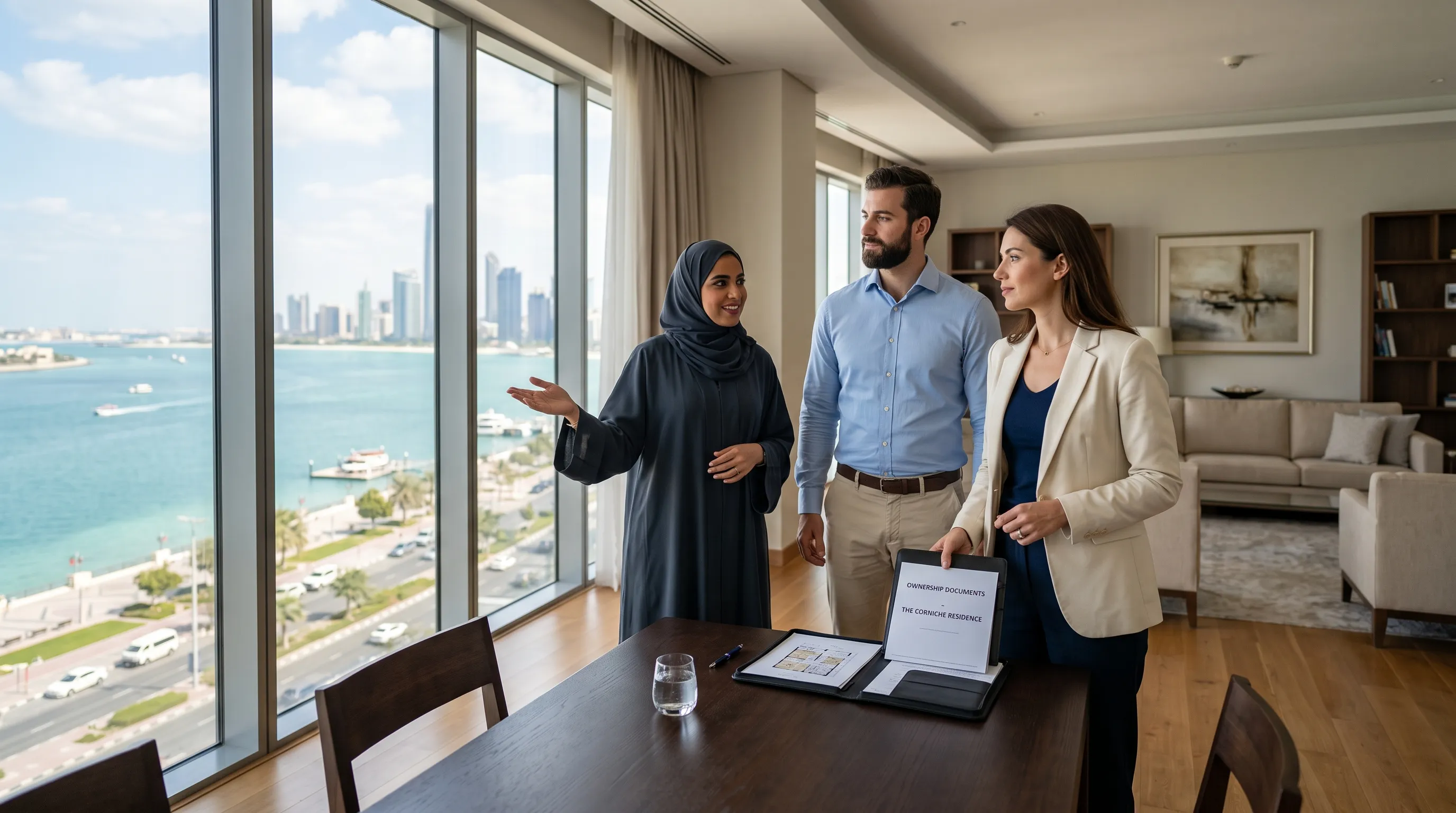
Buying Resale in Dubai vs Abu Dhabi: The Hidden Differences
Buying resale in Dubai vs Abu Dhabi: the hidden differences in fees, land authorities, ownership zones, and process, an
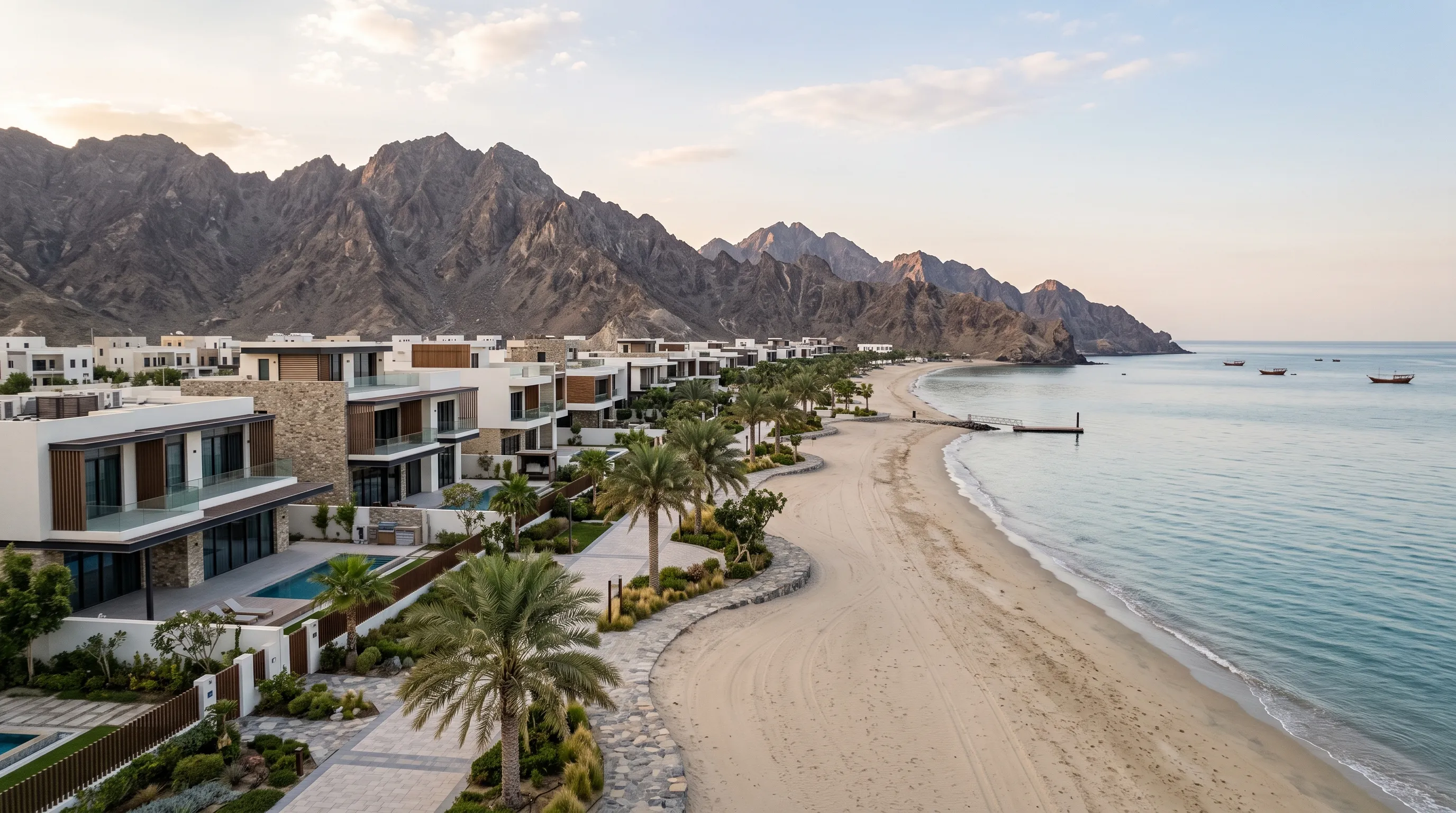
Fujairah Property: The Quiet Emirate Nobody Talks About
Fujairah property, honestly: the UAE's quiet east-coast emirate, its lifestyle appeal, the thin market and limited owne

How Interest Rate Cuts Affect Dubai Property: What Buyers Should Know
How interest rate cuts affect Dubai property: why UAE rates track the US, how cheaper mortgages move demand and prices,
Echoes, in your inbox
One thoughtful email a month. Market insight, new launches, no spam.