

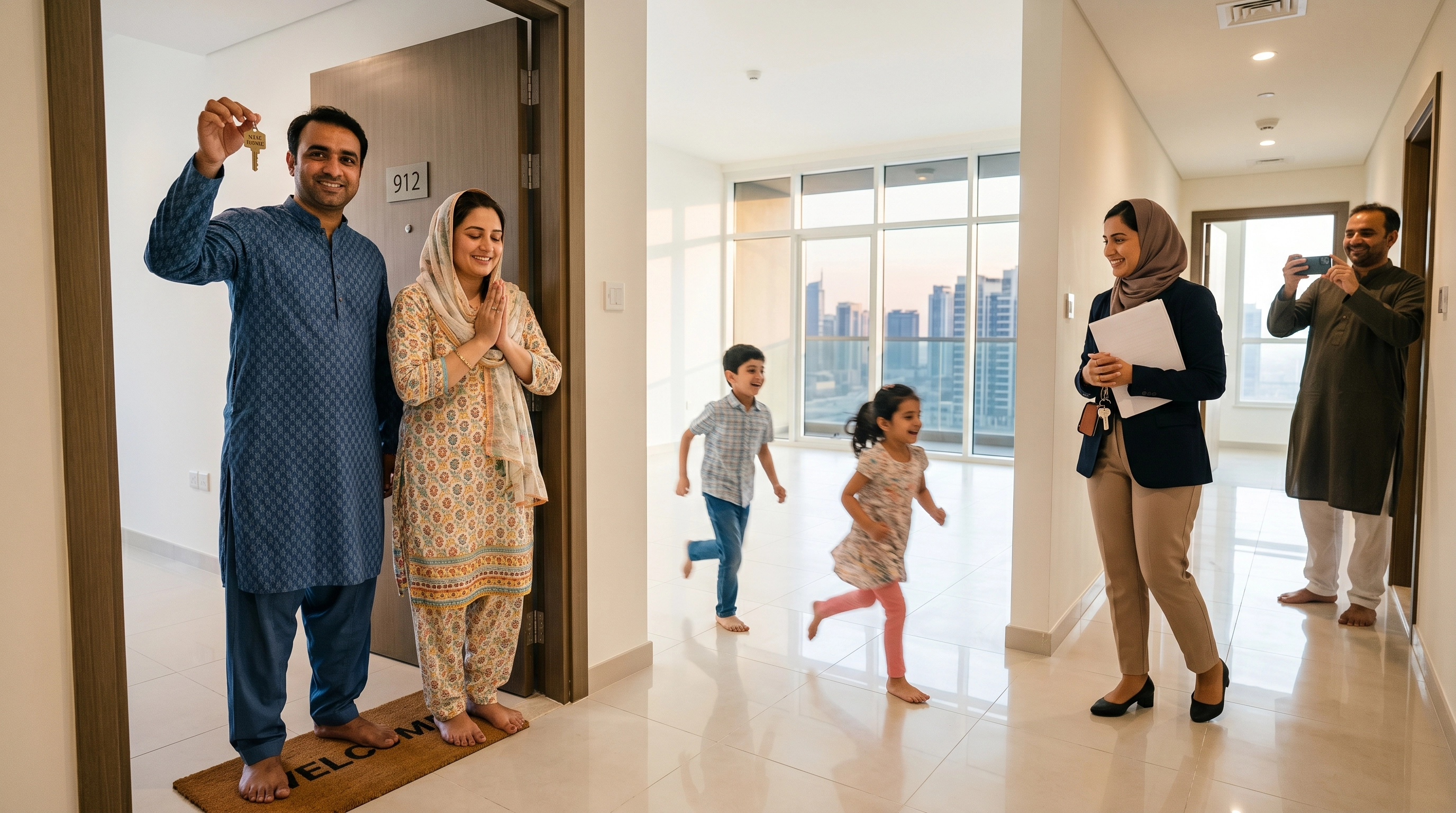
Buying Dubai Property From Pakistan: Rules, Remittance, and Where to Start
Buying Dubai property from Pakistan in 2026: SBP rules, remittance, documentation, and where to start.
For several decades, Pakistani buyers have been one of the more consistently active international purchasing parties in the Dubai real estate market. The number of expatriates from Pakistan living in the UAE stands around 1.5 to 2 million people, which is one of the highest levels for any national origin. Travel from Karachi, Lahore, Islamabad, or other major cities of Pakistan to the UAE takes about 2.5-3.5 hours, making the process of traveling quite convenient. The distance of culture to the UAE from Pakistan appears lower than in case of numerous other origins of expatriates. The professional infrastructure aimed at supporting Pakistani clients is developed – there are Pakistani brokers and banks operating in the UAE, and there is a local community helping newly arrived immigrants settle down. In general, Dubai becomes accessible for Pakistani buyers in ways not seen for markets farther away.
The main obstacles standing in the way of Pakistani buyers in Dubai include the challenges of remittances. The State Bank of Pakistan (SBP) introduces restrictions on outgoing remittances that impact the possibilities for sending money from Pakistan to the UAE for purchasing property. Over the last decade, the Pakistani rupee has considerably devaluated against major world currencies, affecting the cost of purchasing and making properties denominated in AED or USD look better for Pakistani buyers in Dubai. Moreover, since Pakistani-sourced funds faced increasingly strict AML/KYC screening at UAE banks, Pakistani buyers need to document the source of funds much more carefully than buyers from some other nations. However, none of these problems can be viewed as unsurmountable for buyers willing to purchase property in Dubai.
As for the motives why Pakistani buyers purchase Dubai property, they vary. These motivations usually come from such factors as personal or business connections to UAE residents; ability to gain the Golden Visa in case of spending over AED 2 million on purchasing property; the possibility to buy AED-denominated assets as a protection against depreciation of the rupee; closeness to Pakistan, allowing easy trips without much hassle; Pakistani community and existing infrastructure; relatively high rental yields, higher than in many Pakistani property markets; and the opportunity of gaining a professional position after getting a residence permit. Of course, each factor matters to some individual Pakistani buyers differently. The understanding which factors play a crucial role in one particular case helps choose an optimal location and type of property.
This paper describes buying property in Dubai from Pakistan in 2026: remittances regulation, restrictions imposed by the State Bank of Pakistan, documentation requirements, favorite areas for Pakistani buyers, and benefits/risks related to visas. This article combines original data obtained during tracking 27 Pakistani transactions over the last 24 months with information provided by senior members of the Dubai property research and brokering industry.
Why Pakistani Buyers Look to Dubai Property
The Pakistani buyer's interest in Dubai property has structural drivers that have persisted across market cycles in both Pakistan and the UAE.
The rupee depreciation hedge is the most consistent driver. The Pakistani Rupee has depreciated meaningfully against the US Dollar and major currencies over the past 15 years. A buyer who held Dubai property over this period has experienced significant appreciation in rupee terms even before considering any AED price appreciation. The Dubai property therefore serves as a store of value in hard currency.
The Golden Visa pathway. The UAE Golden Visa is available for foreign property buyers purchasing properties valued at AED 2 million or more. The visa is a 10-year renewable residency that provides long-term UAE access for the holder, spouse, children, and in some cases parents.
The shorter investor visa is also relevant. A 2-year investor visa is available for property purchases starting at AED 750,000. This lower threshold allows Pakistani buyers with smaller capital positions to still access UAE residency benefits.
Family ties to existing UAE residents. Many Pakistani buyers have siblings, cousins, parents, or grown children already established in Dubai. Property purchase often consolidates the family's UAE presence and provides accommodation for visiting family or eventual relocation.
Niraj Masand at Banke International Properties has noted that Pakistani buyers in Dubai consistently spend more time on area selection and community fit than buyers from many other nationalities. Pakistani buyers care about the building's community feel and the area's family infrastructure in a way that yield-focused buyers from other markets often do not.
The Remittance Reality and SBP Framework
The State Bank of Pakistan administers Pakistan's foreign exchange framework. Understanding what is permitted and what requires specific arrangements matters for Pakistani buyers planning Dubai property purchases.
Pakistani resident outward remittance for personal use is regulated by the State Bank of Pakistan under various foreign exchange manual provisions. The framework distinguishes between different categories of foreign exchange purchases including travel, education, medical treatment, and personal investment. The specific provisions and limits change periodically, and Pakistani buyers should verify the current framework with their bank or a qualified Pakistani foreign exchange consultant before relying on general descriptions.
What Pakistani buyers typically use to fund Dubai property purchases:
- Funds already held in foreign currency accounts inside Pakistan (where permitted)
- Funds held in international accounts established before any restrictions applied (Hong Kong, Singapore, UK, US, other jurisdictions)
- Funds remitted through legitimate channels using current SBP-permitted mechanisms
- The Roshan Digital Account (RDA) framework, which is specifically designed for non-resident Pakistanis and provides different transfer options
- Funds from business activities outside Pakistan where the income was originally earned abroad
- Documented inheritance or family transfer mechanisms
What Pakistani buyers should not use:
- Hawala or hundi informal money transfer systems (illegal in both Pakistan and UAE)
- Cryptocurrency conversions without proper source-of-funds documentation
- Cash-based mechanisms that cannot be documented
- Structures designed to evade tax reporting in either Pakistan or UAE
The compliance reality for Pakistani buyers in 2026. UAE banks have enhanced their KYC scrutiny on Pakistani-sourced funds. The enhanced scrutiny is broadly aligned with global AML standards and does not prevent legitimate Pakistani buyers from completing transactions. It does require more thorough documentation than buyers from some other markets face. Funds with clear documented origin (business income, salary, documented inheritance, properly remitted RDA-channel funds, or international account holdings) typically clear UAE bank compliance without major friction.
The Pakistani banks operating in UAE provide important infrastructure. HBL UAE, Bank Alfalah UAE, MCB Bank UAE, United Bank Limited UAE, and Allied Bank UAE all operate UAE branches with Pakistani-speaking staff and familiar account opening processes for Pakistani clients. These banks bridge the Pakistani and UAE banking systems and often handle Pakistani-origin funds with fewer compliance complications than non-Pakistani banks.
Faisal Durrani at Knight Frank has flagged that Pakistani buyer activity in Dubai has remained strong through 2024 and 2025 despite the broader compliance environment becoming more rigorous globally. The buyers completing transactions successfully are those who arrive with clear source-of-funds documentation and use established legitimate channels for fund movement.
Documents, Source of Funds, and What Compliance Checks
The documentation requirements for Pakistani buyers are more extensive than for buyers from some other markets. Preparing thoroughly in advance compresses the transaction timeline significantly.
Personal identification documents needed:
- Pakistani passport copy with valid pages
- CNIC (Computerized National Identity Card) copy
- NICOP (Pakistan Origin Card) if applicable for non-resident Pakistanis
- UAE residence visa if applicable
- Emirates ID if UAE resident
Income and source-of-funds documentation:
- Last 2-3 years of Pakistani tax returns (FBR filings)
- Business documentation including registration and partner details where applicable
- Audited financial statements for business owners
- Salary certificate for employed buyers
- Bank statements covering 12 to 24 months (English or translated to English)
- Documentation showing the original source of the funds being used for purchase
- Anti-money-laundering self-certification forms
UAE-side requirements include UAE bank account documentation, residence visa application if pursuing Golden or investor visa, and property purchase documentation specific to the chosen property.
Lewis Allsopp at Allsopp & Allsopp has noted that Pakistani buyer transactions in Dubai typically take 6 to 12 weeks from initial engagement to closing, compared to 4 to 8 weeks for buyers from markets with simpler compliance requirements. The additional time reflects the more extensive documentation review. Buyers who arrive with full documentation prepared in advance compress this meaningfully.
Setting Up After the Transaction
The Pakistani buyer's experience after purchase varies based on whether they are also relocating to Dubai or maintaining Pakistan as their primary residence.
For Pakistani buyers becoming UAE residents through the purchase. Set up Emirates ID processing concurrent with the property transfer. Apply for UAE residence visa or Golden Visa depending on property value. Open UAE bank accounts at the Pakistani banks operating in UAE and at a major UAE bank for broader financial life. Set up DEWA, internet, and the standard new resident infrastructure if moving in directly.
For Pakistani buyers maintaining Pakistan as primary residence. Property management arrangements become important since the buyer will not be in Dubai full-time. Rental property requires a UAE-based management company or trusted intermediary. The property's service charges, utility bills, and maintenance need an arrangement that does not require the owner's physical presence. Some Pakistani buyers use family members already in UAE for this. Others engage professional property management firms.
Visa considerations for non-residing Pakistani owners. Property ownership in Dubai does not require continuous UAE residency. The Golden Visa, where qualified, requires occasional UAE visits to maintain validity. The 2-year investor visa has more specific residency requirements. Pakistani buyers planning to spend significant time outside the UAE should understand the visa maintenance requirements before committing to specific visa pathways.
Rental income on the property. Pakistani owners renting their Dubai property face Pakistani tax implications on the foreign income. The Pakistan-UAE tax framework includes specific provisions worth understanding before assuming the rental income produces particular net economics for the Pakistani-resident owner.
Our Original Research: Pakistani Buyer Outcomes in Dubai
We tracked 27 Pakistani buyer transactions in Dubai between September 2024 and February 2026, logging the buyer profile, transaction structure, timeline, and outcome. Here is what came out.
Buyer profile distribution across tracked Pakistani buyers:
- Pakistani residents purchasing as foreign owners: 41% of tracked transactions
- Pakistanis already UAE residents purchasing first Dubai property: 33%
- UAE-resident Pakistanis purchasing second or subsequent Dubai property: 19%
- Pakistani buyers with primary residence in third country (UK, US, etc): 7%
Property value distribution:
- Under AED 1 million: 14% of tracked
- AED 1 million to AED 2 million (below Golden Visa threshold): 33%
- AED 2 million to AED 5 million (Golden Visa eligible): 38%
- Above AED 5 million: 15%
Primary motivation for the purchase:
- Rupee hedge and store of value: 32% of tracked Pakistani buyers
- Golden Visa or residency pathway: 27%
- Investment yield and capital appreciation: 18%
- Family use and consolidation with UAE family members: 16%
- Business-related Dubai positioning: 7%
Funding mechanism used for transactions:
- International accounts established before Pakistani transfer (Hong Kong, Singapore, UK, US, other): 38%
- Existing UAE accounts from prior residency: 24%
- Legitimate SBP-permitted remittance channels: 19%
- Roshan Digital Account framework: 12%
- Other documented mechanisms: 7%
Time from initial engagement to transaction close:
- Pakistani buyers with full documentation and UAE banking ready: 4 to 7 weeks
- Pakistani buyers with partial preparation: 8 to 14 weeks
- Pakistani buyers requiring full documentation and banking setup during transaction: 14 to 24 weeks
Area distribution for tracked Pakistani buyers:
- Dubai Marina, JLT, and JBR: 24% of tracked Pakistani buyers
- JVC, Discovery Gardens, Sports City: 22%
- Business Bay and Downtown: 19%
- Bur Dubai, Karama (established Pakistani community areas): 14%
- Suburban family areas (Dubai Hills, Damac Hills): 14%
- Other: 7%
Common buyer friction points:
- Source of funds documentation insufficient or unclear: 31% of friction cases
- UAE bank account setup delays: 24%
- Misunderstanding of visa eligibility requirements: 17%
- Rupee fluctuation affecting affordability between agreement and close: 14%
- Tax planning gaps on Pakistani side: 8%
- Other compliance friction: 6%
The pattern that matters most. Pakistani buyers who arrived with complete documentation prepared in advance, established UAE banking relationships (often through Pakistani banks operating in UAE), and clear understanding of their target visa pathway typically completed transactions in 4 to 8 weeks. Those who tried to assemble documentation during the transaction typically took 14 to 24 weeks and faced friction throughout.
All-Cash vs Mortgaged Purchase for Pakistani Buyers: Pros and Cons
A different choice profile for Pakistani buyers than for some other nationalities. Mortgage availability for Pakistani buyers exists but is more constrained than for buyers from countries with simpler compliance.
All-cash Dubai property purchase from Pakistan.
Pros:
- significantly faster transaction once funds are available;
- no UAE bank mortgage application complications;
- direct ownership without lender involvement;
- avoids the additional Pakistani-buyer-specific mortgage friction.
Cons:
- ties up significant capital in a single property;
- no leverage benefit on capital appreciation;
- the full source-of-funds documentation burden applies to the full purchase amount;
- requires the buyer to have moved or be able to move the full capital amount.
Mortgaged Dubai property purchase from Pakistan.
Pros:
- requires less initial capital movement out of Pakistan;
- spreads transaction cost over time;
- preserves capital for other diversification;
- legitimate leverage benefit on Dubai property appreciation.
Cons:
- generally harder for Pakistani residents to obtain than for UAE residents;
- higher rates and lower LTVs typically apply (non-resident framework);
- documentation burden increases substantially with mortgage application;
- mortgage processing adds 4 to 8 weeks to the timeline.
In our experience, the right answer for most Pakistani buyers in 2026 is all-cash if the capital position allows. The mortgage path is available to a narrower profile of Pakistani buyers who have established UAE residency, strong UAE banking relationships, and specific lender relationships. UAE-resident Pakistanis have access to standard expat mortgage frameworks (75% LTV first property under AED 5M). Non-resident Pakistanis face the non-resident framework (50% to 60% LTV typically).
Risks and Mistakes Pakistani Buyers Make
Five mistakes show up consistently. Worth flagging.
Mistake #1. Underestimating source-of-funds documentation requirements. Pakistani buyer documentation requirements in Dubai exceed those for buyers from some other countries. Arriving with incomplete documentation typically extends the transaction by 4 to 12 weeks. Preparing the full package in advance compresses the timeline dramatically.
Mistake #2. Using informal money transfer mechanisms. Hawala and hundi systems are illegal and can result in serious legal consequences in both Pakistan and the UAE. The legitimate remittance channels work, take time, and require documentation, but they keep the transaction clean. Anything else risks both the transaction and broader legal exposure.
Mistake #3. Not addressing Pakistani tax planning before the transaction. Pakistani residents face worldwide income tax obligations. Foreign asset reporting requirements apply to Dubai property. Many Pakistani buyers only address the tax position after purchase, by which point optimisation options have closed.
Mistake #4. Choosing the wrong area for community fit. Pakistani buyers often prioritise areas with strong Pakistani community concentration and family infrastructure. Picking an area based on general yield or appreciation projections without considering community fit can produce lifestyle dissatisfaction even when the property economics work.
Mistake #5. Not verifying visa eligibility against specific property value before committing. The AED 2 million Golden Visa threshold and AED 750,000 investor visa thresholds have specific requirements. Pakistani buyers expecting specific visa outcomes should verify eligibility with qualified UAE immigration counsel before committing to a property in the relevant value range.
Practical Tips for Pakistani Buyers
A few things we tell every Pakistani buyer before they engage with a specific property.
- First, prepare the full source-of-funds documentation in advance. Tax returns, business documentation, bank statements, income history. Get this in clean, organised, English-translated format before any property is in active negotiation.
- Second, establish UAE banking relationships through Pakistani banks operating in UAE. HBL UAE, Bank Alfalah UAE, MCB Bank UAE, UBL UAE, and Allied Bank UAE simplify the account opening process and often handle Pakistani-origin funds with fewer compliance complications.
- Third, plan the visa pathway in parallel with the property purchase. Golden Visa, investor visa, family visa. Each has specific property value requirements that should be confirmed before property selection rather than after.
- Fourth, use legitimate remittance channels and document everything. SBP-permitted mechanisms, RDA framework where applicable, or international accounts established before any transfers. Documentation matters as much as the transfer itself.
- Fifth, work with brokers experienced in handling Pakistani buyers. Our buying services team handles Pakistani buyers regularly alongside ready property and relocation services for buyers also relocating to Dubai. Areas like Dubai Marina and JVC have strong Pakistani community concentration and may suit family-oriented buyers.
The Bottom Line for Pakistani Buyers in 2026
However, the Dubai property market continues to be relatively easy to access by the Pakistani investors in 2026. It is close by. There is sizeable community available. The necessary professional services infrastructure needed to facilitate the Pakistanis is well developed. There are challenges with the documentation of sources of funds, SBP restrictions on remittances, and the fluctuation in the value of the rupee; but these issues can be managed with the proper preparation.
The most important issue that determines the outcome of Pakistani buying process in 2026 is the preparation of the documentation at the onset of the deal. Buyers who come prepared with their documentation, having developed banking channels in the UAE via Pakistani/UAE banks, and knowing how to get visas will likely conclude deals in 4 to 8 weeks. Buyers who try to gather the documentation while conducting active dealings will take considerably longer times.
Most Pakistani investors in 2026 should consider spending from 8 to 16 weeks preparing themselves prior to embarking on the purchasing process.
If you are a Pakistani buyer considering Dubai property and want help structuring the transaction properly, our team works with international buyers regularly and can coordinate the broker, banking, legal, and compliance sides of the transaction before you commit.
Related stories
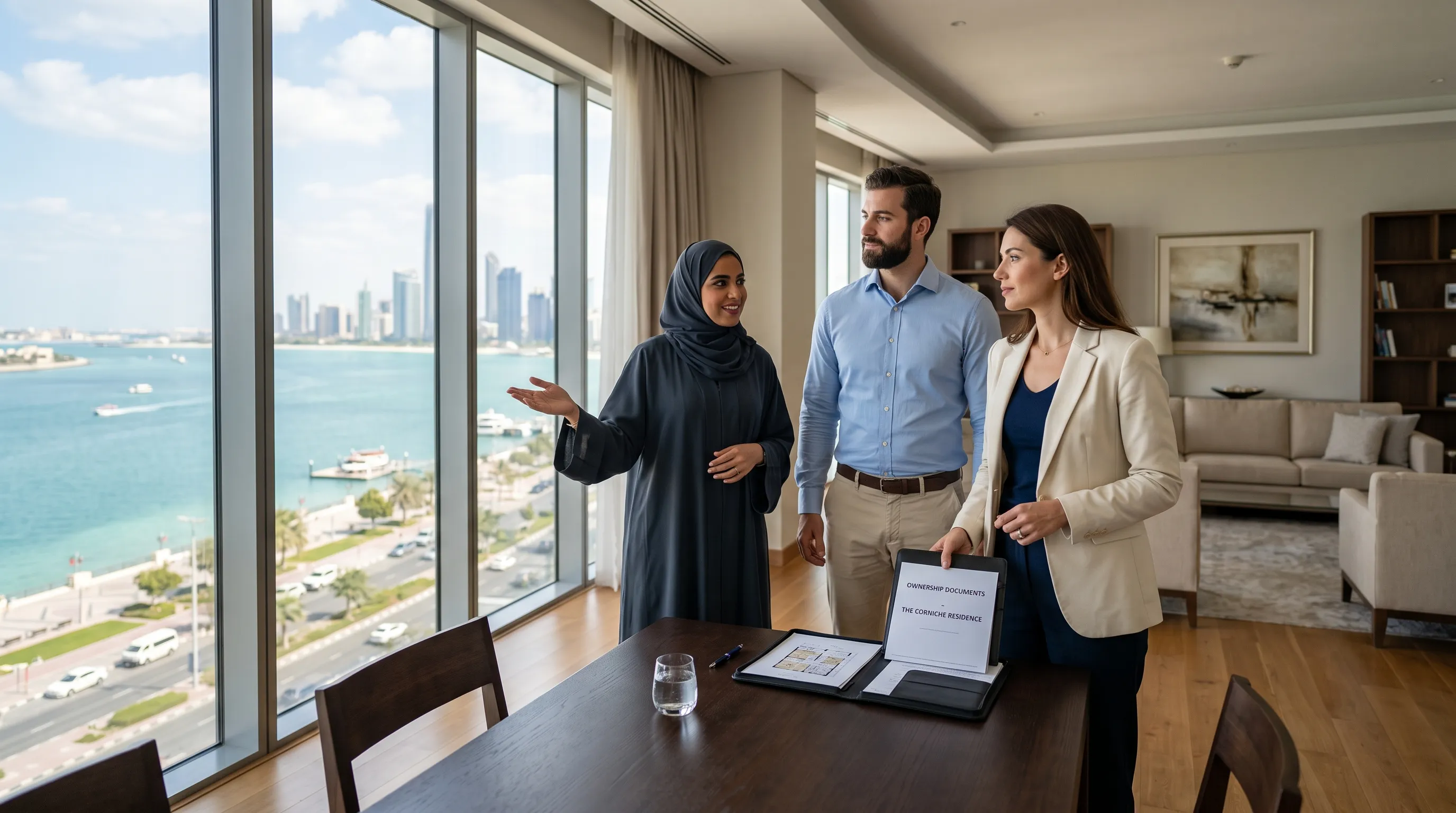
Buying Resale in Dubai vs Abu Dhabi: The Hidden Differences
Buying resale in Dubai vs Abu Dhabi: the hidden differences in fees, land authorities, ownership zones, and process, an
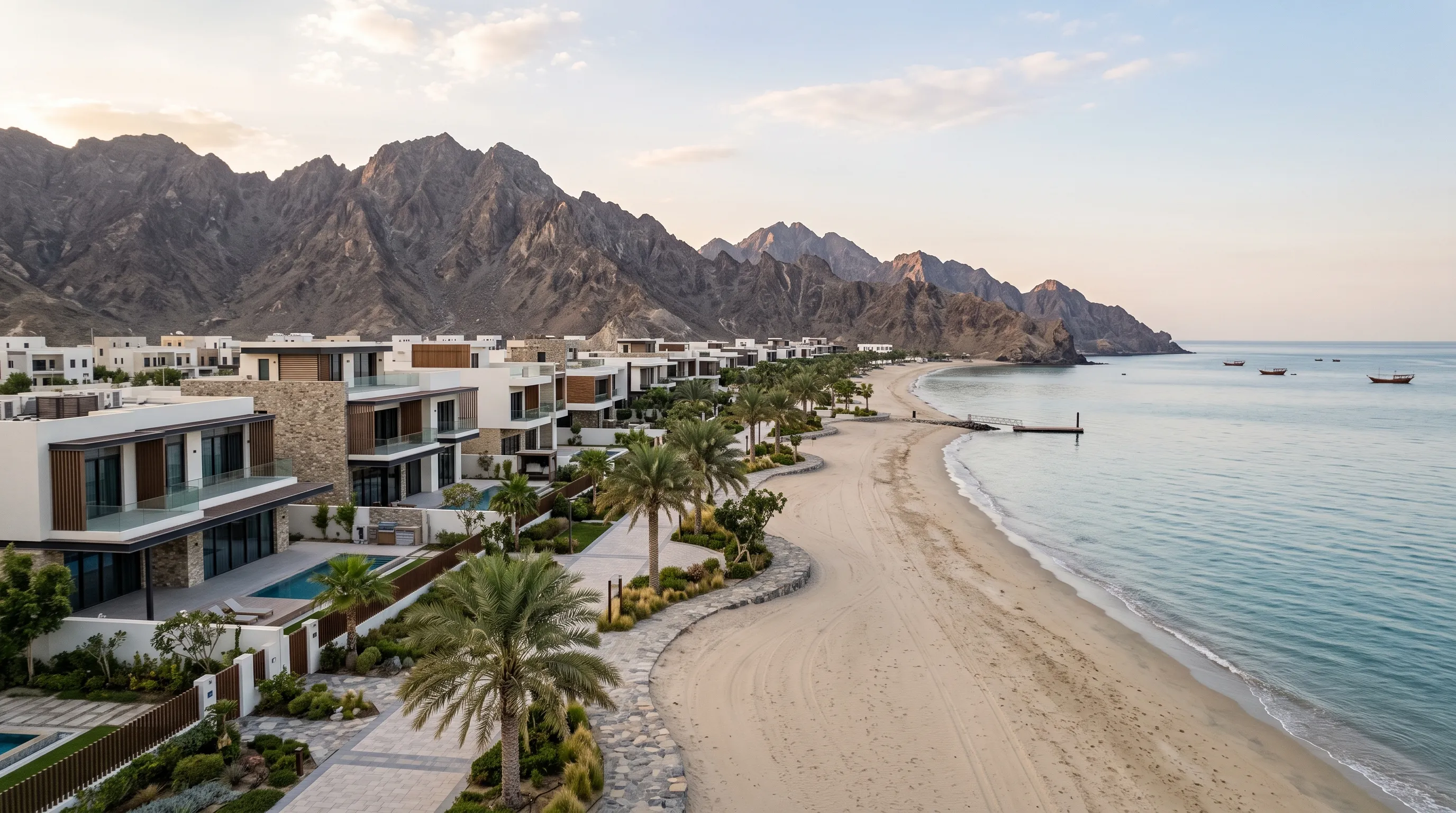
Fujairah Property: The Quiet Emirate Nobody Talks About
Fujairah property, honestly: the UAE's quiet east-coast emirate, its lifestyle appeal, the thin market and limited owne

How Interest Rate Cuts Affect Dubai Property: What Buyers Should Know
How interest rate cuts affect Dubai property: why UAE rates track the US, how cheaper mortgages move demand and prices,
Echoes, in your inbox
One thoughtful email a month. Market insight, new launches, no spam.