


How Currency Fluctuations Affect Your Dubai Property Investment
The dirham is pegged to the dollar, so your real risk is your home currency. Here's how currency fluctuations affect yo
In buying an asset overseas, you undertake two commitments. You acquire both the asset and the currency in which its value is denominated. If your asset performs well but the currency fluctuates against you, the effective returns you receive measured in your domestic currency will differ markedly from the number printed on the certificate of ownership. For foreign investors in Dubai, there is an added currency component to consider. In terms of currency issues in buying Dubai property, it is a factor that is often underestimated.
That is the crux of the matter. The United Arab Emirates dirham is tied to the US dollar, with a rate that stands firm at approximately 3.67 dirhams to the dollar. Thus, Dubai property is effectively priced in dollars. All you need to know about currency fluctuations and how they can impact a Dubai property investment can be encapsulated in one point: that it means that the currency risk involved is not of the UAE dirham, but rather that of your own currency relative to the dollar.
This guide will tell you why the peg is so important to all this; why currency changes can impact your investment at each step; how currency changes are just as likely to benefit as they are to harm; and what measures you can take without assuming anyone can reliably predict exchange rate movements.
Before we continue, it should be stated upfront that this is not financial advice nor even an attempt to predict exchange rate movements, which are highly uncertain anyway. Exchange rates do fluctuate unpredictably. The numbers used are merely examples for illustration purposes; the appropriate action will depend on your own specific situation. Nevertheless, let us start with the peg.
The One Fact That Changes Everything: The Peg
Start here, because everything else depends on it. The dirham is pegged to the US dollar at a fixed rate that has held for decades, roughly 3.67 to the dollar. The dirham does not float against the dollar the way most currencies float against each other. It is deliberately held steady, which means that for currency purposes, holding a dirham asset is very close to holding a dollar one.
This single fact reshapes the whole currency question. If you are a dollar-based buyer, there is essentially no exchange-rate risk on the dirham itself, because the dirham simply tracks your own currency. Your Dubai property behaves, in currency terms, like a dollar-denominated asset. If you are not a dollar buyer, a pound, euro, or rupee investor, your real currency exposure is not to the dirham but to your home currency against the dollar, since the dirham moves with the dollar. The peg, in other words, does not remove currency risk for everyone, it relocates it. The monetary policy and exchange-rate arrangements behind this sit with the Central Bank of the UAE, which maintains the peg.
Here is what the peg means for different buyers:
- It is a fixed link. The dirham is held steady against the dollar, not left to float freely.
- Dollar buyers face little risk. If your money is in dollars, the dirham tracks it, so there is almost no FX risk.
- Pegged-currency buyers too. If your currency is itself pegged to the dollar, the same stability applies.
- Other buyers face dollar risk. A pound, euro, or rupee investor is really exposed to their currency versus the dollar.
- Dubai is effectively dollar-priced. For pricing and returns, think of the property as a dollar asset.
- The risk is relocated, not removed. The peg shifts your currency question to your home currency against the dollar.
It is worth being clear-eyed that a peg is a policy choice, maintained by the central bank, rather than a law of nature. It has been remarkably stable for a very long time, and the practical reality for an investor is that you can treat Dubai property as dollar-linked. But sensible investing means understanding what you are relying on, and here you are relying on a long-standing and well-supported peg holding, which it has, consistently, for many years.
So the headline is simple. Dubai property is a dollar-linked asset. For dollar people, that means little currency drama. For everyone else, the currency story is really a story about your own money versus the dollar, which is the lens for everything that follows.
Where Currency Actually Hits Your Investment
Currency does not affect your investment in one moment, it touches it at several points along the way. Four moments matter most, and a non-dollar investor feels currency at each of them.
The first is at purchase. When you convert your home currency into dirhams to buy, the exchange rate that day sets your effective entry cost. A weak home currency means your money buys fewer dirhams, so the property costs you more in your own terms, and a strong one means the opposite. The second is your rental income. Rent is collected in dirhams, which is stable in dirham terms, but when you convert or spend it back home, its value in your currency rises and falls with the rate. The third is the capital value, and this is the one people miss, because your property can rise in dirham value while your return in home-currency terms is something quite different once the exchange rate is applied. And the fourth is at sale, when you convert dirhams back to your own money and the rate that day determines what your return is actually worth.
Here are the four touchpoints:
- At purchase. The rate when you convert to dirhams sets your real entry cost in your home currency.
- On rental income. Your dirham rent is steady, but its value back home moves with the exchange rate.
- On capital value. A dirham gain and the exchange-rate move together decide your real return.
- At sale. The rate when you repatriate determines what your proceeds are actually worth at home.
- On financing. Borrowing in dirhams while earning in another currency adds a mismatch to manage.
- Over time. The longer you hold, the more short-term rate swings tend to average out.
The capital-value point deserves a moment, because it is where the confusion lives. Imagine your dirham property value rises from around AED 2 million to AED 2.4 million over a few years. In dirham terms, a clear gain. But if your home currency has strengthened against the dollar over the same period, converting back gives you fewer units of your own money than the dirham figure suggests, shrinking or even erasing the gain in your terms. The reverse is just as true. The property framework you are buying into is set out through the UAE government portal, but the framework prices everything in dirhams, and translating that into your money is the step that currency governs.
The point of mapping these touchpoints is not to alarm you, it is to show that currency is a thread running through the whole investment, not a one-off worry at purchase. For a dollar buyer the thread barely tugs. For everyone else, it is worth feeling at each stage.
Tailwind or Headwind: It Cuts Both Ways
Here is the honest part most marketing skips. Currency movements are not simply a risk to fear, they are a two-way street that can boost your returns just as easily as dent them. Understanding that they cut both ways is what stops you treating currency as a threat or, worse, as a sure thing.
When your home currency weakens against the dollar after you buy, your dirham asset becomes worth more in your own money, a currency tailwind that adds to your property return when you convert back. When your home currency strengthens against the dollar, the opposite happens, a headwind that shrinks your return in home terms even if the property did well in dirhams. The same move helps a buyer from one country and hurts a buyer from another, depending on which way their currency went. None of this is predictable in advance, which is the key point, because anyone who claims to know where a currency is heading is guessing, however confidently.
Here is how the two-way effect plays out:
- A currency tailwind. Your home currency weakens against the dollar, so your dirham asset is worth more back home.
- A currency headwind. Your home currency strengthens, so your return shrinks in your own money.
- A dirham gain can still be a home loss. A rising property can deliver less, or more, once the rate is applied.
- It differs by buyer. The same rate move helps an investor from one country and hurts one from another.
- It is unpredictable. No one can reliably forecast a rate, so do not invest on a currency bet.
- Income feels it too. The home-currency value of your rent drifts with the rate, year to year.
Your rental income is where the two-way effect shows up steadily rather than all at once. The dirhams arrive on schedule and, in dirham terms, the rent is stable, but if you live in another currency, what that rent is worth to you nudges up and down with the rate every time you convert it. That is not a problem to solve so much as a reality to expect, and keeping the income flowing reliably in dirhams is the part you can actually control. Our property management team keeps a let earning steadily in dirhams, which is the solid base underneath whatever the exchange rate does on top.
The honest takeaway is that currency is neither friend nor enemy, it is a variable that can swing either way and that you cannot control. The right attitude is to respect it, plan around it, and never let a hopeful currency bet justify a property decision, because the one thing certain about exchange rates is that they will surprise you.
What You Can Actually Do About It
You cannot control exchange rates, but you are not helpless either. There are sensible, non-speculative things a foreign investor can do to manage the currency side, and they are mostly about awareness and planning rather than clever bets.
The first is simply to understand your real exposure, which, thanks to the peg, is your home currency against the dollar, not the dirham. Once you know that, you can think about your return in your home currency, not just the dirham figure, which keeps you honest about what you are actually making. Beyond that, you can be thoughtful about when you convert large sums, without falling into the trap of trying to perfectly time a market no one can time. You can use a proper currency specialist rather than a high-street bank for big conversions, since the rates and tools can be better. And tools like forward contracts, which lock in a rate for a future conversion, exist for those who want certainty, though they carry their own costs and considerations and are worth taking advice on rather than using blind.
Here is what you can sensibly do:
- Know your real exposure. Your risk is your home currency versus the dollar, so frame it that way.
- Think in your home currency. Judge the return in your own money, not just the dirham figure.
- Convert thoughtfully, not cleverly. Be sensible about timing large conversions, but do not try to call the market.
- Use a currency specialist. For big conversions, a specialist often beats a bank on rate and options.
- Consider hedging tools carefully. Forward contracts can lock a rate, but they have costs, so take advice.
- Hold for the long term. Time tends to average out short-term swings, so a long horizon softens currency noise.
Financing deserves its own note, because borrowing introduces a currency angle of its own. If you take a dirham mortgage but earn in another currency, your repayments are effectively dollar-linked while your income is not, which is a mismatch to be aware of. It is manageable, but it is worth understanding before you borrow, and our mortgage service can walk through how a dirham loan sits against income in another currency so there are no surprises.
There is also a quietly positive angle for non-dollar investors. Because Dubai property is dollar-linked, it can act as a dollar-denominated holding within a portfolio that is otherwise in your home currency, a form of diversification rather than only a risk. Whether that suits you is a question for your own circumstances and ideally an adviser, but it is worth seeing the peg as a feature as well as a factor.
It Depends Who You Are
Pull it together and the currency picture comes down to who you are and where your money lives. The same Dubai property carries very different currency stories for different buyers, and knowing yours is most of the battle.
We lined up the main cases, each on one line:
- A US dollar buyer: almost no currency risk on the property, since the dirham tracks the dollar.
- A buyer in a dollar-pegged currency: much the same, as the peg-to-peg link keeps the rate steady.
- A pound, euro, or rupee buyer: real exposure, but to your currency versus the dollar, not the dirham.
- At purchase: a weak home currency makes your entry dearer, a strong one makes it cheaper.
- On returns: your dirham gain and the rate move together to decide your real home-currency return.
- At sale: the rate when you repatriate sets what your proceeds are actually worth back home.
The pattern is clear once you see it. For dollar and dollar-pegged buyers, currency is barely a factor, and Dubai property behaves like the dollar asset it effectively is. For everyone else, currency is a real but manageable thread, and the key is to stop thinking about dirham risk, which the peg largely removes, and start thinking about your own currency against the dollar, which is where your exposure actually lives.
The sale is where all of this comes home, because that is when your paper return becomes real money in your own currency. The dirham price you sell at, recorded with the Dubai Land Department, is only half the story, the exchange rate the day you convert is the other half, and together they set your actual result. Building that currency step into your thinking from the start, rather than discovering it at the end, is what separates investors who are surprised by their final number from those who are not.
So the takeaway by investor type is straightforward. If you earn and spend in dollars, enjoy the simplicity. If you do not, respect the currency dimension, plan your conversions, think in your home currency, and decide on the property's merits while managing the currency as the secondary factor it should be, and if you are weighing a sale, our property selling service can help you time and handle the exit, currency included.
What We Would Actually Do
In fact, it all boils down to simple issues because of the fixed exchange rate, as property in Dubai behaves like a dollar asset anyway. If you are using dollars, then currency is not an issue. Otherwise, you have currency exposure to your national currency against the dollar, regardless of the dirham. This applies equally to the purchase price, the rental income, the returns, and the sale. This is the whole story.
If a friend from abroad wanted to purchase, we would advise on three main principles: find out what your actual exposure to currency risk is: your currency to the dollar, not the dirham; evaluate the return in your currency, not in dirhams; and be careful with big conversions: use a specialist for help, think about whether it is worth fixing your exchange rate, but do not try to beat the currency market (no one can), and take a long-term perspective. It will mitigate the problem of the volatility of currencies that worries people.
It should be emphasized that the primary thing to do is not to let the issue of currency dictate your property choices. Buy a good property in a good location for a fair price because of its quality and other features and deal with currency separately. Do not take into account a speculative bet on currency when buying property, even if the property is bad. Conversely, currency risks should not be allowed to deter you from good property.
And, finally, it should be said explicitly that this is generally information that you may want to use in making your decisions. This information is not financial advice or a prediction. Numbers are illustrative, the exchange rate can be unpredictable; what works for one country and another may well apply to someone's home currency. Consult specialists on questions of currency and taxation.
If you want help investing here with the currency dimension properly understood, from the conversion at purchase onward, that is part of what we do. Our property buying service keeps the property side sound while you handle the currency with the right specialists.
And if you want a straight conversation about how currency fits your particular investment, we are glad to help and to point you to the right people for the FX and tax side. Get in touch and we will take it from there.
Related stories

Buying Resale in Dubai vs Abu Dhabi: The Hidden Differences
Buying resale in Dubai vs Abu Dhabi: the hidden differences in fees, land authorities, ownership zones, and process, an
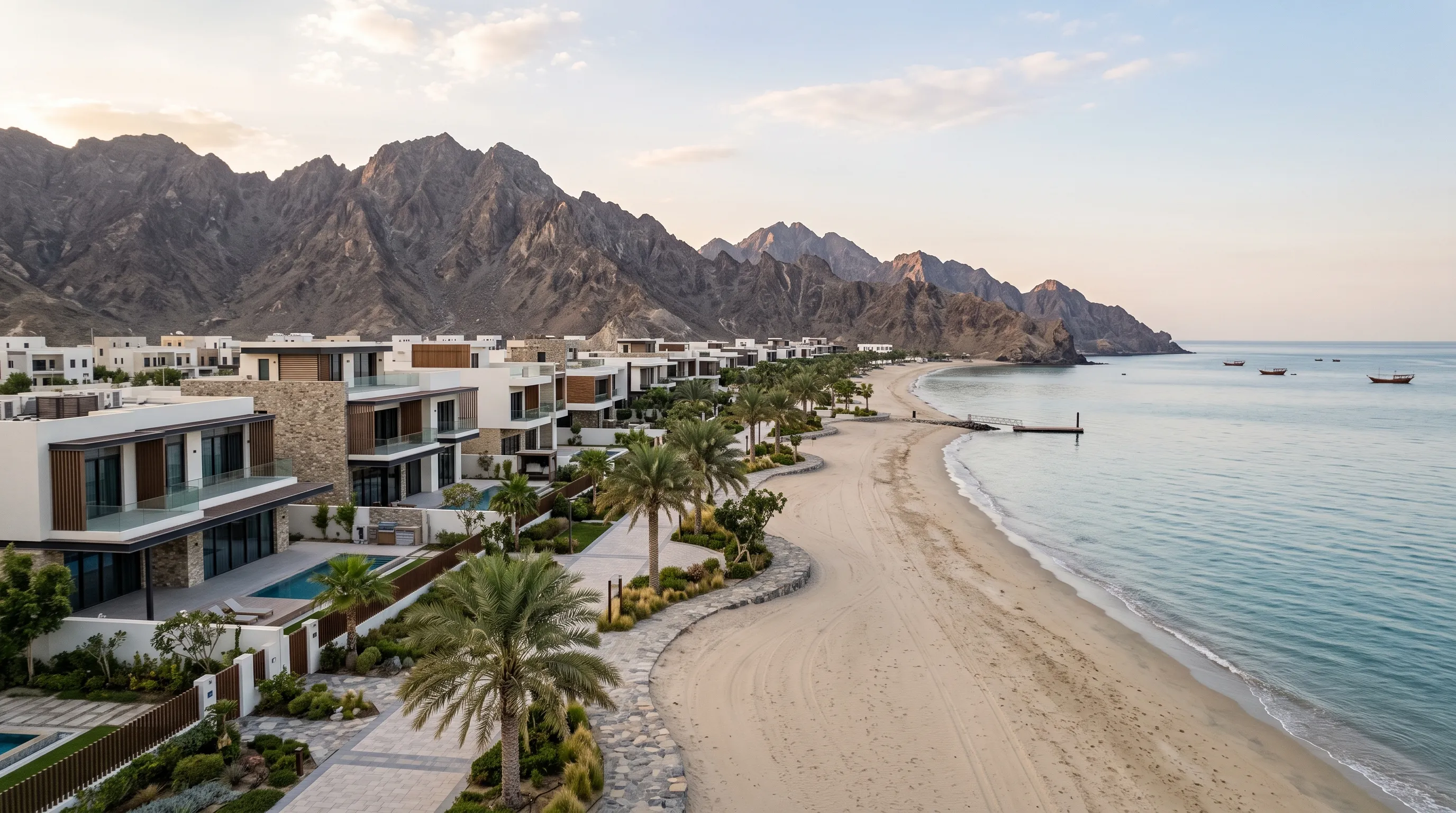
Fujairah Property: The Quiet Emirate Nobody Talks About
Fujairah property, honestly: the UAE's quiet east-coast emirate, its lifestyle appeal, the thin market and limited owne

How Interest Rate Cuts Affect Dubai Property: What Buyers Should Know
How interest rate cuts affect Dubai property: why UAE rates track the US, how cheaper mortgages move demand and prices,
Echoes, in your inbox
One thoughtful email a month. Market insight, new launches, no spam.