


The Real Cost of Living in Dubai by Family Size and Lifestyle
Dubai cost of living 2026 by family size and lifestyle: where the money goes and what each tier really costs.
The idea of “Dubai is expensive” coexists with the idea of “Dubai is cheap” perpetually, and both are correct in different cases depending on the viewpoint of the person saying it. One professional living in a studio apartment in JVC, cooking their meals at home, and using public transport could survive in Dubai cheaper than in most big cities in the West. On the other hand, a family with kids, sending them to the best international British-curriculum school, renting a villa in Arabian Ranches, paying for the services of a live-in nanny, and eating at weekends at the Atlantis might spend more per year than in London or San Francisco. So the two ideas exist simultaneously in the city. Even citing any single statistic such as the cost-of-living index compiled by Numbeo shows that there is a wide spectrum behind any one particular figure. Essentially, Dubai is not about uniform pricing.
It makes it particularly difficult to understand anything related to cost of living if one considers moving there and wants to assess whether he or she will be earning enough after relocation. All headline cost-of-living indexes do not account for the extra cost that comes due to the chosen lifestyle. Usually, the information one would get about how much things cost would contain the phrase “It depends” which is true but not very practical in terms of planning one's expenses. In order to give a clear answer to the question "how expensive is it to live in Dubai?" one needs to divide the query into several components based on the household size, the chosen tier of life quality, geography, and some category choices.
This article describes what it really costs to live in Dubai in 2026 according to family size and quality of life level. It explains the major cost categories that constitute monthly spending, shows typical expenses for singles, couples, and families of different sizes, and what lifestyle choices increase spending and which do not. It compares the options of renting apartments in central neighborhoods and villas in family-friendly locations. The research has been done based on the original research data provided by more than 80 family household profiles across Dubai for the year 2025 in addition to consulting with financial experts working with expats' budgets.
If you are considering moving to Dubai or living there currently and wondering if you are spending too much, please read this article through. The numbers matter more than the words.
The Big Cost Categories That Drive Dubai Living Expenses
Dubai household spending is dominated by a handful of large categories. Get these right and the rest mostly falls into place. Get any of them wrong and the monthly bill compounds quickly.
Rent is the largest single line for almost every household. Annual rent ranges from AED 35,000 for a small studio in older inland stock to AED 600,000-plus for a premium villa. For most working households, rent absorbs 25% to 45% of after-tax household income, which is a significant range driven by area and unit choice.
School fees are the second biggest line for families with children. The fees range from AED 8,000 a year at budget Indian curriculum schools to AED 150,000-plus at elite British or American schools. For families with two or three children, school fees often exceed rent.
Transport varies dramatically based on car ownership and commute pattern. A household relying on the Dubai Metro and occasional taxis spends AED 800 to AED 1,500 a month. A household with one car spends AED 2,500 to AED 4,500 a month including fuel, insurance, Salik tolls, parking, and maintenance. A household with two cars often spends AED 5,500 to AED 8,500 a month all in. Christopher Cina at Betterhomes has noted that transport often gets underestimated by international families relocating from cities with strong public transport because they expect Dubai to be similar and end up needing one or two cars they had not budgeted for.
Utilities including DEWA and cooling run AED 600 to AED 2,500 a month depending on the unit size and season. Cooling charges in peak summer for a larger villa can hit AED 2,800 a month alone.
Healthcare is largely covered by employer insurance for working expats but the gaps matter. Maternity, dental, optical, and certain specialist treatments are often partially excluded. Out-of-pocket healthcare spending of AED 5,000 to AED 25,000 a year per household is normal once the gaps are counted.
Groceries, dining, and discretionary lifestyle complete the picture. Groceries for a single person run AED 1,500 to AED 3,000 a month. A family of four typically spends AED 4,000 to AED 8,000 a month. Dining out, gym memberships, and leisure activities add another AED 2,000 to AED 12,000 a month depending on lifestyle.
Single Professionals: What Dubai Costs at Each Lifestyle Tier
A single professional in Dubai has the widest spread of possible spending of any household type. The choices matter enormously.
Budget tier, AED 12,000 to AED 18,000 a month all in. Studio or 1-bedroom in JVC, Discovery Gardens, or similar inland stock. AED 4,000 to AED 6,000 a month rent. Cooking at home, occasional dining out, Metro and occasional taxi for transport, gym membership at a mid-tier chain. Workable but disciplined.
Mid-tier, AED 18,000 to AED 28,000 a month. 1-bedroom in Dubai Marina, JLT, or Business Bay. AED 7,500 to AED 10,500 a month rent. One car. More frequent dining out, premium gym, decent travel budget. The most common single-professional spending profile we see.
Premium tier, AED 28,000 to AED 50,000 a month. 1 or 2-bedroom apartment in Downtown, Palm Jumeirah, or Bluewaters. AED 12,000 to AED 25,000 a month rent. Premium car, regular fine dining, private trainer or concierge, frequent international travel. The lifestyle that gets profiled in the media but is the minority position by household count.
The trade-off across tiers for single professionals is usually the rent decision. A budget single can save 40% to 60% of after-tax income. A mid-tier single can save 20% to 35%. A premium single often saves less than 15% despite earning more, because the lifestyle absorbs more of the increase. Vijay Valecha at Century Financial has made this point in his commentary on UAE expat savings rates. The single biggest driver of long-term wealth building for Dubai-based singles is not income level but rent decision.
Couples Without Children: The Real Range
Couples without children sit in a wider range than singles because the income side often doubles while the housing decision can stay similar. The total household spend ranges from AED 18,000 a month for a dual-income couple living modestly to AED 80,000-plus for a premium-lifestyle couple.
Budget tier, AED 18,000 to AED 28,000 a month. 1 or 2-bedroom apartment in a budget area. Two contributing incomes. Modest discretionary spending. Strong savings potential. A common profile for couples in their late twenties or early thirties saving toward property purchase or relocation.
Mid-tier, AED 28,000 to AED 50,000 a month. 2-bedroom apartment in Dubai Marina, Downtown, or comparable areas. Two cars sometimes. Regular travel, mid-premium lifestyle, occasional luxury purchases. The most common couple profile.
Premium tier, AED 50,000 to AED 100,000-plus a month. Villa or premium apartment in Dubai Hills or comparable. Premium cars, club memberships, frequent international travel, domestic help. Strong income required.
For couples specifically, the cost-of-living conversation often pivots around the question of children. The transition from a 2-person to a 3-person household triggers a step change in expenses that many couples underestimate. Going from no children to one child can add AED 8,000 to AED 40,000 a month depending on choices.
Families With Children: Where the Numbers Really Spike
Families with children in Dubai see the steepest cost curves. School fees, larger housing, transport, healthcare, and household help all scale with family size.
Budget tier for a family of four, AED 35,000 to AED 50,000 a month. 2 or 3-bedroom apartment in Arabian Ranches' more affordable phases or similar suburban communities. Two children at budget or mid-tier Indian or Pakistani curriculum schools. One car. Modest discretionary spending. Healthy savings still possible at this tier with disciplined choices.
Mid-tier for a family of four, AED 50,000 to AED 85,000 a month. 3-bedroom townhouse or villa. Two children at mid-tier British or American curriculum schools. Two cars. Live-in or live-out nanny. Regular family activities, weekend dining. The largest family profile in Dubai by share of households.
Premium tier for a family of four, AED 85,000 to AED 180,000-plus a month. Villa in Dubai Hills, Arabian Ranches, or similar premium community. Two children at top-tier British or American schools (AED 80,000 to AED 130,000 per child per year). Premium cars, club memberships, regular international travel, full-time household staff. The lifestyle that appears on social media but is the minority among Dubai families.
Steve Cronin, who writes extensively on UAE financial planning at DeadSimpleSaving, has flagged in commentary that the school fee decision is the single most consequential financial choice for Dubai families. The difference between a AED 35,000 school and a AED 110,000 school is AED 75,000 per child per year, or AED 150,000 for two children. Over 10 years of schooling, that is AED 1.5 million in cumulative cost. The school choice deserves the same analytical rigor as the home purchase decision.
Our Original Research: Actual Monthly Spending Across Dubai Households
We tracked detailed monthly spending data from 82 Dubai households across family sizes and lifestyle tiers between July 2024 and February 2026. Here is what came out.
Rent as a share of total household monthly spending:
- Budget tier singles: 32% to 42% of total spend
- Mid-tier singles: 36% to 48%
- Premium tier singles: 38% to 52%
- Mid-tier couples: 28% to 38%
- Mid-tier families with 2 children: 22% to 32%
- Premium tier families with 2 children: 28% to 38%
School fees as a share of total household monthly spending for families:
- Budget tier families with children: 12% to 22%
- Mid-tier families: 22% to 32%
- Premium tier families: 30% to 42%
Average monthly all-in spending by profile:
- Budget tier single: AED 13,500 to AED 17,500
- Mid-tier single: AED 19,500 to AED 27,500
- Premium tier single: AED 32,000 to AED 48,500
- Budget tier couple: AED 19,500 to AED 26,500
- Mid-tier couple: AED 30,500 to AED 47,000
- Premium tier couple: AED 58,000 to AED 95,000
- Budget tier family of 4: AED 38,500 to AED 49,500
- Mid-tier family of 4: AED 55,500 to AED 82,000
- Premium tier family of 4: AED 95,000 to AED 175,000
Underestimated cost categories cited by tracked households:
- Cooling and DEWA bills in summer months: 41% of households said they underestimated
- Domestic help and household staff: 38% underestimated
- Salik road tolls and parking costs: 32% underestimated
- Schools' extra fees beyond tuition: 31% of families underestimated
- Healthcare costs not covered by basic insurance: 29% underestimated
- Travel costs for visa runs or family visits home: 24% underestimated
Most common overestimates cited by tracked households:
- Groceries (most found Dubai groceries cheaper than expected): 22%
- Petrol and basic transport (vs Western European baselines): 18%
- Basic utilities (excluding peak cooling): 14%
The pattern that matters most. Households consistently underestimate the running costs of a premium lifestyle and overestimate the basic costs. The trap is the lifestyle inflation that compounds month after month. A household that moves into a larger villa often ends up with bigger cooling bills, more cleaning, more travel, more discretionary spending. Each individual increase looks small. The cumulative monthly impact is significant.
Apartment Living vs Villa Community: Pros and Cons
A major cost-of-living decision Dubai households face. Live in a central apartment with smaller space and amenity sharing, or live in a suburban villa community with larger space and family infrastructure.
Living in a Dubai apartment.
Pros:
- lower total housing cost for the same number of bedrooms;
- close to workplaces, dining, and entertainment;
- amenity sharing (gym, pool, security) reduces personal cost;
- lower running costs across utilities and maintenance.
Cons:
- limited outdoor space and storage;
- higher density and less privacy;
- harder for families with children to find good local play space;
- service charges in premium buildings can be high.
Living in a Dubai villa community.
Pros:
- significantly more space and private outdoor area;
- better suited to families with multiple children;
- access to community schools, parks, and family amenities;
- ability to host extended family or guests easily.
Cons:
- higher total cost including rent, cooling, maintenance, and staff;
- transport costs higher due to greater distance from city centers;
- one or two cars often required for daily life;
- larger space means larger cooling, cleaning, and utility bills.
In our experience, the right answer depends on family size and lifestyle preferences. Singles and couples without children almost always come out ahead financially in central apartments. Families with two or more children often pay similar total amounts in either configuration but get more usable space in the villa community.
Risks and Mistakes That Inflate Dubai Living Costs
Five patterns show up over and over. Worth flagging.
Mistake #1. Picking the area before pricing the lifestyle. Households often pick the area first because they like the look of it, then discover the running costs of that area's lifestyle do not fit their budget. Match the area choice to the realistic total spending pattern, not to the aspirational lifestyle.
Mistake #2. Underestimating the school fee inflation. Most Dubai schools raise fees 3% to 6% annually. Top-tier schools often more. Families budgeting for current fees without inflation often face a meaningful squeeze 3 to 5 years into the schooling.
Mistake #3. Treating a single annual rent cheque as cash flow neutral. Some Dubai landlords offer 8% to 12% discount for single-cheque rent. Households who take the discount without planning the cash flow can end up financially constrained in the months immediately after the cheque clears.
Mistake #4. Forgetting the visa runs, healthcare gaps, and "invisible" costs. Visa renewals, Emirates ID processing, occasional medical needs outside insurance coverage, child care during school holidays. These small items add up to AED 15,000 to AED 40,000 a year for many families and are often missing from the household budget.
Mistake #5. Lifestyle creep across the early years. New arrivals to Dubai often start carefully and gradually inflate spending as they settle in. The fourth restaurant subscription, the second car, the upgraded gym, the more frequent travel. Each individual decision feels small. The cumulative effect over 2 to 3 years can shift a household from healthy saving to break-even spending.
Practical Tips for Managing Costs Across Family Sizes
A few things we tell every household working out their Dubai budget.
- First, build a 12-month projection before you commit to an area or property. Spread out the rent cheques, school fees, insurance renewals, and major lifestyle costs across the year. The total annual number tells you whether the lifestyle is sustainable on your income.
- Second, separate the fixed and variable costs. Rent, school fees, insurance, and basic utilities are largely fixed. Dining, travel, and discretionary spending are variable. Knowing your fixed cost floor protects you against the lifestyle creep that erodes savings.
- Third, factor cooling into the housing decision. A villa with central cooling and large floor plates can run AED 2,500 to AED 3,500 a month in peak summer for cooling alone. An apartment in a well-managed building may run a fraction of that. The unit choice has a meaningful long-tail cost.
- Fourth, plan the savings rate before you plan the spending. Decide what you want to save monthly first, then work the lifestyle backward into the remaining income. The reverse approach almost always produces lifestyle that absorbs the available cash.
- Fifth, talk to a Dubai-experienced financial planner if the move is permanent. Our relocation services team regularly helps new arrivals model the realistic cost of different lifestyle choices before they commit to a property or area.
The Bottom Line on the Real Cost of Living in Dubai
Dubai may turn out to be the cheapest city you could live in or the most expensive of all major international cities. A lot will depend on your housing, educational, transportation, and general living habits established within the first six to twelve months of living there. It all depends on what kind of start a household makes.
The single most important decision you can make in terms of future expenses is that of the location and house/condo/apartment you choose since it determines not only your rent for the coming year but also the transportation and lifestyle conditions. The second most crucial thing for families with children is the school they choose. Finally, decisions about purchasing your own cars will determine a considerable share of household expenses. In total, these three factors account for 60%-75% of the difference in the expenses of otherwise similar households in Dubai.
In Dubai, affordability or lack thereof is not a matter of whether the place is affordable. The question is what specific version of Dubai is cheap to live in. Living in a budget apartment in JVC with access to Metro lines is a completely different experience from residing in a luxurious family home in Dubai Hills with two cars and three kids enrolled in prestigious British schools. While both options are viable, the mistake is trying to achieve one and budgeting for the other.
If you are weighing a move to Dubai or recalibrating your existing budget and want help mapping the lifestyle to the realistic spending pattern, our team works with new arrivals and existing residents regularly and can walk through the area and lifestyle trade-offs before you commit.
Related stories

Buying Resale in Dubai vs Abu Dhabi: The Hidden Differences
Buying resale in Dubai vs Abu Dhabi: the hidden differences in fees, land authorities, ownership zones, and process, an
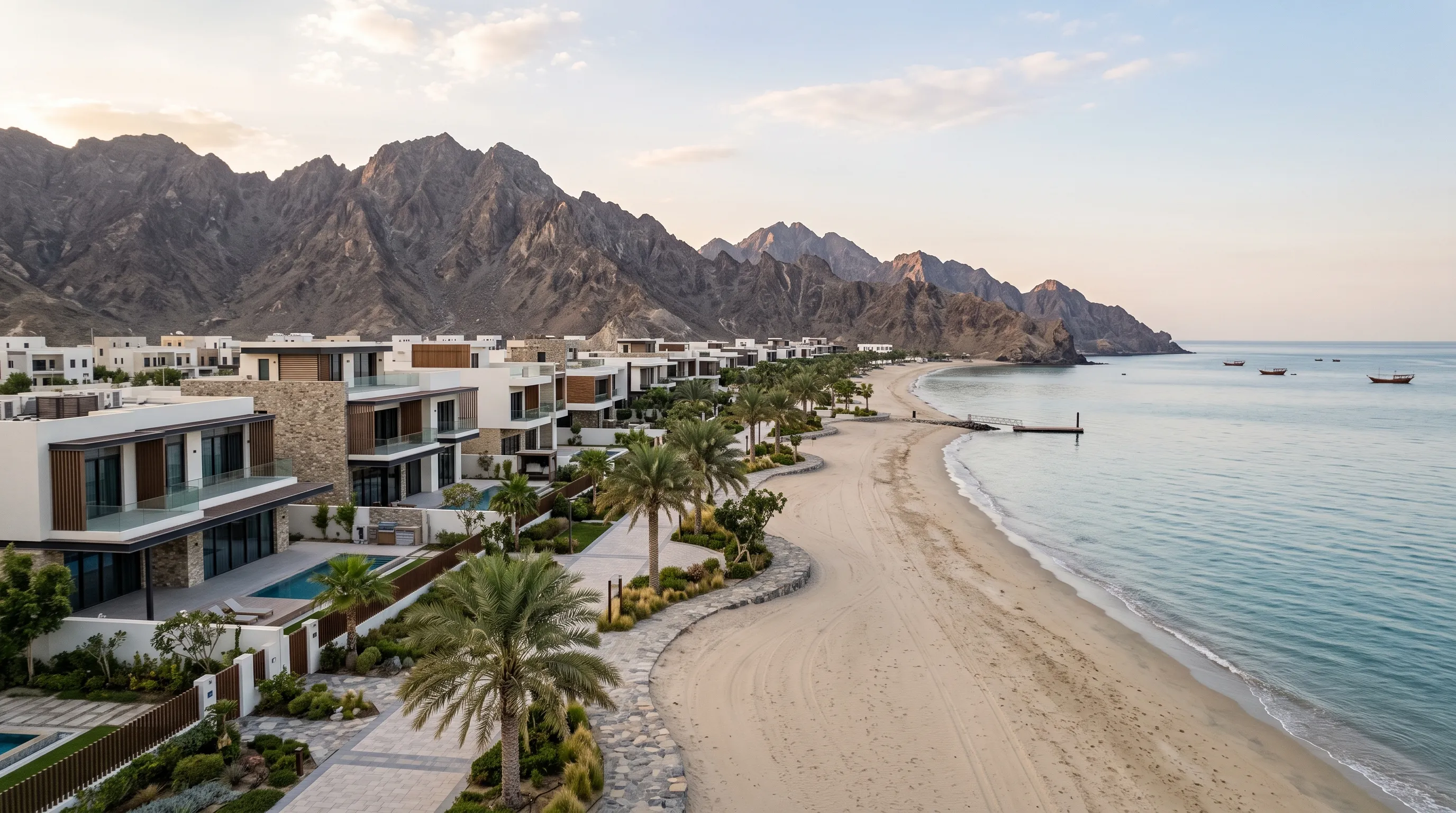
Fujairah Property: The Quiet Emirate Nobody Talks About
Fujairah property, honestly: the UAE's quiet east-coast emirate, its lifestyle appeal, the thin market and limited owne

How Interest Rate Cuts Affect Dubai Property: What Buyers Should Know
How interest rate cuts affect Dubai property: why UAE rates track the US, how cheaper mortgages move demand and prices,
Echoes, in your inbox
One thoughtful email a month. Market insight, new launches, no spam.