

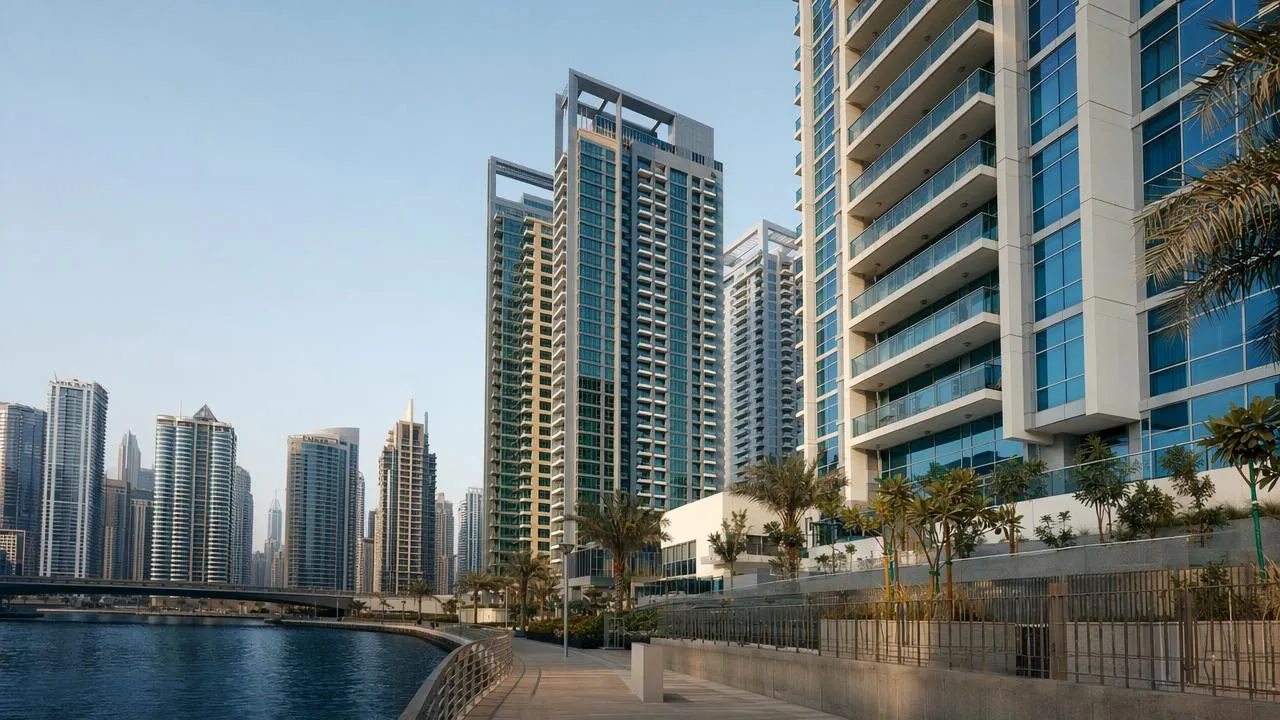
Dubai Property as an Inflation Hedge: Does the Theory Hold Up
Dubai property as an inflation hedge: the theory, the catch with interest rates, why Dubai's cycles make it bumpy, and
Real estate is usually considered an excellent hedge against inflation, and Dubai property is sold using the same marketing slogan. The logic sounds clear enough: as prices grow due to inflation, real assets like real estate do too; then the rents increase and if any borrowing has been used, the burden of debt decreases with time due to the same inflation. The idea is that the purchase of real estate is a hedge against devaluation of money.
However, the very question to ask is whether the theory holds true and is relevant to the case of Dubai. The honest answer, once the theory is analyzed properly, is partially true and quite conditional, with many caveats involved. Real estate can serve as a hedge against inflation, but only partially, conditionally, and in the long term, not as an automatic hedge as suggested by the theory. One of the main caveats of such a hedge is that the inflation increases the interest rates, which have negative effect on the real estate values.
As for the real estate of Dubai, other aspects should be considered. Namely, it has cycles and sometimes undergoes serious falls, including even real falls within the cycle. In addition, the fact that the national currency of UAE (dirham) is pegged to the US dollar means that the interest rates of the Federal Reserve Bank affect the interest rates in the country. Thus, the inflation hedge of Dubai real estate is real in some cases and fragile in others. Nevertheless, there is one specific view of the case which is reasonable enough and deserves consideration.
Our point of view is quite clear. We are selling the property, and the slogan "buy property and get rid of the inflation" is quite convenient for us. That is why we would like to check if it holds true and is relevant to the situation.
This guide raises the problem and analyses it. It speaks about the theory, the less mentioned caveat, what makes the situation in Dubai different from the general one and when the theory becomes relevant.
The Dubai Property Inflation Hedge Theory
Let us give the theory its due, because it is a sensible one. Real assets rise. When money loses value, things that are real, like property, tend to hold their worth better than cash sitting in a bank. The bricks, the land, and the cost of building a replacement all rise with inflation, so the nominal value of a property tends to climb rather than melt away. A home worth, say, AED 1.5 million today should, in theory, be worth more in nominal terms after a decade of steady inflation.
There are two more legs to the theory. Rents can rise with inflation, so the income a property throws off keeps pace rather than falling behind, protecting the real return. And if you bought with a mortgage, inflation quietly erodes the real value of that debt, because you repay a fixed loan in future money that is worth less, so the borrower gains at the lender's expense. Put the three together, a real asset that holds value, income that rises, and debt that shrinks in real terms, and property looks like a natural shield against inflation. Analysis of property as an asset class from firms like Knight Frank often frames it this way.
Here is the theory:
- Real assets hold value. Property beats cash when prices rise.
- Replacement cost rises. Building anew costs more with inflation.
- Rents can climb. Income keeps pace with rising prices.
- Debt erodes. A fixed loan is repaid in cheaper money.
- The borrower gains. Inflation shifts value from lender to owner.
- A natural shield. Value, income, and debt all point the right way.
The honest summary is that the inflation-hedge theory is genuinely sensible and rests on real mechanisms, which is why it is repeated so often. Property is a real asset, rents do tend to rise, and debt does erode in real terms. If that were the whole story, the pitch would be right. But it is not the whole story, because there is a catch that the confident version always leaves out, and it is a big one.
The Catch Nobody Mentions
Here is what the confident pitch leaves out. Inflation brings rates. When inflation runs hot, central banks usually fight it by raising interest rates, and rising rates are bad for property. They make mortgages more expensive, cut how much buyers can afford, cool demand, and put downward pressure on prices. So the very thing the theory says should lift property, inflation, tends to trigger the very thing that drags it down, higher rates. The two forces work against each other, and in the short to medium term the rate effect can easily win.
The debt part of the theory is shakier than it sounds too. Inflation only erodes your debt in your favour if you have a fixed-rate loan and the inflation was not already priced in. Most UAE mortgages are variable or reset periodically, so when rates rise, your payments rise with them, which is the opposite of the benefit the theory promises. Our mortgage service can explain how a specific loan behaves when rates move.
And because inflation and interest rates are so tightly linked, the picture depends heavily on central-bank policy, which you can follow through the Central Bank rather than assuming property simply rides inflation upward.
Here is the catch:
- Inflation brings rate rises. The usual response to hot prices.
- Higher rates hurt property. Costlier loans, weaker demand.
- The forces fight. Inflation lifts, rates drag, in tension.
- Rates can win. Especially in the short to medium term.
- Debt erosion is conditional. Only with fixed-rate borrowing.
- Variable rates bite. Rising rates raise your payments.
The honest summary is that the inflation-hedge theory has a built-in enemy, the interest rates that inflation usually summons. Property can still come out ahead over long periods, but the smooth, automatic protection the pitch describes is a fiction, because rising rates can push prices and affordability down for years even while inflation is high. The hedge is real but partial and conditional, and anyone selling it as a guarantee is skipping the hardest part.
Why Dubai Is Different
Now layer Dubai on top, because it changes the picture again. Dubai property is cyclical and volatile. It has been through real booms and real corrections, and prices can fall, in nominal and real terms, for years within a down cycle regardless of what inflation is doing. That is the opposite of the steady, reliable hedge the theory imagines. A market that can drop meaningfully over a multi-year stretch is not a smooth shield against rising prices, it is a real asset with its own loud cycle laid over the top of any inflation effect.
Two Dubai features sharpen this. The city builds a lot of new supply, and waves of new units can cap or reverse price growth even when inflation would otherwise push values up, so the supply cycle often matters more than inflation in any given year. And because the dirham is pegged to the dollar, UAE interest rates track the US Federal Reserve, which means the rate tension we described is imported from American inflation, not local conditions. Rents can rise strongly, which helps the income side, though renewal caps limit how fast they climb for sitting tenants, and our property management service sees how uneven that rent growth can be. So Dubai is a bumpy, cyclical version of the hedge, not a calm one.
Here is why Dubai differs:
- A cyclical market. Real booms and real corrections.
- It can fall for years. In real terms, within a down cycle.
- Not a smooth shield. Its own cycle sits over inflation.
- Heavy new supply. Can cap price growth in any given year.
- Rates track the Fed. The tension is imported from the US.
- Rents help, unevenly. Strong at times, capped on renewal.
The honest summary is that Dubai's cyclicality and volatility make it a far bumpier inflation hedge than the theory assumes, capable of protecting real value over a long hold but also of falling hard in between. Its supply cycles and its dollar-linked rates add their own swings that have little to do with inflation. Treated as a smooth, guaranteed shield, Dubai property will disappoint. Treated as a cyclical real asset that may hold real value over long horizons, it is far more honestly understood, and that reframing is where the genuine version of the case finally appears.
Where the Theory Actually Holds
So is there a version of this that genuinely works? Yes, and it is more specific than the generic pitch. The strongest case is not property beats inflation in the abstract, it is holding a hard-currency asset abroad. If you live in a country with high inflation or a weakening currency, buying a dollar-linked Dubai property moves some of your wealth into a stable, hard-currency real asset, outside a system that is eroding your money at home. That is a real, meaningful hedge against your own currency's debasement, arguably stronger than the general theory, and it is a genuine reason many buyers from soft-currency economies choose Dubai. Our relocation service works with plenty of people making exactly that move.
The second place it holds is over long horizons. Across a long enough hold, spanning full cycles, Dubai property has a real chance of preserving purchasing power, because the real-asset and rising-rent mechanisms do operate, even if the ride is bumpy. What it is not is a short-term shield, a low-risk one, or a substitute for a proper inflation strategy across several asset types. For grounded context on how property has actually behaved against inflation, coverage from firms like Savills is more useful than a sales slogan.
Here is where it holds:
- Hard-currency asset abroad. The strongest version of the case.
- Soft-currency home. Hedges against your own currency falling.
- Long horizons. Full cycles give the mechanisms time to work.
- Real-asset logic operates. Just not smoothly or on demand.
- Not a short-term shield. And not low-risk.
- Not the whole strategy. One piece, not the answer.
The honest summary is that the theory holds up best in two specific ways, as a hard-currency store of value for buyers from high-inflation countries, and as a long-horizon real asset that may preserve purchasing power across full cycles. It does not hold up as a smooth, short-term, guaranteed shield, and it should never be the only thing standing between you and inflation. Understood narrowly and honestly, the Dubai property inflation hedge is real. Understood as the confident pitch describes it, it is oversold.
The Honest Scorecard
So does Dubai property actually hedge inflation? We scored the question straight, each on one line:
- The theory: property, rents, and inflation-eroded debt should keep pace with rising prices.
- The catch: high inflation usually brings higher rates, which push property the other way.
- In general: a partial, long-run hedge, not an automatic or guaranteed one.
- Dubai's twist: a cyclical, volatile market that can fall in real terms for years.
- The peg effect: UAE rates track the US Fed, so the rate tension is imported.
- The real Dubai angle: a hard-currency asset abroad, hedging home-currency inflation.
- The honest verdict: an imperfect, long-horizon hedge, strongest for soft-currency buyers.
The pattern is that the theory is half right and often oversold. Property does have real inflation-hedging mechanisms, but they are partial, they fight against the rate rises inflation triggers, and in a cyclical market like Dubai they are buried under swings that have nothing to do with inflation. The strongest, most honest version of the case is narrow, a hard-currency asset for people whose home currency is losing value.
Read the list and the takeaway is that Dubai property is a real but imperfect inflation hedge, best over long horizons and best for buyers escaping a soft home currency, and a poor one if you expect a smooth, guaranteed, short-term shield. The single most important line is the one about the rate tension, because it is the mechanism that most often turns the confident theory into a disappointment.
The honest summary of the scorecard is that the inflation-hedge theory holds up partially and conditionally for Dubai property, strongly as a hard-currency store of value, weakly as a smooth guaranteed shield. Buy for a long horizon, understand the cyclicality and the rate tension, treat it as one part of a wider inflation plan rather than the whole of it, and take proper advice. Do that, and you can use the real part of the theory without falling for the oversold part.
What We Would Actually Do
Briefly, a qualified theory is true in the sense that Dubai real estate has properties which make it a good inflation hedge as a real asset since it provides rents and debt that can depreciate in real terms. However, there are limits as the partial mechanisms of inflation hedge face high interest rates that accompany the inflation period and that they may struggle with during the volatility of the Dubai real estate market. There is too much confidence in the pitch. The honest version is more restricted and more useful.
In the event that a friend wants to buy Dubai property in order to have protection from inflation, we will ask him/her to answer the following questions. The first question is related to the friend's home currency since if it is weak or inflationable, having hard-currency Dubai property is a very reasonable thing to do because it hedges the depreciation of home currency and thus becomes the strongest reason to invest. The second question is related to the horizon of the investment since in case the investor can wait for the completion of a whole market cycle, the real asset mechanism will work.
We will inform our friend about our own motivation for the discussion since it is an example of a typical sales talk in the real estate business. Property beats inflation, buy now is an easy slogan to say and to believe in. That is exactly why it needs to be questioned carefully. We want to see our friend investing for a good honest reason and not for a slogan that is partially true.
The main misconception we see frequently is the buyers who think that Dubai property is always a good inflation hedge and get disappointed to see that the price drops despite the inflation due to the rate cycle and/or excess of supply. Be prepared for a bumpy ride. Invest in the long run, learn the balance between rates and cycles, use property as a part of the anti-inflation portfolio but not the whole one and realize that it is good to hedge a soft currency at all.
If you want help thinking through whether Dubai property fits your own inflation and currency picture, that is exactly the kind of thing we talk buyers through. Our property buying service starts from your situation, not a slogan.
And if you want a straight, no-hype conversation about property, inflation, and where it fits in a wider plan, we are glad to help. Get in touch and we will take it from there.
Related stories

Buying Resale in Dubai vs Abu Dhabi: The Hidden Differences
Buying resale in Dubai vs Abu Dhabi: the hidden differences in fees, land authorities, ownership zones, and process, an
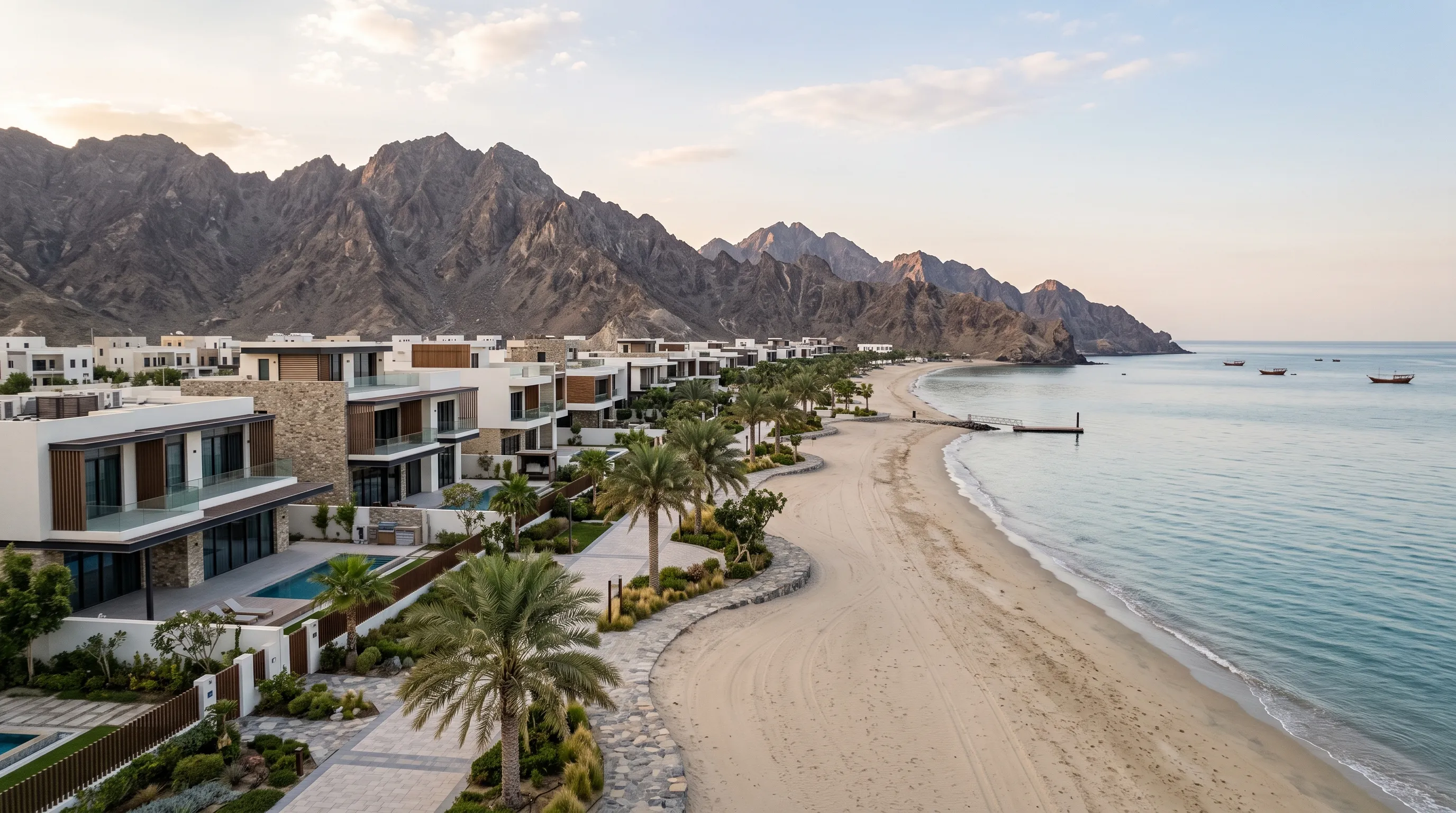
Fujairah Property: The Quiet Emirate Nobody Talks About
Fujairah property, honestly: the UAE's quiet east-coast emirate, its lifestyle appeal, the thin market and limited owne

How Interest Rate Cuts Affect Dubai Property: What Buyers Should Know
How interest rate cuts affect Dubai property: why UAE rates track the US, how cheaper mortgages move demand and prices,
Echoes, in your inbox
One thoughtful email a month. Market insight, new launches, no spam.