

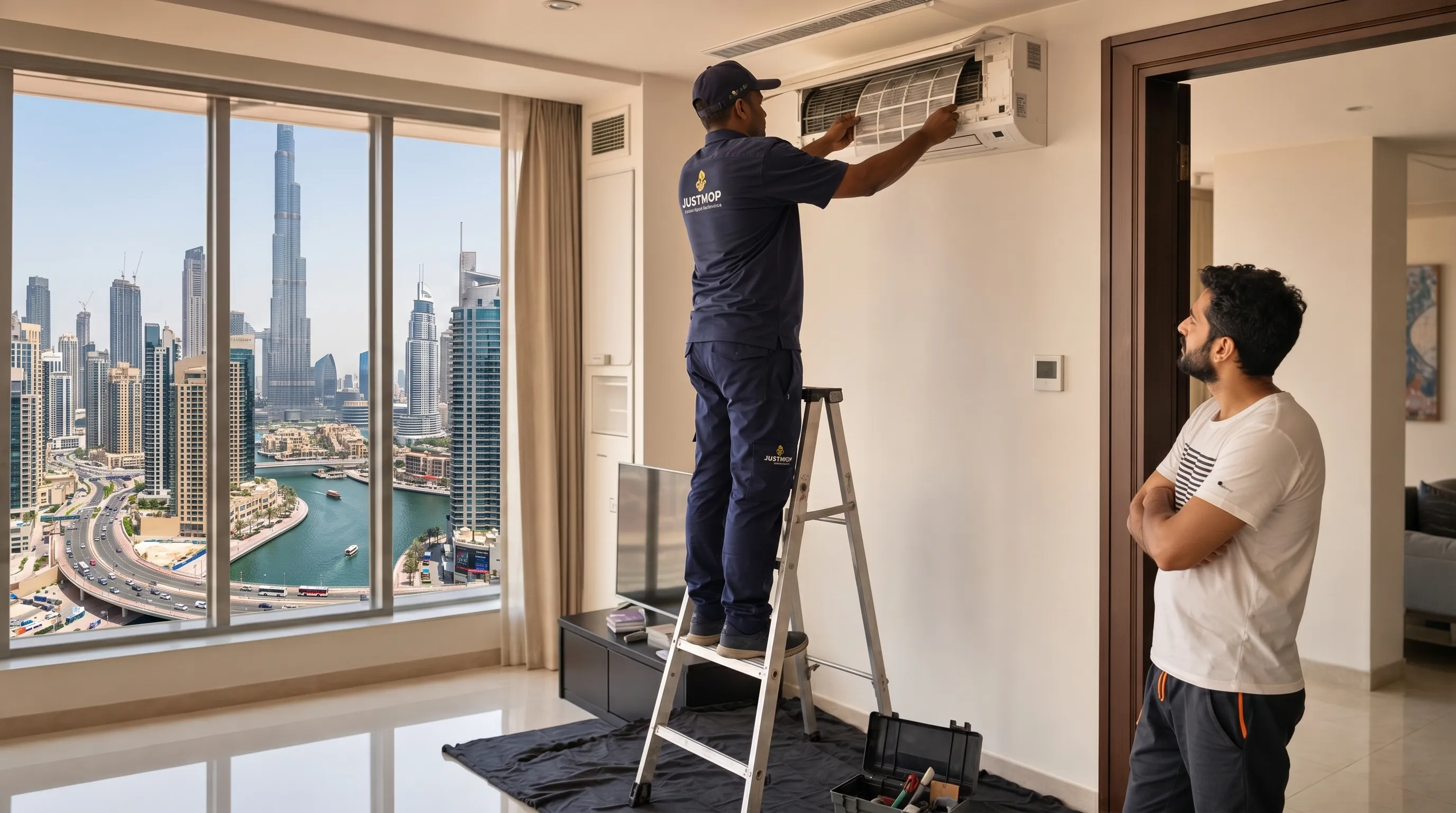
Property Maintenance Costs in Dubai: What to Budget Annually
Owning a Dubai property costs more than the price tag. Here's the annual maintenance costs to budget for, from service
Whereas the price is what attracts all the attention, the recurring expenses incurred every year are normally underestimated until the first bill for service charge comes in. In Dubai, the annual cost of owning a property will more often than not surpass the expectations of many enthusiastic buyers.
As such, the annual cost of maintaining your property in Dubai is made up of several components including service charges, utilities, air-conditioning or cooling, repairing work, housing fees, insurance, and other costs in case the property is let. Whereas some of the mentioned costs can easily be predicted and accounted for, others may come as a surprise.
In this article, we are listing the most common expenses which are often neglected. Those include service charges (which happen to be the highest single expense), DEWA charges, cooling, and housing fees. We also touch upon repairs which vary greatly depending on whether it is an apartment or a villa, and calculate the annual cost of all these together in one simple calculation.
First off, we should start with a disclaimer about the figures mentioned below. As we've already stated above, there's no single price when it comes to service charges, utilities, cooling, and other costs associated with the property in Dubai. All the mentioned figures are just rough estimates which should give you an idea about how much you need to pay annually. To get the correct figure, contact the property management directly.
The Costs People Forget to Budget For
Let's start with the full picture, because the trap is thinking of owning as a one-off purchase rather than an ongoing cost. Owning a home in Dubai comes with a yearly bill that keeps coming whether you live in it, let it, or leave it empty. Knowing what makes up that bill is the first step to budgeting for it.
The single biggest line for most owners is the service charge, the annual fee for maintaining the building or community. After that come utilities and cooling, then the cost of keeping the inside of your own home working, then insurance, and, if you rent it out, the costs of managing and maintaining it for a tenant. None of these is huge on its own. Together, they are a real annual figure you have to plan for.
Here is the full list of what to budget for:
- Service charges. The yearly fee for the upkeep of shared areas, amenities, and the building, usually your biggest cost.
- DEWA utilities. Electricity and water, billed by Dubai's utility provider, which rise and fall with how much you use.
- Cooling. District cooling or air-conditioning costs, which in Dubai's climate are a serious year-round expense.
- The housing fee. A municipality fee tied to your property's rental value, collected through your utility bill.
- In-unit maintenance. Keeping your own AC, plumbing, and appliances working, which is on you, not the building.
- Insurance and, if let, management. Cover for the home, plus a management fee and tenant costs if you rent it out.
So the headline is that the real cost of owning is the purchase plus all of this, every year, for as long as you hold the property. A lot of first-time owners budget carefully for the deposit and the fees, then get surprised by the running costs once they are in. The fix is simple, plan for them up front.
The amounts depend heavily on what and where you own. A small apartment in an affordable community is cheap to run. A big villa with a pool and a garden in a premium area is not. The rest of this guide breaks down each cost so you can build a realistic annual budget for your own situation, rather than guessing.
Service Charges, the Big One
For most owners, the service charge is the largest annual running cost, so it deserves the most attention. Service charges are the yearly fee that pays for maintaining everything you share, the lobby, the lifts, the pool, the gym, the security, the gardens, and the building's upkeep. You pay them whether or not you use the gym or ever set foot in the lobby.
They are charged per square foot of your property, per year, and the rate varies enormously by community and building. As a rough guide, an affordable community might charge in the region of AED 8 to 15 per square foot, a mid-range apartment community more like AED 15 to 25, and a premium, high-amenity or branded building AED 25 to 40 or more. So a 1,000 square foot apartment could cost anywhere from around AED 10,000 to over AED 35,000 a year in service charges alone, depending entirely on where it is.
Here is what to know about service charges:
- They are charged per square foot. Bigger homes and higher rates both push the bill up, so size and community both matter.
- They vary hugely by community. Amenity-rich and luxury buildings cost far more to run than simple ones.
- They are regulated. Service charges in Dubai are overseen by the authorities and paid into managed accounts, not pocketed by the developer.
- They can change year to year. Budgets are reviewed, so the figure can rise, especially as a building ages.
- High amenities mean high charges. Pools, gyms, concierge, and gardens all cost money to maintain.
- Check before you buy. The service charge is a known number for any given building, so ask for it before you commit.
Because they are regulated, you can check the official picture. Service charges in Dubai are administered under the Dubai Land Department, which publishes a service charge index, so the rate for a given community is not a mystery. You can look into this via the Dubai Land Department before buying anywhere.
The practical lesson is to treat the service charge as part of the price of a property, not an afterthought. Two similar apartments at the same purchase price can have very different running costs if one is in a high-charge tower and the other is not. Since charges vary so much by location, it pays to compare communities, and our areas overview is a useful way to get a feel for the kinds of communities and what living in each is like.
DEWA, Cooling, and the Housing Fee
After service charges, the next chunk of your annual budget is utilities, cooling, and a fee a lot of owners do not see coming. Let's take them in turn.
DEWA is Dubai's electricity and water provider, and your monthly DEWA bill covers exactly that. How much you pay depends on the size of the home and how you use it, but it is a steady, year-round cost, and in Dubai's heat the electricity side is not small. You set up an account, pay a deposit, and the bills come monthly. You can manage all of this through the Dubai Electricity and Water Authority.
Cooling is the one that surprises people. Many Dubai apartments use district cooling rather than their own air-conditioning, supplied by a separate company and billed separately from DEWA. It typically has a usage charge plus a fixed capacity or demand charge, which means you pay something even when the place is empty. In a hot climate where the AC runs much of the year, cooling can be a meaningful annual cost on its own, so never forget to ask how a property is cooled and what it costs.
Here is how these costs break down:
- DEWA electricity. The big utility cost, driven by the size of the home and how hard the AC works.
- DEWA water. A smaller but steady part of the monthly bill.
- District cooling. A separate bill in many communities, with both usage and fixed charges, sometimes a large line.
- The housing fee. A municipality fee, typically around 5% of your property's rental value, collected through the DEWA bill.
- Connection deposits. Setting up utilities involves refundable deposits, a one-off cost to plan for at the start.
- Seasonal swings. Summer bills run higher than winter ones, so budget on the yearly total, not a low-month figure.
The housing fee deserves a word, because it catches owners out. It is a municipality charge calculated as a percentage of the property's rental value, usually in the region of 5%, and it is collected in instalments through your utility bill rather than as a separate demand. It applies whether you own or rent, so it is a genuine part of your annual running cost, not an optional extra.
The honest takeaway is that utilities and cooling together can rival or exceed a modest service charge, especially for a larger home or one with separate district cooling. Add the housing fee on top, and this whole category is a serious slice of the annual budget that buyers routinely underestimate.
Maintenance, Repairs, and Villas
So far we have covered the costs that come whether you lift a finger or not. Now the ones tied to keeping your actual home working, which is where apartments and villas part ways sharply.
In an apartment, the building's service charge covers the shared parts, but the inside of your unit is your responsibility. That means servicing your own air-conditioning, fixing your own plumbing, replacing your own appliances, and general wear and tear. For a well-built apartment this is usually modest, a service here, a repair there, perhaps an annual maintenance contract for the AC and handyman jobs. It adds up to a sensible but not scary yearly figure.
A villa is a different animal. You own more, so you maintain more, the AC units, the water systems, the exterior, and often a garden and a pool. A pool needs regular servicing and chemicals. A garden needs landscaping and water. Larger AC systems cost more to run and maintain. None of it is dramatic, but together it makes a villa noticeably more expensive to keep up than an apartment of similar value.
Here is what to budget for upkeep:
- AC servicing. Regular maintenance of your cooling system, which in this climate is not optional.
- Plumbing and electrics. The occasional repair, plus the odd bigger job as systems age.
- Appliances. Repairs and eventual replacement of white goods and fittings inside the home.
- Garden and pool, for villas. Ongoing landscaping, pool servicing, and the water and power they use.
- An annual maintenance contract. Many owners take one to cover routine jobs at a fixed yearly cost.
- A repairs buffer. Set aside a sum each year for the unexpected, because something always comes up.
A sensible habit is to set aside a yearly maintenance buffer rather than being surprised by each bill. For an apartment that buffer is modest. For a villa, plan for more, since the pool, the garden, and the systems all want feeding. And when something bigger comes along, a refurbishment, a kitchen, a proper upgrade, that is a separate project to budget for on top. If you are planning work like that, our fit-out service can handle the bigger jobs properly.
The honest point is that a home costs money to keep working, and a villa costs more than an apartment. Buyers drawn to a big villa for the space sometimes forget that the space itself, the garden, the pool, the systems, all carry an annual cost. Factor it in before you fall for the square footage.
Putting It Together: A Worked Annual Budget
Numbers in isolation are hard to picture, so let's build a rough annual budget and compare the two main property types. These are illustrative figures to show the shape, not quotes, and your real numbers depend on your specific home.
Take a mid-range one-bedroom apartment of around 800 square feet in a decent community. Service charges at, say, AED 18 per square foot come to roughly AED 14,000 a year. Add DEWA and cooling of perhaps AED 8,000 to AED 12,000 depending on use, the housing fee, modest in-unit maintenance of a couple of thousand, and basic insurance. All in, you might budget somewhere in the region of AED 25,000 to AED 35,000 a year to run it. A larger or more premium apartment climbs from there.
Now take a four-bedroom villa. The community service charge per square foot may be lower, but the home is far bigger, the cooling and electricity are higher, and you are paying for a garden and a pool on top. It is easy for a villa's all-in annual running cost to reach well into the tens of thousands of dirhams, comfortably more than a comparable apartment. We compared the two property types, each cost on one line:
- Service charges: an apartment pays a higher rate per square foot for amenities, a villa a lower rate but on a far larger area.
- Cooling and power: an apartment's is contained, a villa's is higher thanks to size, a garden, and often a pool.
- In-unit maintenance: an apartment's is modest, a villa's is bigger because you own and maintain far more.
- Garden and pool: an apartment has none, a villa carries real ongoing servicing and water costs for both.
- Overall: an apartment is cheaper and simpler to run, a villa costs more in nearly every category.
If you let the property out, add the cost of managing it, typically a percentage of the rent, plus the odd void period and tenant-turnover costs. Our property management team can handle all of that, and a good manager often pays for itself by keeping the place tenanted and maintained.
The housing fee and other government charges are calculated and collected through official channels, and the broad rules on these are set out on the UAE government portal. The point of the worked budget is simply this, decide the real annual cost of a property before you buy, and you will never be ambushed by it after.
What We Would Actually Do
In conclusion, the expenses required to own a Dubai property are greater than the asking price. The main expense is the service charges followed by utilities and cooling, housing fees, maintenance to keep the property functional, and rental charges if the property is being let out. It does not mean that one should not buy the property, but simply be aware of these.
If a friend asked about budgeting advice, the following is what we would tell him/her. Determine the exact cost of the service charges because these can change and one knows exactly what he/she will be paying in advance. Find out what method of cooling will be used and the cost involved as it can sometimes be quite costly. Have an annual reserve fund for maintenance as it will save you from unpleasant surprises in case the building needs some repairs.
Running costs would be something else to consider besides the prices. A less expensive apartment in a building with very high service charges may have more running costs than another expensive but well-maintained one. A large house that looks attractive may require annual services for the garden, pool, and other spaces. The wise thing would be to consider the actual running cost as opposed to its price tag.
These are not scary things if one approaches them with the right perspective. These are just numbers that people must compute and those that own the building with a better experience are usually those who do it in advance. Know the annual expenses, factor them into your budget, and the experience will be fun.
If you are buying and want help working out the true annual cost of a place before you commit, our property buying service can run through the real running costs of any property with you, not just the price.
And if you want a straight conversation about budgeting for a home you own or are about to buy, we are glad to help you get to a realistic number. Get in touch and we will take it from there.
Related stories

Buying Resale in Dubai vs Abu Dhabi: The Hidden Differences
Buying resale in Dubai vs Abu Dhabi: the hidden differences in fees, land authorities, ownership zones, and process, an
Fujairah Property: The Quiet Emirate Nobody Talks About
Fujairah property, honestly: the UAE's quiet east-coast emirate, its lifestyle appeal, the thin market and limited owne

How Interest Rate Cuts Affect Dubai Property: What Buyers Should Know
How interest rate cuts affect Dubai property: why UAE rates track the US, how cheaper mortgages move demand and prices,
Echoes, in your inbox
One thoughtful email a month. Market insight, new launches, no spam.