

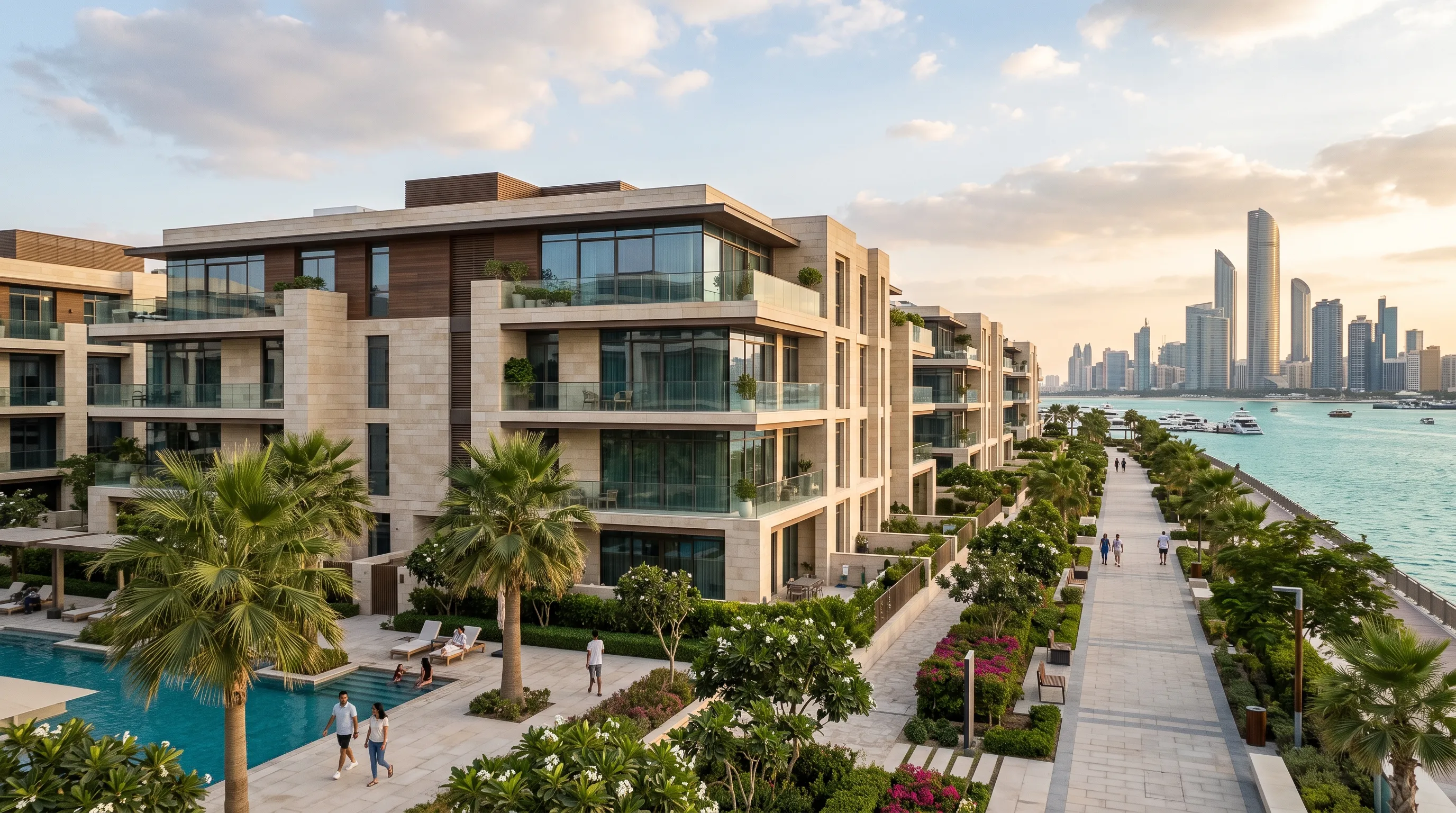
Dubai vs Abu Dhabi Construction Quality: Why Some Buyers Are Switching
Dubai vs Abu Dhabi construction quality: why some buyers prefer Abu Dhabi, why it is really a developer question, and h
Frequently and confidently expressed views hold that Abu Dhabi constructs better than Dubai. Therefore, some buyers move to the capital in search of better construction. And indeed there is sense in these views. More consistent development backed by government in Abu Dhabi is perceived as more steady and consistent, and this, along with low transfer fees and master-planned islands, attracts certain category of buyers.
But let us consider two things that need to be taken into account before moving between emirates. First of all, it cannot be stated that there was change in preferences as there are no statistics of buyer's movement. Treat this statement as personal view of some individuals and not proved trend. Secondly, much more importantly, honest comparison of construction quality in Dubai and Abu Dhabi shows that quality depends on developer and on building, and not on emirate. Difference between good and bad developer in either emirate will be greater than average difference between the two.
It is enlightening conclusion. Dubai has some of the best developers in the world, as well as cheap and speculative market with different levels of quality. Abu Dhabi has smaller market known for its consistency. Therefore, main point is not to move to Abu Dhabi because of quality, but to buy from known developer and investigate building you are buying, wherever it may be.
We are honest about our positions. We work in both emirates, and narrative of switching to Abu Dhabi because of quality benefits us. Therefore, we strive for honesty because emirate on the sign matters less than developer's reputation.
This guide is comprehensive on this topic: why buyers compare the two, why Abu Dhabi feels more solid, what is the real construction quality, how to buy solid property in either emirate, and objective evaluation of these two.
Small note: this concerns buying decisions, therefore it is general information and not financial advice; numbers are used for illustration purposes and no predictions are made. Standards of developers and quality of projects change over time, therefore buyer should check developer and building he/she is buying before purchase.
Why Buyers Compare Dubai vs Abu Dhabi
So why is this even a conversation? A few reasons. Abu Dhabi has built a reputation for solid, consistent construction, the sense that a home there is built to last rather than built to sell fast. For a buyer who wants a long-term family home rather than a quick flip, that reputation matters. Add the lower transfer fees, roughly 2% versus Dubai's 4%, so on an AED 2 million home around AED 40,000 less to buy, and the big masterplanned island communities like Saadiyat, Yas, and Reem, and the capital starts to look appealing to a certain kind of buyer.
The buyers most drawn to this are usually end-users, not speculators. Families wanting a solid home they will actually live in. People who have been through a snagging nightmare in a rushed Dubai project, or heard the stories, and want the quieter, more measured feel of Abu Dhabi. Our Abu Dhabi area guide covers what the capital offers beyond the construction question. That is the real pull, a reputation for consistency that speaks to people buying a home rather than a trade.
Here is why buyers compare them:
- The consistency reputation. Abu Dhabi seen as more measured.
- Lower fees. Roughly 2% versus Dubai's 4% to buy.
- Island communities. Saadiyat, Yas, and Reem draw families.
- A calmer pace. Less rush, more considered development.
- End-user appeal. Buyers of homes, not quick flips.
- Snagging wariness. Some burned by rushed projects elsewhere.
One honest note on the switching claim. We can explain why some buyers prefer Abu Dhabi, but we cannot confirm a measurable wave of people leaving Dubai, because the reliable data is not there and Dubai remains extremely active. General context on the emirates sits within the UAE government portal. So read this as a genuine preference held by some buyers, not a proven stampede, which matters because the reasons behind the preference are more useful than the headline.
Why Abu Dhabi Feels More Solid
Here is the honest reason behind the perception. Market structure. Abu Dhabi's property market is smaller and more concentrated, built largely around a few big, well-funded, government-linked developers, with Aldar as the dominant name. When a market is anchored by a handful of large, deep-pocketed builders held to consistent standards, the average quality tends to be steadier, with fewer wild swings. Our Aldar developer page covers the capital's biggest builder.
The pace matters too. Abu Dhabi developed more slowly and more deliberately than Dubai, without the same frenzied, high-volume, speculative off-plan boom. Slower building, by fewer and larger developers, with less pressure to throw up towers as fast as possible, produces a more consistent result on average. It is not that Abu Dhabi has discovered some secret. It is that a smaller, more concentrated, less frantic market naturally produces less variation, and less variation reads as more solid. That is a real structural difference, and it is the honest core of the reputation.
Here is why it feels more solid:
- A concentrated market. Fewer, larger developers overall.
- Government-anchored. Big, well-funded, accountable builders.
- A slower pace. Less rush to build at speed.
- Less speculation. A smaller off-plan boom than Dubai's.
- Consistent standards. Fewer builders, steadier average quality.
- Less variation. Which simply reads as more solid.
The honest summary is that Abu Dhabi feels more solid because its market structure produces less variation, not because Dubai is incapable of building well. A concentrated, government-anchored, slower market naturally delivers a steadier average. But average is the key word, because averages hide the range, and the range is where the real story is. That is what the next section is about, and it is the part that actually changes how you should buy.
Construction Quality Is a Developer Question
Here is the truth that the emirate-versus-emirate framing hides. Construction quality is driven by the developer, the building, the era it was built in, and the price segment, far more than by which emirate it sits in. The gap between a top-tier developer and a bottom-tier one, within either Dubai or Abu Dhabi, is much wider than any average difference between the two emirates. Buy from an excellent builder in Dubai and you get an excellent home. Buy from a weak one in Abu Dhabi and you do not.
Dubai proves the point in both directions. It has some of the best developers in the world, building to standards that rival anywhere, and our Emaar developer page covers one obvious example of Dubai's world-class end. It also has a large, cheaper, more speculative off-plan segment where quality is far more variable, and that segment is where most of Dubai's quality reputation comes from, not from its premium builders.
Dubai also runs a mature, transparent regulator, and transaction and handover data through the Dubai Land Department is among the most accessible in the region. So the honest picture is not a worse emirate, it is a wider range.
Here is the developer truth:
- Developer decides quality. Far more than the emirate.
- Within-emirate range is huge. Best to worst, in both.
- Dubai's top end. World-class, rivalling anywhere.
- Dubai's weak spot. The cheaper, speculative off-plan segment.
- Era and segment matter. When and at what price it was built.
- A range, not a verdict. Both emirates span great to poor.
The honest summary is that construction quality is a developer and building question, and treating it as an emirate question leads you to the wrong conclusions. You can buy a beautifully built home in Dubai and a disappointing one in Abu Dhabi, because the name on the building matters more than the emirate on the map. Abu Dhabi's more consistent average is real, but it does not mean every Abu Dhabi home beats every Dubai one. It means the range is narrower, which is a different and much smaller claim than the switching headline suggests.
How to Buy a Solid Home in Either Emirate
So how do you actually get a well-built home, wherever you buy? The single rule follows from everything above, buy the developer, not the emirate. Research the specific developer's track record, look at their completed, lived-in projects rather than the glossy renders, and talk to people who own their older buildings about how they have held up. A proven developer with a decade of solid, well-aged projects is worth far more than a reassuring emirate name.
The practical steps are the same in Dubai and Abu Dhabi. Favour ready, completed property so you can see and inspect the actual build rather than trusting a promise, and our ready property service is built around exactly that kind of see-it-first buying. Get a proper snagging inspection before you accept handover. Check the building's age, condition, and maintenance history. And judge the segment honestly, because a premium project from a top developer is a different animal from the cheapest tower in a rushed cluster, in either emirate.
For grounded context on developers and build standards across the market, coverage from firms like Knight Frank helps you compare rather than rely on reputation alone.
Here is how to buy a solid home:
- Buy the developer, not the emirate. Track record first.
- See completed projects. How their older buildings aged.
- Favour ready property. Inspect the real build, not renders.
- Get a snagging survey. Before you accept handover.
- Check the segment. Premium and budget are worlds apart.
- Talk to owners. How the building has actually held up.
The honest summary is that buying a solid home is about developer due diligence, not emirate selection, and a careful buyer can find an excellent build in Dubai just as easily as in Abu Dhabi. Where the switch to Abu Dhabi genuinely pays off, it is usually because the buyer ended up with a proven, consistent developer, which you can also do in Dubai by choosing carefully. A quick way to sanity-check any developer is to go and look at something they finished five or ten years ago, because a building that has aged well through a decade of Gulf heat and heavy use tells you far more than a show apartment ever will. The lesson is not the emirate. It is the homework. Do the homework, and the quality follows, wherever you land.
The Honest Scorecard
So how does Dubai versus Abu Dhabi on construction quality really score? We rated it straight, each on one line:
- The real driver: quality comes from the developer and building, not the emirate.
- Within-emirate spread: bigger than any average gap between the two emirates.
- Dubai's strength: a huge choice, including some genuinely world-class developers.
- Dubai's weak spot: variable quality in the cheaper, speculative off-plan end.
- Abu Dhabi's reputation: more consistent, from a smaller, government-anchored market.
- The switching story: a real preference for some buyers, not a measurable wave.
- The honest lesson: check the developer's track record, wherever you buy.
The pattern is that Abu Dhabi earns its reputation for consistency through a smaller, more concentrated market, and Dubai offers a far wider range that includes both world-class builders and a variable cheaper segment. Neither emirate is simply better built. One has a narrower range, the other a wider one, and the buyer who picks a strong developer wins in both.
Read the list and the takeaway is that the switching headline is half true and half misleading. It is true that some buyers prefer Abu Dhabi's consistency, and fair enough. It is misleading to conclude that Dubai builds badly, because its best is world-class and its reputation issue lives in one segment. The single most important line is the first, that quality is a developer question, because it is the one that actually protects you when you buy.
The honest summary of the scorecard is that Dubai and Abu Dhabi both span excellent to poor construction, Abu Dhabi with a narrower range and Dubai with a wider one, and the emirate you choose matters far less than the developer you choose. Judge the builder's track record, inspect the actual home, buy ready where you can, and the construction-quality question mostly answers itself. Switch emirates if you like the capital for other reasons too, but do not switch expecting the address alone to guarantee a better build.
What We Would Actually Do
In conclusion, it is possible to say that the question of construction quality is a fallacy in Dubai vs Abu Dhabi. Abu Dhabi has a good reputation because of consistency and smallness of the market. However, the quality is a concern of the developer and an individual house and not an emirate in general. Moreover, the variation in quality in each of the emirates is bigger than between emirates. The performance of the Dubai in terms of quality in peak moments is world-class; the problem of reputation is typical for the cheaper sector of the market.
We would not recommend our friend not to move to Abu Dhabi in case they consider construction quality as an advantage of the city. But we would correct their reason for moving. We would suggest that if people want quality houses, the choice should be based on the good developer and a good house, which can also be found in Dubai. The movement itself is fine but the reason for it needs correction.
Of course, in the given case, we have a vested interest. We are active in both emirates, so it would not help us to redirect people into one or another; we need to show them the truth: the reputation of the developer provides more security than the designation of the emirate. Good builder in Dubai performs better than poor builder in Abu Dhabi.
What we see as a problem among buyers is the substitution of emirate designation for the quality of construction. They believe that any housing in Abu Dhabi is good or that any cheap housing in Dubai is poor. These assumptions are wrong. The buyer should research the developer, check his/her past projects, buy the house that is ready to live in and complete the snagging process. In this way, it does not matter whether the address is Dubai or Abu Dhabi, and the reputation is worth nothing.
If you want help checking a specific developer's track record, or comparing two real homes across the emirates, that is exactly what we do. Our property buying service works across both markets.
And if you want a straight, no-spin conversation about build quality and who actually built what, we are glad to help. Get in touch and we will take it from there.
Related stories

Buying Resale in Dubai vs Abu Dhabi: The Hidden Differences
Buying resale in Dubai vs Abu Dhabi: the hidden differences in fees, land authorities, ownership zones, and process, an
Fujairah Property: The Quiet Emirate Nobody Talks About
Fujairah property, honestly: the UAE's quiet east-coast emirate, its lifestyle appeal, the thin market and limited owne

How Interest Rate Cuts Affect Dubai Property: What Buyers Should Know
How interest rate cuts affect Dubai property: why UAE rates track the US, how cheaper mortgages move demand and prices,
Echoes, in your inbox
One thoughtful email a month. Market insight, new launches, no spam.