

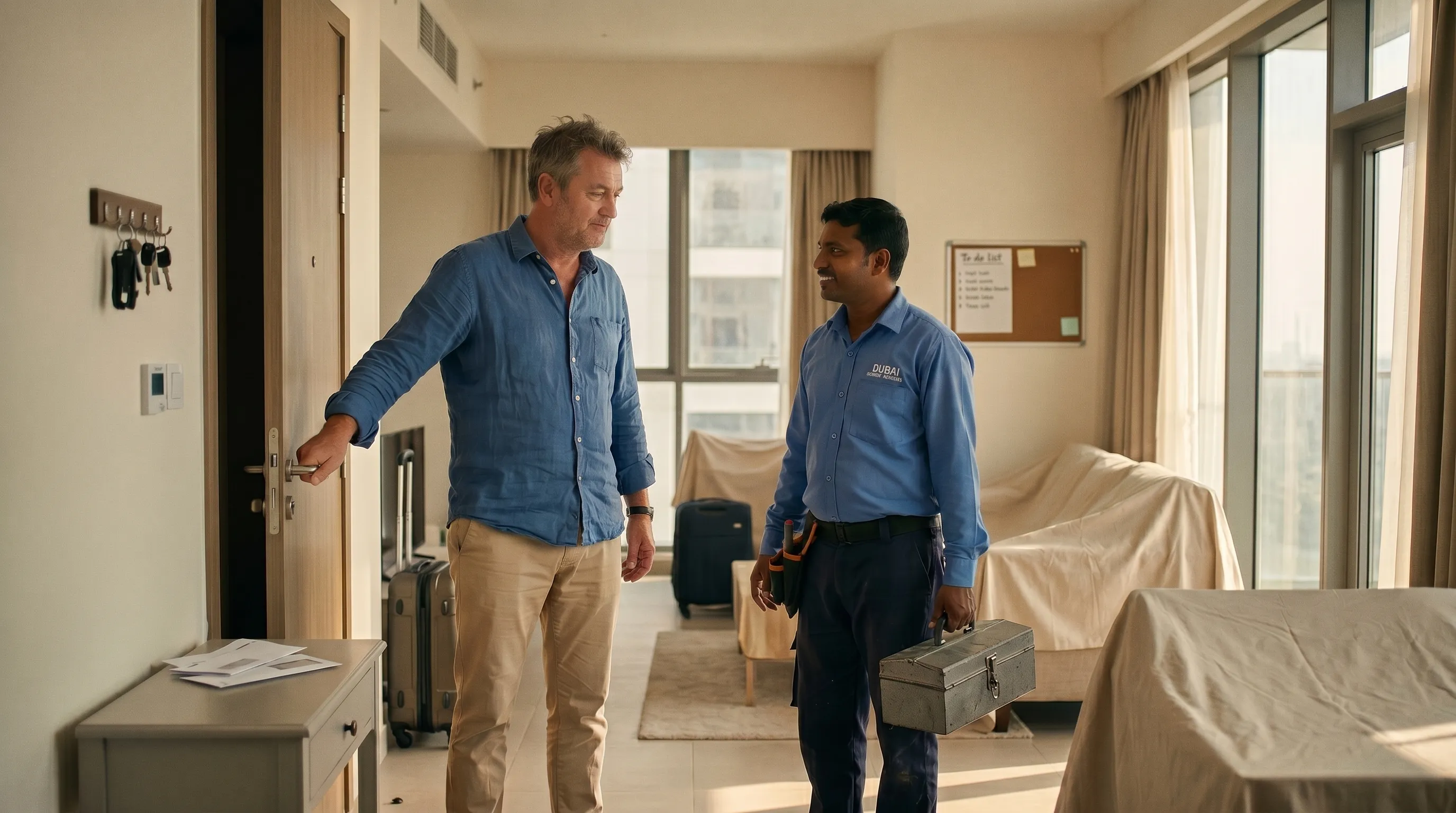
The Hidden Costs of Owning a Holiday Home in Dubai
The price is just the start. Here are the hidden costs of owning a holiday home in Dubai, from furnishing and managemen
To buy a holiday home in Dubai? A sunny flat, the bustling tourism industry, and a gross yield from renting which makes a long-term rent relatively low. What the proposal does not mention is everything there is to pay from that headline yield to your bottom line. Which turns out to be more than you may think initially. Owning a holiday house means expenses which exceed the expectations of many first-timers.
These expenses do not remain hidden because nobody tells about them. They are simply not often totaled up before buying the property. Sometimes, the expenditure is one-time such as fitting the holiday home to match the level required by visitors. Other times, it happens regularly like service payments or extra electricity charges during summer. One more group includes costs of renting the house – like licensing and management, cleanliness after each guest and the expense of days when no one stays in the flat. When summed up, the gap between gross yield and net income could be surprisingly wide.
In this guide, you will find a complete cost breakdown. From additional expenses to cover at the beginning of ownership. From expenses incurred regularly without even renting your property out. From the costs of holiday letting of the property. And from a straightforward account of the net income you make from the property.
A word of caution before proceeding. All figures provided below are only illustrative examples as the costs vary greatly depending on the building where your property stands and the period in question, hence, you must verify the accurate amounts yourself. The document gives some general guidance to budget honestly. Not an offer of financial advice. Not an attempt to scare you away but to provide all possible expenses which have to be calculated based on the bottom line, not the gross yield. Having said that, let us see what these expenses are.
The Costs Nobody Mentions
Every holiday home comes with a headline, the price, and usually a second one, the gross yield if you let it. Both numbers are real, and both are incomplete, because they sit at the top of a cost stack that the brochure never shows you. Owning the place is where the spending actually happens.
The costs fall into a few groups. There are the upfront ones beyond the price itself, the transaction fees and, the big surprise for many, furnishing the property. There are the recurring costs of simply holding it, the service charges, the utilities, the insurance, the upkeep, which roll on whether or not anyone is staying. And if you let it out, there is a whole extra layer, the licensing, the management, the cleaning, the platform fees, the empty nights. A personal-use holiday home skips that last layer but still carries the first two, and earns nothing to offset them.
Here are the cost groups to plan for:
- Transaction costs. The fees on top of the price when you buy, which add up to a meaningful percentage.
- Furnishing. The cost of fitting out a holiday home to the standard guests or you expect.
- Service charges. The annual per-square-foot charge for the building and its amenities.
- Utilities and cooling. Electricity, water, and district cooling, which spike in summer and bill even when empty.
- Insurance and upkeep. Cover for the property and the steady cost of maintenance and repairs.
- Letting costs. For a holiday let, the licensing, management, cleaning, and platform fees on top of everything.
The reason this matters is that the gross yield, the figure that sells the property, ignores almost all of it. The property ownership framework you are buying into is set out through the UAE government portal, but no framework totals up your running costs for you, that is your job, and most people do not do it thoroughly until after they own the place.
So the honest starting point is to treat a holiday home as something that costs real money to own, not just to buy. Whether it is a business or a lifestyle purchase, the running costs are the part that decides whether it was a good idea, and they are exactly the part the headline numbers leave out. The rest of this guide is simply that missing list.
The Upfront Costs Beyond the Price
Before the property earns a single dirham, it costs you well beyond the agreed price. Two things make up the upfront stack, the transaction fees and the furnishing, and the second catches more people out than the first.
The transaction costs are the ones covered whenever anyone buys here, the land department transfer fee of around four percent, the agent commission, the registration and trustee fees, and any mortgage costs if you finance. Together these commonly add something in the region of six to eight percent on top of the price, which is real money to find at completion. But the bigger surprise for a holiday home is furnishing. A holiday let, and any holiday home you would actually enjoy using, has to be furnished and equipped to a good standard, the furniture, the appliances, the kitchenware, the linens, the television, the everything. Furnishing a whole apartment properly can run to tens of thousands of dirhams, easily AED 50,000 or more for a decent two-bedroom, and for a short-let it is not optional, because guests judge a place on exactly this.
Here are the upfront costs beyond the price:
- The transfer fee. The land department charge of around four percent of the property value.
- Agent commission. Commonly around two percent of the price, plus tax, paid at the deal.
- Registration and trustee fees. The smaller charges to register the transfer and issue the title.
- Mortgage costs. If you finance, the arrangement, valuation, and registration fees on the loan.
- Furnishing and equipping. Fitting out the whole property, often tens of thousands of dirhams, easy to forget.
- Setup extras. Photography, listings, and any work to get a let ready to receive its first guest.
That furnishing figure deserves emphasis because it is so routinely left out of the sums. A holiday home is only as good as its fit-out, both for guest reviews and for your own enjoyment, and doing it cheaply usually shows and costs you in bookings. Our fit-out service handles exactly this kind of furnishing and finishing, which is worth pricing properly at the start rather than discovering as an afterthought once you own the place.
The honest takeaway on upfront costs is to add a clear margin to the purchase price in your budget, both for the transaction fees and for a proper fit-out. A buyer who budgets only the price is short from day one, and a holiday home that is under-furnished to save money tends to earn less or please you less, which defeats the point of buying it.
The Recurring Drain
Then there are the costs that never stop, the ones that bill you month after month and year after year whether the property is full, empty, lived in, or sitting idle. This is the recurring drain, and it is the part owners most often underestimate.
Service charges come first. Every building levies an annual charge per square foot for maintenance, security, and the shared facilities, and holiday-home-friendly buildings, the ones with pools, gyms, and concierge that guests love, tend to sit at the higher end. These charges are regulated and you can check the rate for a building through the Dubai Land Department rather than taking an agent's word, but they are a real, unavoidable annual cost. Then there are utilities, and here a holiday home has a particular sting, because for a let you typically pay the electricity and water yourself, included for guests, and Dubai summers mean air conditioning running hard and bills climbing accordingly.
Here is the recurring drain:
- Service charges. The annual per-square-foot building charge, often higher in amenity-rich towers.
- Electricity and water. Paid by you for guests, and spiking in summer as the cooling runs flat out.
- District cooling. Where a community uses it, a separate bill, often with a capacity charge even when empty.
- Insurance. Annual cover for the property and its contents, more important still for a let.
- Maintenance and repairs. Ongoing upkeep, air-conditioning servicing, and fixing the steady wear of use.
- Standing costs when empty. Service charges, cooling capacity, and insurance roll on with no one staying.
District cooling deserves its own warning, because it surprises people. In communities that use it, you are often charged a capacity fee whether or not you are cooling anything, so an empty holiday home can still run up a cooling bill. You can set up and understand your utility accounts through DEWA for power and water, with cooling handled separately by the relevant provider, and it is worth knowing the full picture before you buy rather than after your first summer bill lands.
The hardest truth in the recurring drain is that most of it continues when the property earns nothing. An empty week in the low season still costs you service charges, cooling capacity, insurance, and standing utility charges. For a let, that is lost income against continuing cost. For a personal-use home, it is pure cost with no income at all. Either way, the running of the place is a constant, and budgeting for it honestly is the difference between a holiday home that makes sense and one that quietly bleeds money.
The Holiday-Let Costs That Eat Your Yield
If you let the place out, a whole extra layer of cost sits between the gross revenue and what you actually keep, and this is where the headline yield really comes apart. These are the costs that turn an impressive gross figure into a far more modest net one.
Start with the licensing, because a short-term let must be properly licensed as a holiday home through the relevant tourism authority, the Department of Economy and Tourism, which carries permit and registration costs, plus the Tourism Dirham fee charged per bedroom per night. Then the running of the let, which is real work if you do it yourself and a real fee if you do not, because a management company typically takes a meaningful slice of revenue, often a fifth or more, in exchange for handling bookings, guests, cleaning, and the rest. On top of that sit the booking-platform commissions, the cleaning and laundry between every stay, the consumables guests expect, and the marketing to keep the calendar full.
Here are the holiday-let costs:
- Licensing. The holiday-home permit and registration through the tourism authority, renewed periodically.
- Tourism Dirham. A per-bedroom, per-night fee on guest stays, on top of the licensing.
- Management fee. An operator's cut, often a fifth or more of revenue, if you do not self-manage.
- Platform commissions. The booking sites take their percentage of every reservation.
- Cleaning and laundry. A per-stay cost that mounts quickly with frequent short bookings.
- Voids and seasonality. Empty nights, especially in the slow summer, earn nothing while costs continue.
The two that hurt most are usually the management fee and the voids. A management cut of a fifth or more of revenue is a large, permanent reduction, though it buys you a hands-off let, and our property management team is exactly that kind of service, worth its fee when it keeps occupancy high and the operation smooth, but a fee to budget for honestly all the same. And voids are the silent killer of yield, because the seductive gross figure usually assumes near-full occupancy that the real, seasonal market rarely delivers.
Because the licensing and the operational side are genuinely involved, it is worth understanding the whole short-let business before you buy into it, and our holiday homes and short-term rentals service covers how it actually works, from the permit to the day-to-day. The single most important habit is to model your return on realistic occupancy and after every one of these costs, because a gross yield that ignores them is not a return, it is a fantasy.
Personal Use, and the Honest Net Math
Not every holiday home is an investment. Plenty of people buy one to use themselves, a place to escape to a few times a year, and that is a perfectly good reason to buy. But it changes the cost picture in one important way, there is no rental income to offset any of the costs above, so a personal-use holiday home is a pure lifestyle expense, and an honest buyer prices it as one.
A personal holiday home carries the upfront costs and the entire recurring drain, the service charges, the cooling capacity, the standing utilities, the insurance, the maintenance, all rolling on through every month you are not there. Add the cost of actually travelling to use it, and the fact that capital is tied up in something earning nothing, and the real cost of ownership is considerable. None of that is a reason not to buy a place you will love and use, it is simply a reason to call it what it is, a lifestyle purchase, not an investment, unless you also let it when you are away.
We lined up the hidden costs against why each one bites, each on one line:
- Furnishing: a one-off but big upfront cost, often tens of thousands of dirhams, easy to forget.
- Management fee: a large recurring slice of revenue if you use an operator, often a fifth or more.
- Voids and seasonality: empty nights in the low season earn nothing while the costs roll on.
- Utilities and cooling: paid by you for guests, and charged even when the unit sits empty.
- Cleaning and turnover: a per-stay cost that adds up fast with frequent short bookings.
- Licensing and platform fees: the permit and the booking-site cuts each take their slice off the top.
The way to use this list is to build a real net model before you buy. Take the realistic gross income, not the optimistic one, then subtract every cost above, the management, the cleaning, the utilities, the licensing, the service charge, the insurance, a sinking fund for furnishing wear, and a sensible allowance for voids. What is left is your actual net return, and it is usually a good deal lower than the gross that first caught your eye. Picture a property whose gross yield looks like eight percent, and watch it settle to something far more modest once all of this is counted. That smaller number is the truth, and it is the one to make your decision on.
What We Would Actually Do
However, a holiday home in Dubai is not as affordable as it seems to be if one only takes into consideration its purchase price and gross yield. Apart from the purchase price, transaction fees, and fit-out cost should be taken into account, as well as monthly costs including service charges, electricity, cooling, insurance, and maintenance. If the property is going to be rented out, then licensing and other costs should be accounted for as well as licensing fees, management fees, cleaning costs, platform fees, and empty night losses. None of those make the property a bad investment option – the problem lies in the way investors calculate the return on it.
Should a holiday home in Dubai be considered, we recommend calculating net costs first and foremost. Take into account realistic rental costs, deduct all possible expenses, and see the remainder. Never underestimate furnishings expenses, and always take into account management cost, which may vary depending on whether the investor is going to manage the property on their own or not. Last but not least, don't count on 100% occupancy rates – especially off-season ones.
Apart from advising on how the investor should approach financial matters related to the holiday home, we advise the potential investor to analyze themselves first. If this particular holiday home will be an investment, treat it as a business – take into account all net expenses and realistic occupancy, allowing some room for maintenance. If it is going to be used for leisure purposes, then it is great – but still, it should be priced properly because no one guarantees you that the owner will be using it all year round.
One of the biggest mistakes investors make is falling prey to the gross yields and forgetting about the cost stack. As a result, people feel disappointed when the net income turns out to be lower than expected. Of course, there is nothing wrong with the property itself – the reason lies elsewhere. Calculations have to be done properly from the very beginning, and once that is done, the holiday home might well become a good purchase decision.
If you want help working out the true, all-in cost and realistic net return on a specific holiday home before you commit, that is exactly what we do. Our property buying service brings an honest eye to the full numbers, not just the headline.
And if you want a straight conversation about whether a holiday home makes sense for your goals and budget, we are glad to help. Get in touch and we will take it from there.
Related stories

Buying Resale in Dubai vs Abu Dhabi: The Hidden Differences
Buying resale in Dubai vs Abu Dhabi: the hidden differences in fees, land authorities, ownership zones, and process, an
Fujairah Property: The Quiet Emirate Nobody Talks About
Fujairah property, honestly: the UAE's quiet east-coast emirate, its lifestyle appeal, the thin market and limited owne

How Interest Rate Cuts Affect Dubai Property: What Buyers Should Know
How interest rate cuts affect Dubai property: why UAE rates track the US, how cheaper mortgages move demand and prices,
Echoes, in your inbox
One thoughtful email a month. Market insight, new launches, no spam.