

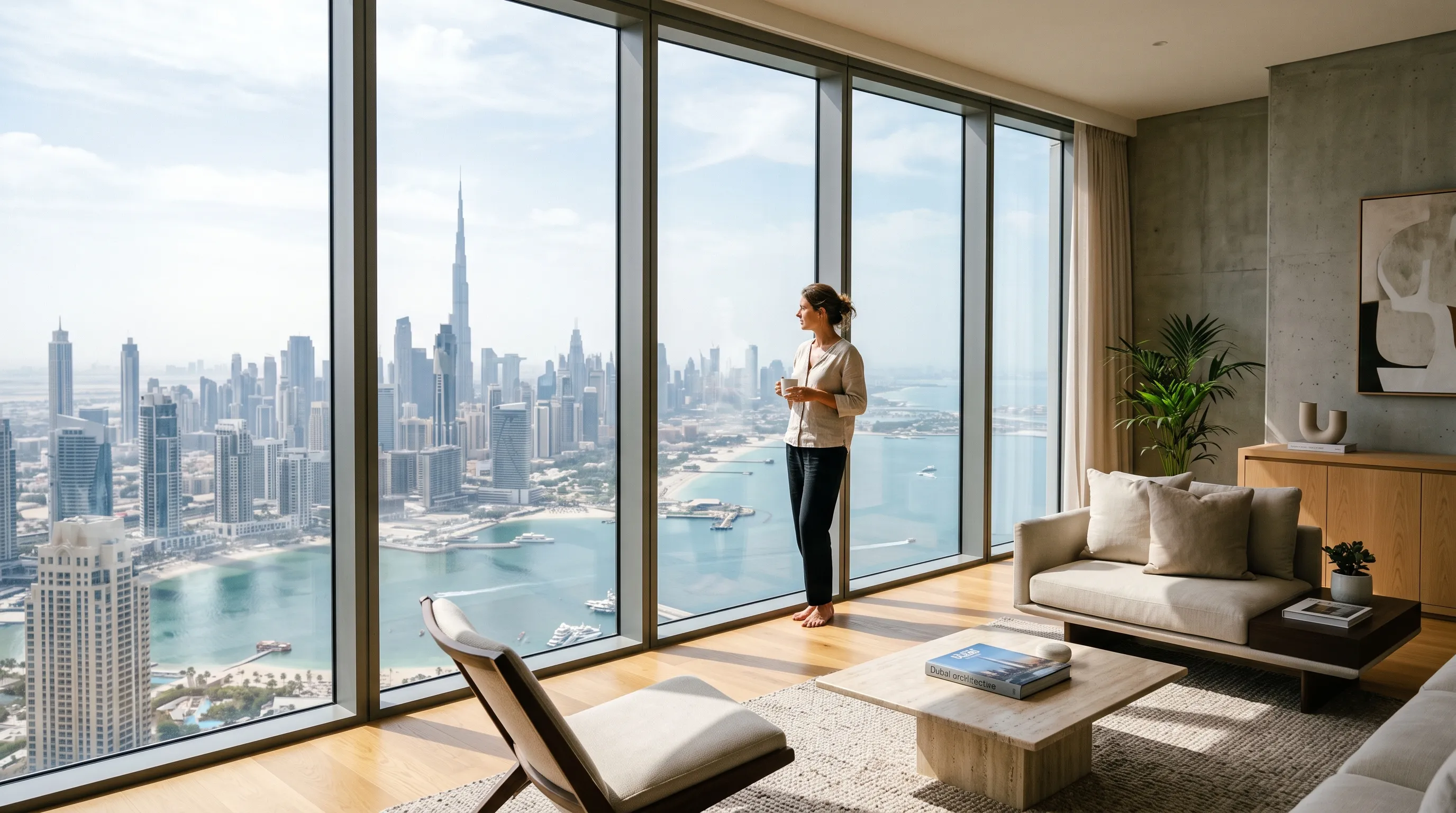
High-Floor vs Low-Floor Apartments: The Price Difference Explained
High-floor vs low-floor apartments: why the price differs, what the premium for height actually buys, and which floor i
Take, for instance, two apartments situated in the same building. Equal in terms of their interior arrangement, square footage and finishing, one is on the fifth floor while another is on the thirty-fifth. But there is a difference in the cost of these apartments. The same apartment in different locations on the floor plan fetches a different price. So, what is it that makes one pay extra money for being higher up?
There is a simple answer: it is all about the view, along with the additional features like light, quietness and privacy that come with living on a higher floor. This accounts for the major part of the price difference between a high-floor and a low-floor apartment and explains why the premium grows with the height, reaching its maximum value on the upper floors and penthouse levels. Nevertheless, higher is not necessarily better, as low-floor apartments have their perks and lower price, which some people find even more important.
This guidebook shows the difference straightforwardly. It provides information concisely about both options, their differences, the reasons behind the higher price of high-floor apartments, what a buyer gets from low floors, what is the price difference and, finally, helps to understand which floor is right for a person since the correct answer depends on his lifestyle habits.
One thing worth mentioning. The amount of floor premium greatly varies depending on the building, its views and developer, hence the numbers cited below may vary from one building to another. Nevertheless, what benefits does the floor premium offer?
High-Floor vs Low-Floor Apartments, in Short
Let's lay out the trade first. Higher floors cost more because they tend to come with better views, more light, less noise, and more privacy, and those things are what the premium is really paying for. Lower floors cost less and give you easier access, sometimes more outdoor space, and a more practical setup for some households. Neither is simply better, they suit different priorities and different budgets, and the whole point is to work out which set of strengths matters more to you.
The core driver of the whole price gap is the view. As you go up, the outlook usually improves, the light gets better, the street noise fades, and the sense of privacy grows, so buyers pay more for higher floors and developers price them accordingly. That is why two identical apartments can carry very different prices based on nothing but their height in the building, and why the gap is widest in towers with a standout outlook. The general picture of property and housing across the country sits within the UAE government portal for the official side, though the floor premium itself is a market matter set building by building.
Here is the short version:
- Higher costs more. View, light, quiet, and privacy drive the premium.
- Lower costs less. The same layout for a smaller price.
- The view is the big driver. Most of the premium is the outlook.
- The premium grows with height. The higher you go, the more you pay.
- Low floors are practical. Easier access and sometimes more outdoor space.
- Neither wins outright. They suit different buyers and budgets.
The honest framing is that this is a trade between what height gives you, view, light, quiet, privacy, prestige, and what it costs you, a higher price and a little less practicality. The premium is worth it if you value and will use the things height buys. It is not if you would rather save the money or care more about easy access and outdoor space. Knowing which camp you are in settles most of the choice before you ever look at a floor plan.
Why High Floors Cost More
So what exactly does the height premium buy? The view leads the list and usually by a distance. Higher up, you get the better outlook, the skyline, the sea, a landmark, open sky instead of the building across the road, and in a city built on its views, that outlook is what people will pay a premium for. A high-floor unit looking over water or a famous skyline can command far more than the same flat lower down facing a wall, and that single difference accounts for most of the gap you see on the price list.
Beyond the view, height brings a cluster of related perks. There is usually more natural light, since fewer surrounding buildings block the sun, and less noise, since you sit further from the street, the traffic, and the pool deck. Privacy improves too, with fewer windows looking back at you, and many people simply find higher floors feel airier and more pleasant to live in. Together these turn the view premium into a broader desirability premium, and they explain why prices climb floor by floor toward the top of the building. Our apartments overview gives a sense of how units compare across different buildings and floors.
Here is what the premium pays for:
- The view. The single biggest driver of the price difference.
- More natural light. Fewer buildings blocking the sun.
- Less noise. Distance from street, traffic, and pool.
- More privacy. Fewer windows looking back at you.
- An airier feel. Many find higher floors more pleasant.
- Prestige at the top. Top floors and penthouses command the most.
The honest summary is that high floors cost more because they bundle together the things people most want from an apartment, a great view, good light, peace, and privacy, and the premium rises as those things improve with height. For a buyer who will actually enjoy the view every day and may sell it on to someone who wants it too, that premium can be money well spent. The key word is enjoy, because a view you never look at is a premium you paid for nothing, and plenty of high-floor owners admit they stopped noticing the skyline within a month of moving in.
What Low Floors Give You Instead
It would be easy to assume low floors are just the cheap compromise, but that misses what they genuinely offer. The most obvious thing is the lower price, the same apartment for less, which frees up budget for a bigger unit, a better area, or simply keeping the cash in your pocket. For a buyer on a budget, that saving is the whole point, and it can be the difference between affording a home in the building you want and not.
Beyond price, low floors come with real practical advantages. Access is easier and faster, with less reliance on lifts, which matters in a busy building, during maintenance, in a power cut, or simply when you are carrying shopping or pushing a pram. Ground and podium-level units often come with larger terraces or even small gardens, giving outdoor space that high floors cannot match. They tend to suit families with young children, older residents, and pet owners better, since getting in and out is simpler, and very high balconies can be too windy to use comfortably while lower ones stay usable all year. The official property and market data behind any building you are comparing sits with the Dubai Land Department, worth a look for the registered details of a specific unit.
To compare actual units at different floors and prices, our property listings let you see the real difference rather than rely on a general rule.
Here is what low floors offer:
- A lower price. The same layout for less money.
- Easier access. Less reliance on lifts, quicker in and out.
- More outdoor space. Ground units often have terraces or gardens.
- Better for families. Simpler with young kids, elderly, or pets.
- Usable balconies. Lower balconies are less wind-exposed.
- Practical in a pinch. Easier in maintenance or a power cut.
The honest summary is that low floors are not a consolation prize, they are a different and often sensible choice, trading the view and the height premium for a lower price and real day-to-day practicality. For a family, an older buyer, someone who values a garden, or anyone who would rather spend the saving elsewhere, a low floor can be the smarter pick. The view is lovely, but practicality and price are not nothing, and for many lives they quietly matter more than an outlook does.
The Price Difference, Explained
So how big is the gap, and how does it work? The price difference is not a fixed number, it builds up as you rise through the building, with each tier of floors typically carrying a bit more than the one below, and the steepest jumps tend to come at the floors where the view opens up or at the prestige floors near the top.
As a rough illustration, two identical apartments might differ by, say, AED 50,000 or more between a low floor and a high one in the same tower, and far more again for a top-floor or penthouse unit with a standout view, though the exact gap depends entirely on the building, the view, and the developer's pricing. The premium is really a view-and-desirability premium, so it is biggest where the view difference is biggest. A tower over the water or a famous skyline will price its high floors far above its low ones, while a building with a similar outlook from top to bottom will show a much smaller gap. At the very top, prestige units like penthouses sit in their own bracket entirely, and our exclusive properties page is where that high-floor, high-view end of the market tends to live.
Here is how the price difference works:
- It builds with height. Each tier usually costs a little more.
- The view sets the size. Bigger view gains mean bigger premiums.
- Steep jumps at view floors. Prices climb where the outlook opens up.
- The top is its own bracket. Penthouses command the largest premiums.
- It varies by building. The same height difference prices differently.
- It is illustrative, not fixed. Check the specific tower's pricing.
The honest summary is that the price difference is a view-and-height premium that grows as you climb, biggest where the view improves most and at the prestige top floors, and impossible to pin to a single number because it depends so heavily on the building. The useful way to read it is not as a fixed rate per floor but as the market pricing the outlook, so the better the view you are buying, the more of a premium you should expect to pay for it. Where the view barely changes from floor to floor, the premium should be modest, and if it is not, that is worth questioning.
Which Floor Is Right for You
So which floor should you actually choose? It comes down to what you value and how you will use the place. We lined up the high-floor and low-floor cases side by side, each on one line:
- Views: high floors win, the main thing the premium pays for.
- Price: low floors win, cheaper for the same layout.
- Natural light: usually better higher up, with less obstruction.
- Noise: quieter higher up, away from street and pool.
- Access: easier lower down, less reliance on lifts.
- Outdoor space: often larger on the ground floor, with terraces or gardens.
The pattern is that high floors win on the experience, view, light, quiet, while low floors win on price and practicality, access, outdoor space. Which set matters more is entirely personal. A couple who will sit on the balcony every evening watching the skyline should probably pay up for the height. A family with small children who value a garden and easy access, and would rather save the money, should probably stay low. There is no right floor, only the right floor for your life. For market context on how view and floor premiums move, reports from firms like Knight Frank are a useful reference.
On the investment side, it is worth a light word. High-floor view units tend to be in steady demand and can hold value and rent well, but they cost more to buy, while low-floor units have a lower entry price that can sometimes mean a stronger yield on the money you put in, though this depends on the rents and the building, so run the actual numbers rather than assuming. This is general information, not financial advice, and an unusual or poorly positioned unit can behave differently from the rule of thumb.
The honest summary is that the right floor is the one whose strengths match what you actually want, the view and the calm if you will use them, the price and the practicality if you would rather have those. Decide what you will genuinely value day to day, and the floor chooses itself. Pay for height only if you will enjoy what it buys, and never let the word penthouse do your thinking for you.
What We Would Actually Do
Basically, the difference between a high-floor and low-floor is the value of a view and what comes with it - light, quietness, and privacy of the height. The higher floors are more costly and give all these things; the lower ones are cheaper and have good access, usually more outdoor spaces, and savings. There is no definite right answer; the right thing depends on the person.
If a friend came to us asking for help in choosing a floor, we would ask them how they plan to live in their apartment. Would they sit and appreciate the view or is it going to be barely noticed? Do they value the quietness and privacy or is it more important for them to have easier access and some garden? Would they be ready to pay the premium for the height, or would they rather invest in the bigger apartment or a better location? These honest answers show the floor they need much better than any universal formula stating that "the higher the better."
We would also suggest them not to spend too much money on the view which won't be used. Indeed, the excellent view is certainly worth spending more money if it makes life better and appeals to a potential buyer as well. But paying a premium for the view which won't be looked at or is partially obscured by a future neighboring building is the wrong way to spend money. So, check the real view in present and in future and consider if it's worthy paying extra money for it.
But, probably, the biggest mistake we see people make when buying apartments is that people think that the higher floor is always better and start searching for a high floor immediately, or choose a low floor only because of the price, ignoring the light and noise. Choose the floor according to your lifestyle pattern and don't pay extra money for height unless you are going to enjoy it; otherwise, your money will be spent unwisely. Automatic choices can result in paying money for something you aren't going to use and not getting the thing you want.
If you need help in comparing floors and finding the apartment which suits your budget and your way of living, this is exactly what we can help you with. Our property buying service can line up the right options at the right height.
And if you want a straight opinion on whether a high floor is worth the premium for your situation, we are glad to help. Get in touch and we will take it from there.
Related stories

Buying Resale in Dubai vs Abu Dhabi: The Hidden Differences
Buying resale in Dubai vs Abu Dhabi: the hidden differences in fees, land authorities, ownership zones, and process, an

Fujairah Property: The Quiet Emirate Nobody Talks About
Fujairah property, honestly: the UAE's quiet east-coast emirate, its lifestyle appeal, the thin market and limited owne

How Interest Rate Cuts Affect Dubai Property: What Buyers Should Know
How interest rate cuts affect Dubai property: why UAE rates track the US, how cheaper mortgages move demand and prices,
Echoes, in your inbox
One thoughtful email a month. Market insight, new launches, no spam.