

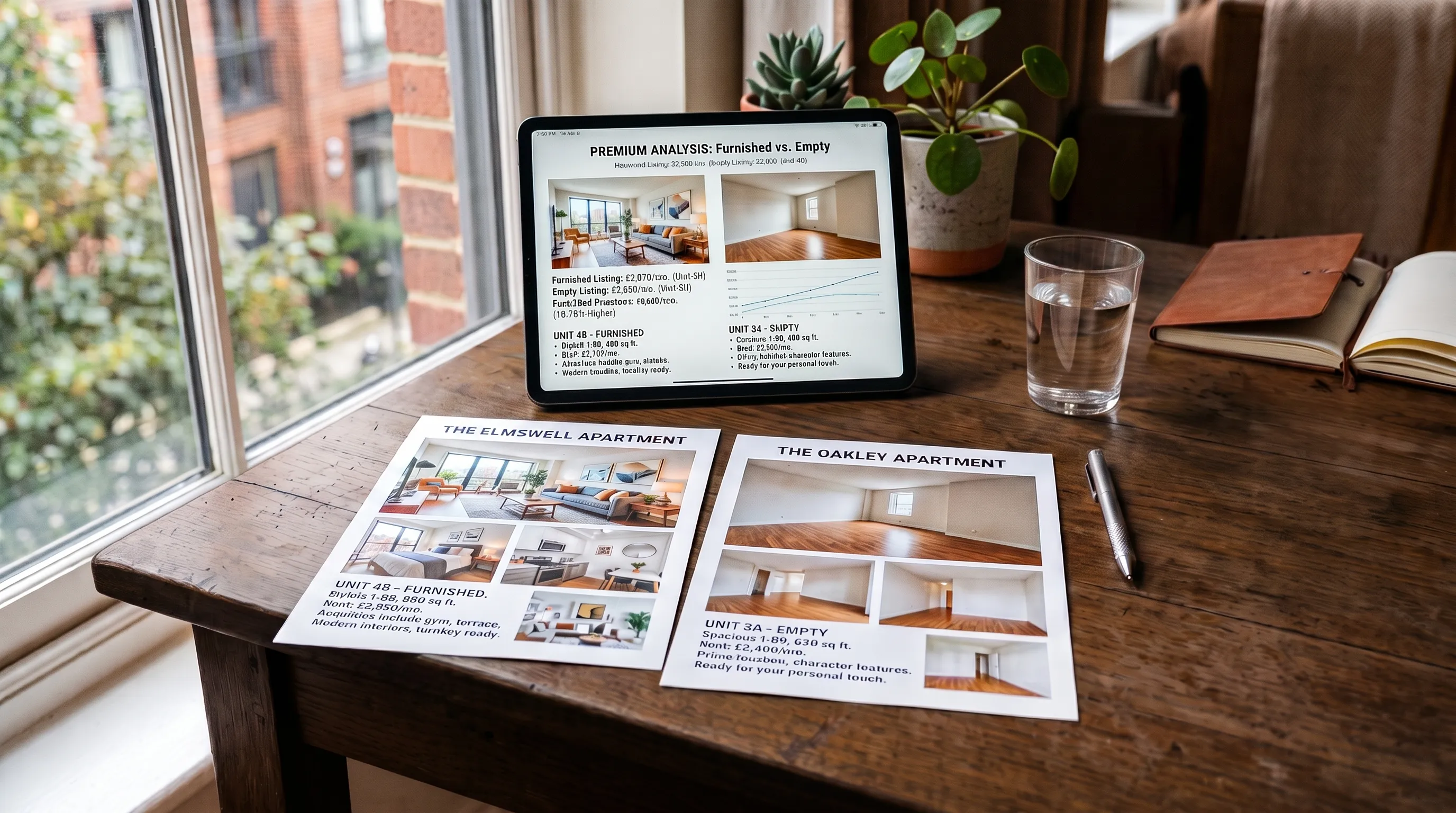
Selling Furnished vs Unfurnished in Dubai: The Price Premium Reality
Selling furnished vs unfurnished in Dubai: does furniture add a price premium, why the reality often disappoints, and w
You have properly decorated your Dubai apartment. An excellent sofa, a nice bed, and the entire furnishings are expensive and cost a lot of money. However, now you are selling and expect that your furniture will make you money back – after all, an equipped house is more valuable, and this will affect the sale price. It is a logical expectation. In the same way, for most homeowners, it is a disappointment.
The reality of the furnished versus unfurnished Dubai property is simple: usually furniture does not give a big price increase and even in some cases does not help to sell the apartment at a better price. The reasons are obvious: buyers are buying the property itself rather than a set of your taste; furniture quickly depreciates; and the bank valuation (on which the vast majority of sales depend) ignores the furniture altogether. Of course, there are exceptions and we will talk about them, but the fact is that furnishing a property with the purpose to raise its sale price is a losing strategy.
This guide gives the straightforward approach. The reality shortly: why furniture does not add much to the price; what valuation limits this effect; situations where furnished solutions can help; and what should be done with your existing furniture.
The exception: depending on the property, the buyer, and the market segment, the effect of furniture on the property value varies greatly. That means that the numbers stated below are just an illustration and come with no warranties. This guide provides only general advice, not a specific valuation of your property. Here comes the reality of the furniture premium.
Selling Furnished vs Unfurnished, in Short
Let's give you the answer up front. Furniture usually adds little or no premium to a standard resale price, because buyers are valuing the property, not the contents, and the mortgage valuation that underpins most sales ignores the furniture completely. So the money you spent furnishing is largely a sunk cost when it comes to the sale price, not an investment you get back.
That said, it is not a flat no everywhere. Furnished can genuinely help in specific cases, with branded or designer-furnished units where the furniture is part of the package, and with investor or holiday-let buyers who want a turnkey home and value not having to furnish it themselves. And furnished can sometimes help a property sell faster to the right buyer, even when it does not sell for more. So the honest picture is mostly myth, with real exceptions. The general framework for property and selling in the country sits within the UAE government portal for the official side.
Here is the reality in short:
- Little premium for standard resale. Buyers value the property, not the furniture.
- The mortgage ignores furniture. The valuation is of the property.
- Furniture depreciates fast. Its second-hand value is low.
- Branded or designer can help. Where furniture is part of the package.
- Investor buyers may value it. Turnkey suits short-let and holiday-home buyers.
- It can aid speed, not price. Furnished can sell faster to the right buyer.
The honest framing is that the furnished sale premium is mostly a myth for ordinary resale, with genuine exceptions in specific niches. If you are hoping furniture will get back what you spent, it usually will not, but if you are in one of the exception cases, or you care more about a quick sale than a higher price, furnished can still work for you. The rest of this guide explains why, and what to do about it. The aim is not to talk you out of furniture you already love, but to set your expectations on the sale price honestly and clearly, so the eventual offer is a confirmation rather than a letdown.
Why Furniture Rarely Adds a Premium
So why does the premium fail to show up? Three reasons, and they stack. First, buyers are buying the property, the location, the size, the view, the building, the condition, and they value those things, not your furniture. To most buyers, the sofa is almost irrelevant to what the home is worth, and some even see your furniture as stuff they will have to remove or replace.
Second, taste is personal. The furniture you chose and love may not match the next owner's taste at all, and plenty of buyers fully intend to refurnish to their own style, so your spend simply does not register as value to them. Third, furniture depreciates fast, much like a car the moment it leaves the showroom. The AED 100,000 you might have spent furnishing a place is worth a fraction of that second-hand, and buyers know it, so they will not pay anywhere near the original cost for used furniture bundled into a property. To see how comparable properties are listed and priced, our property listings show how the market actually values homes, furniture aside.
Here is why the premium rarely appears:
- Buyers value the property. Location, size, condition, not contents.
- Furniture can feel like clutter. Some buyers see it as stuff to remove.
- Taste is personal. Your style may not match theirs.
- Many plan to refurnish. So they discount your furniture entirely.
- Furniture depreciates fast. Worth a fraction of its cost second-hand.
- Used value is low. Nobody pays new prices for used furniture.
The honest summary is that furniture rarely adds a premium because it is not what buyers are paying for, it does not match everyone's taste, and it loses value quickly, so the spend you hope to recoup has mostly evaporated by the time you sell. This is not a Dubai quirk, it is how furniture and resale work almost everywhere. The sooner you treat furnishing as something you did for your own enjoyment rather than as a resale investment, the more realistic your expectations on the sale price will be, and the less the eventual offer will sting.
The Valuation Reality
There is a structural reason the premium gets capped, and it is worth understanding, the mortgage valuation. Most buyers in Dubai use a mortgage, and the bank lends against a professional valuation of the property, which assesses the home itself, the bricks, the space, the location, not the furniture inside it. The furniture simply is not part of what the valuation, and therefore the loan, is based on.
That has a direct effect on what a buyer will pay for furnishing. Since the mortgage covers the property value but not a furniture premium, any extra you want for the furniture has to come out of the buyer's own cash, on top of their deposit and fees, which buyers strongly resist. Faced with paying real cash for used furniture they may not even want, most simply decline, or expect the furniture thrown in. So the valuation mechanism quietly caps the furnished premium for any mortgaged buyer, which is most of them. The official property and valuation framework sits with the Dubai Land Department for the registered side of a sale.
Here is the valuation reality:
- Mortgages value the property. Not the furniture inside it.
- The loan ignores furniture. It is based on the home alone.
- A furniture premium needs cash. Paid on top of the deposit.
- Buyers resist that cash. Few pay extra for used furniture.
- So the premium gets capped. The valuation does not support it.
- Most buyers are mortgaged. So this applies widely.
The honest summary is that the valuation reality is the hard ceiling on any furnished premium, because the mortgage values the property and not the contents, so a buyer would have to pay any furniture premium in cash, which most refuse to do. This is the structural reason the premium rarely materialises, beyond just taste and depreciation. If you understand that the system itself prices the property and not your sofa, you stop expecting the furniture to lift the sale price, and you price the home on its own merits instead of on a hope the market will not honour.
When Furnished Actually Helps
To be fair, there are real cases where selling furnished does help, and they are worth knowing. The clearest is the investor or holiday-let buyer. Someone buying to run a short-term rental or holiday home wants a turnkey property they can let out immediately, so a tastefully furnished unit saves them the time and cost of doing it themselves, and they may genuinely value that. For this buyer, furnished is a real plus. Our holiday homes service gives a sense of that turnkey, short-let part of the market where furnished sells.
The other clear case is branded and designer-furnished property, where the furniture is part of the package and the brand, so it carries value in a way ordinary furniture does not. And across all cases, furnished can help a property sell faster, by appealing to buyers who want move-in-ready convenience, even when it does not sell for a higher price. Speed and a wider or more specific buyer pool are real benefits, just different ones from a price premium. Market data on buyer demand and what sells, the kind published by firms like Knight Frank, helps you see where turnkey demand is strongest.
Here is when furnished helps:
- Investor and holiday-let buyers. Turnkey saves them the work.
- Branded or designer units. Furniture is part of the package.
- Move-in-ready appeal. Some buyers value convenience highly.
- Faster sale. Furnished can sell quicker to the right buyer.
- A specific buyer pool. It widens appeal to certain buyers.
- Lower-effort handover. Less for the buyer to organise.
The honest summary is that furnished genuinely helps in specific situations, the investor or holiday-let buyer, the branded unit, and the buyer who prizes move-in-ready convenience, and it can help a property sell faster even when it does not sell for more. So furnished is not worthless, it is just valuable in narrower and different ways than the price-premium hope assumes. Know which case you are in, because that tells you whether your furniture is an asset to lean on or a sunk cost to set aside, and the two call for very different selling tactics. If you are sitting on a one-bedroom in a building full of short-let investors, the furniture is part of your pitch. If you are selling a family villa to people who will move in with their own things, it is closer to clutter, and the same sofa plays a completely different role depending on who walks through the door.
What to Do With Your Furniture
So, practically, what should you do? It depends on your situation, but the honest options are clear. We lined up the common scenarios against the reality, each on one line:
- Standard resale buyer: furniture adds little, since they value the property, not the sofa.
- Furniture cost recovery: usually poor, as furniture depreciates fast second-hand.
- Mortgage valuation: ignores furniture, so any premium is paid in cash on top.
- Branded or designer-furnished: can add value, where the furniture is part of the package.
- Investor or holiday-let buyer: furnished can help, since turnkey saves them the work.
- Speed of sale: furnished can sell faster to the right buyer, more than for more money.
The practical takeaway is to offer the furniture flexibly rather than bake a premium into the price. Market the property on its own merits, priced as the home is worth, and present the furniture as negotiable or optional, included if the buyer wants it, removed if they do not. That way you appeal to the turnkey buyer who values it without losing the buyer who would rather refurnish, and you are not asking anyone to pay a premium the valuation will not support.
There is also a useful distinction between selling furnished and staging for presentation. Light, neutral staging, a tidy, well-presented home that photographs well, genuinely helps a property sell, and that is different from trying to sell your actual furniture for a premium. If presentation is the goal, our fit-out service can help a property show at its best, which does move the needle on sale appeal in a way that bundled furniture does not.
The honest summary is that the smart move is to price the property on its merits, offer the furniture as a flexible extra rather than a premium, and invest in presentation rather than expecting buyers to pay for your sofa. Furniture you already have is a negotiating tool and a convenience for the right buyer, not a price lever. Treat it that way, and you will sell well without the disappointment of a premium that was never really there.
What We Would Actually Do
In conclusion, there is no basis for expecting a significant sale premium from furnishings in Dubai as regards resale of a typical property. Buyers will place their value on the house and not the furniture which depreciates quite quickly, while the valuation for mortgage purposes will be based on the house alone. Therefore, the money invested in furnishings is not likely to be recovered. There are some cases where furnishings can increase the price of the property, particularly with investors, holiday-let buyers, branded homes, and buyers who need the convenience. However, furnishings mainly help in speeding up the process and attracting the buyer's interest.
We will advise a friend not to furnish a house just to increase its price since the money invested is not likely to be recovered. In case the house is already furnished, we would advise that the seller prices the house as he wishes but makes an offer for the buyer to choose whether to take the furniture or not. The money for the furniture should not be charged as part of the price of the house.
It is important to understand that good presentation does not mean adding any charge for used furniture. Good presentation in terms of lighting and color of the furniture will help a house sell well and this is worth considering. Sellers will make a mistake when they require their buyers to pay extra money for the used furniture since this will affect the sales.
The most frequent mistake of sellers is charging a premium because of the furnishing in the price of the house and then seeing the buyers refusing to buy the furniture at all. This is the approach which should be avoided and one should price the house properly, make furniture optional, present the house in a good manner, and make the sale.
If you are selling and want a realistic view of what your property is worth, furniture aside, and how to present it well, that is exactly what we do. Our property selling service can price and present it properly.
And if you want a straight opinion on what to do with the furniture in your specific sale, we are glad to help. Get in touch and we will take it from there.
Related stories

Buying Resale in Dubai vs Abu Dhabi: The Hidden Differences
Buying resale in Dubai vs Abu Dhabi: the hidden differences in fees, land authorities, ownership zones, and process, an

Fujairah Property: The Quiet Emirate Nobody Talks About
Fujairah property, honestly: the UAE's quiet east-coast emirate, its lifestyle appeal, the thin market and limited owne

How Interest Rate Cuts Affect Dubai Property: What Buyers Should Know
How interest rate cuts affect Dubai property: why UAE rates track the US, how cheaper mortgages move demand and prices,
Echoes, in your inbox
One thoughtful email a month. Market insight, new launches, no spam.