

Sharjah Freehold Rules in 2026: What's Open to Foreigners Now
Sharjah freehold rules in 2026: what's actually open to foreigners now, how freehold differs from usufruct, and what to
Sharjah has been gaining an increasing number of foreign property owners, thanks to relatively lower property prices and proximity to Dubai. Thus, a common question arises: is it possible for a foreigner to own freehold in Sharjah, and what is currently available for foreign buyers in 2026? It is a perfectly valid question and here is the answer that goes beyond the simple yes/no.
In short: foreign ownership of property in Sharjah is possible, yet it works differently compared to Dubai and is less wide-spread. In Dubai, foreign buyers enjoy freehold ownership of property in most parts of the city. In Sharjah, however, foreigners' property rights used to be defined on a project-by-project basis and have mostly taken the form of a lease or usufruct, although freehold ownership is now becoming an option for some new projects. Freehold in Sharjah is thus not an all-access policy, but a series of particular access routes that keep opening.
The following guide explains the system: how Sharjah's freehold laws work, how freehold and usufruct differ in terms of Sharjah's policy, how Sharjah opens up to foreign investors, what is currently available, and how to check if something is really available before purchasing a property.
There are two important considerations at the beginning. We are a property company, not a law office, so the following is general information and not legal advice. Property laws and ownership rules are exactly those things you need to check with an experienced lawyer and Sharjah authorities. Besides, such rules tend to change rapidly, so the current position of Sharjah, regarding the availability of freehold ownership in 2026 and including particular projects, tenure arrangements, and nationalities, should be checked with the official sources. Having said that, the following is a general outline of the situation.
How Sharjah Freehold Rules Actually Work
Let's set up the basic shape of it. Sharjah does not run the broad, citywide freehold system that Dubai is known for, where foreign buyers can own outright across most of the city. Instead, Sharjah ties foreign ownership to specific designated developments, and within those, the kind of ownership on offer has historically been a long-term lease or usufruct rather than the outright, perpetual freehold most people picture when they hear the word.
That is the single biggest thing to understand. In Sharjah, foreign ownership is not a general right that applies everywhere, it is a project-specific arrangement, and what you actually get, freehold or a long lease, depends on the particular development and the rules in force when you buy. The emirate has been widening these openings over the years, moving from very limited foreign ownership toward long-term usufruct for all nationalities in designated projects, and more recently toward freehold in some select developments. The federal framework for foreign property ownership across the country sits within the UAE government portal, which is a useful starting point for the official side, though the emirate-level detail is what governs Sharjah specifically.
Here is the basic shape:
- Not citywide freehold. Foreign ownership is tied to designated projects.
- Project-by-project. What you get depends on the specific development.
- Historically usufruct. Long-term lease rather than outright freehold.
- Freehold in select projects. Offered more recently in some developments.
- GCC nationals differ. They have broader ownership rights than other buyers.
- Rules keep evolving. The openings have widened over time.
The honest framing is that asking whether you can own freehold in Sharjah is the wrong shape of question. The better question is what is open in the specific development you are looking at, and on what terms, because Sharjah grants ownership through particular projects rather than as a blanket right. Get specific, and the rules become much clearer than any general statement about the emirate can be.
Freehold vs Usufruct: The Distinction That Matters
This is the part to understand properly, because it matters more in Sharjah than in most places. Freehold means you own the property and the land it sits on outright, with no time limit, and you can hold it, sell it, or pass it on indefinitely. Usufruct, or a long-term lease, is different, it gives you the right to use and benefit from the property for a long fixed term, commonly cited at around 100 years in many Sharjah projects, after which the right expires or reverts rather than being owned forever.
In day-to-day terms, a long usufruct can feel very much like ownership, since 100 years is longer than anyone's holding period, and you can typically live in, rent out, sell, and pass on the remaining term. But it is not the same as freehold in law, and the difference can matter for resale value as the term shortens, for inheritance, and for how the property is treated over the very long run. So when a Sharjah project is described loosely as offering ownership, the real question is which kind, freehold or usufruct, because they are genuinely different things. Our Sharjah area guide gives a sense of the emirate and its communities as you weigh where to look.
Here is the distinction in brief:
- Freehold is forever. You own the property and land with no time limit.
- Usufruct is a long term. A right to use for a fixed period, often cited near 100 years.
- Usufruct can feel like ownership. Long enough to live, rent, sell, and pass on.
- But it is not freehold. The term expires or reverts rather than lasting forever.
- It can affect resale. Value can soften as a long lease term winds down.
- Always check which. Confirm the exact tenure of the specific project.
The honest summary is that the freehold versus usufruct distinction is the heart of buying in Sharjah as a foreigner. Both can be perfectly good ways to own, and a long usufruct is a real and usable right, but you must know which one you are getting, because they differ in law, in inheritance, and potentially in long-run value. Never let a project's marketing blur the two, ask plainly which tenure applies, and get it confirmed in writing.
How Sharjah Opened Up to Foreign Buyers
It helps to see how Sharjah got here, because the direction of travel tells you a lot. For a long time, Sharjah was largely closed to foreign property ownership, with non-GCC buyers generally unable to own in the way they could in Dubai, and GCC nationals enjoying broader rights. The emirate took a more conservative approach to opening its property market than its neighbour.
That began to change around the mid-2010s, when Sharjah started offering long-term usufruct ownership, commonly on a roughly 100-year basis, to buyers of all nationalities in designated master developments, opening the door to foreign buyers for the first time in a meaningful way. More recently, the emirate has been reported to go further, offering freehold in some select developments, widening what overseas buyers can own outright. The pattern is a steady opening, from closed, to long usufruct for all nationalities, toward freehold in chosen projects, rather than a single dramatic change. To see how different this is from Dubai's approach, the broad citywide freehold that Dubai offers foreign buyers is documented by the Dubai Land Department, a useful contrast to Sharjah's project-by-project model.
For the wider picture of how the emirates compare on ownership, our areas overview is a helpful way to weigh Sharjah against Dubai and the others.
Here is the rough path Sharjah has taken:
- Once largely closed. Limited foreign ownership for non-GCC buyers.
- GCC buyers had more. Broader rights than other nationalities throughout.
- Usufruct opened the door. Long-term leasehold for all nationalities in designated projects.
- A roughly 100-year basis. The usufruct term commonly cited around a century.
- Freehold followed in places. Offered more recently in select developments.
- A steady widening. More opening over time, not one big change.
The honest summary is that Sharjah has been opening to foreign buyers gradually and selectively, moving from a largely closed market toward long usufruct and then freehold in chosen developments. The direction is clearly toward more access, which is good news for overseas buyers, but it has happened project by project rather than as a blanket reform, so the openness is real but specific. Knowing the direction helps, but it does not replace checking the exact position of the project in front of you.
What's Open to Foreigners Now
So where does that leave a foreign buyer in 2026? Here is the quick reference, with the honest caveat that the exact current position is evolving and project-specific. We lined up the key points, each on one line:
- Broad citywide freehold for foreigners: not how Sharjah works, unlike Dubai.
- Designated developments: yes, foreign ownership is tied to specific projects.
- Long leasehold or usufruct: common, often cited around 100 years in many projects.
- Freehold in select projects: increasingly offered, but project-by-project, so confirm.
- GCC nationals: broader ownership rights than other foreign buyers.
- The exact current rules: evolving, so verify the specific project and date.
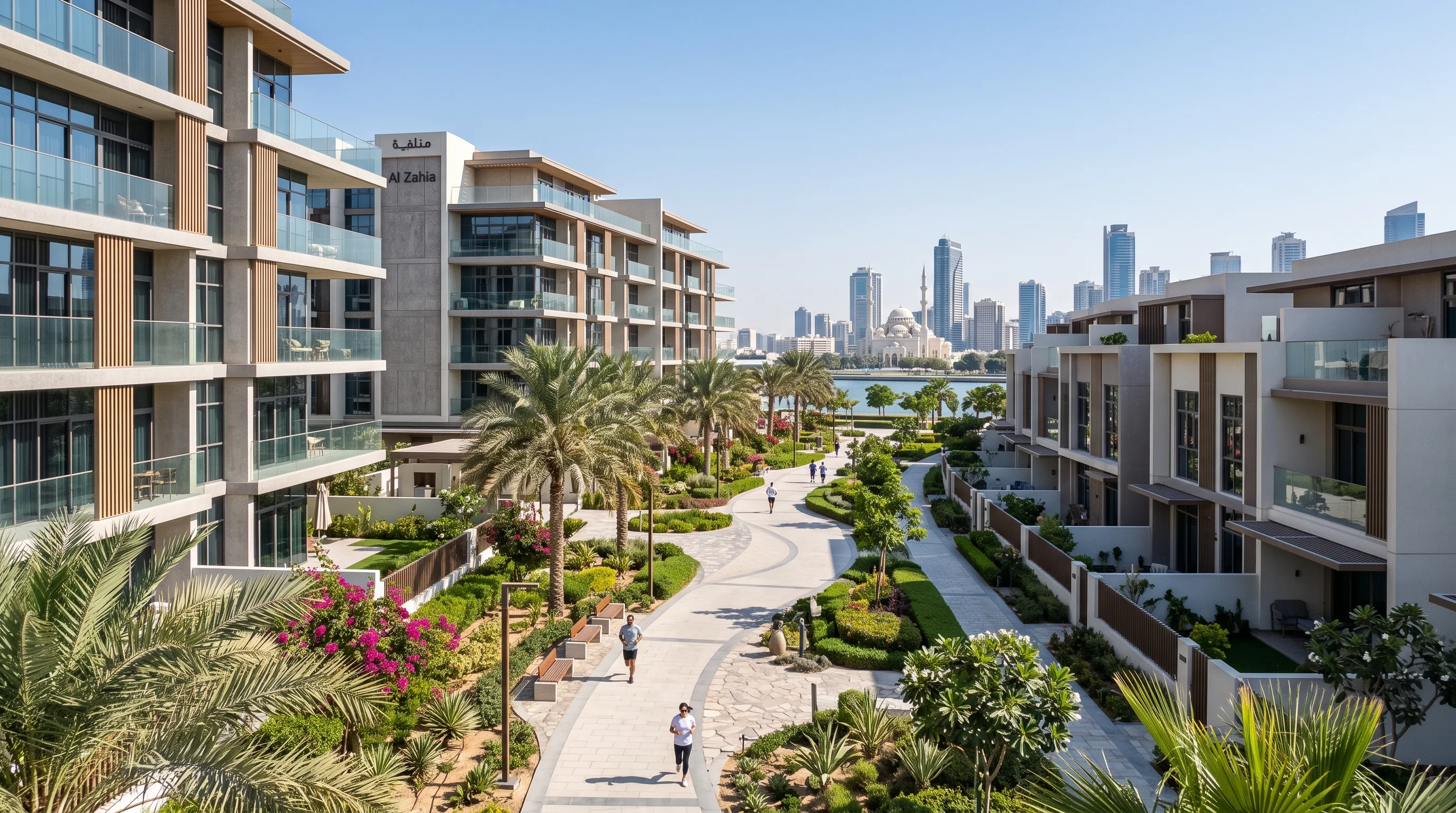
In practice, that means a foreign buyer in Sharjah is looking at designated master developments, where the tenure on offer is some mix of long usufruct and, increasingly, freehold depending on the project. Developments that have featured in the foreign-buyer market over the years include large master communities such as Tilal City, Aljada, Maryam Island, and Al Zahia, though the tenure terms for any specific project and phase should be confirmed directly rather than assumed, since they vary and change. To see what is actually being marketed to buyers at the moment, our property listings are a practical place to look.
The thing we cannot do honestly is give you a fixed, guaranteed list of which exact projects offer freehold versus usufruct in 2026, for two reasons. The rules and project terms have been changing, and the precise current detail is the kind of thing that should come from the official Sharjah authorities and the developer rather than a general guide. So treat the picture above as the shape of what is open, not as a final word on any specific development.
The honest summary is that what is open to foreigners now is ownership in designated Sharjah developments, on terms that range from long usufruct to freehold depending on the project, with the trend toward more freehold and the exact detail varying project by project. The shape is clear and encouraging. The specifics are for you to confirm on the actual development you choose.
How to Check Before You Buy
Because the rules are specific and evolving, the verification step matters more in Sharjah than in a broad-freehold market. The first thing to nail down is the exact tenure of the specific property, freehold or usufruct, and if usufruct, the length of the term and what happens at the end of it. Do not accept a loose description of ownership, get the precise tenure confirmed in writing, because the difference is real.
The next thing is your own eligibility, since rights can differ by nationality, with GCC nationals often able to own more broadly than other buyers. Confirm that you, with your particular nationality, can own the tenure on offer in that specific project. The authoritative source for all of this is the Sharjah Real Estate Registration Department, the official body that registers property and governs ownership in the emirate, and its current guidance, alongside the developer's documentation, is what you should rely on rather than any general article. A qualified UAE lawyer is well worth involving too, to read the tenure terms, check the registration, and confirm the position for your situation before you commit any money.
Here is what to check before buying:
- The exact tenure. Freehold or usufruct, confirmed in writing.
- The term length. If usufruct, how many years and what happens at the end.
- Your eligibility. Whether your nationality can own that tenure there.
- The official position. Confirm with the Sharjah Real Estate Registration Department.
- The developer's documents. Read what the project actually offers and registers.
- Legal review. Have a UAE lawyer check the terms before you commit.
One more honest note, because it matters. These rules have been changing, and our reliable picture runs to early 2026, so anything described here as the current position should be checked against the latest official information before you act, especially given how project-specific and fast-moving Sharjah's openings have been. Prices are gentler than Dubai, often a real draw, with smaller apartments sometimes found in the region of AED 500,000 as a rough illustration, but confirm the live figures and the tenure for the specific unit rather than relying on any general range, since both vary.
The honest summary is that buying in Sharjah as a foreigner is perfectly doable, but it rewards careful checking in a way a broad-freehold market does not. Confirm the tenure, confirm your eligibility, lean on the official Sharjah authorities and a lawyer, and treat the rules as current-as-verified rather than fixed. Do that, and you can buy with confidence. Skip it, and you risk misunderstanding exactly what you are buying.
What We Would Actually Do
In other words, in 2026 Sharjah is definitely accessible to foreign buyers but with its own conditions in the form of designated projects in which foreign citizens are allowed to buy real estate as freehold or long usufruct property. It is more restrictive compared to the unrestricted access to Dubai freehold properties; conditions become easier but the main thing is always to check the conditions of the particular project and not take the generalized information.
If our friend asks us about buying a house in Sharjah, we would say to do not ask in general does Sharjah offer freehold, but to find out what conditions offer the particular project - whether they offer freehold or long usufruct. This one question will clear everything up. At the same time, we would suggest to clarify their personal condition in respect to owning property in Sharjah, as this may affect it.
We would emphasize that they should check this because it is a developing area. The official statement should be taken from the Sharjah Real Estate Registration Department and the developer, the conditions should be clarified by the UAE licensed lawyer. In case the guide offers any information on this matter, this should be considered only as indicative and not the actual rules due to the project-specific character of the rules and their rapid development. Here assumptions cannot be made.
The main mistake which is committed by potential buyers is when people confuse long usufruct with freehold and assume that everything in Sharjah is similar to Dubai. Clarification of the particular tenure and eligibility in respect to the particular project are necessary and should be done properly in order to ensure buying at good prices and not to get into a misunderstanding later about the bought property. If they need help in locating a house in Sharjah, that is the very service which we provide. Our property buying service can help you weigh the options and line up the right checks.
And if you want a straight conversation about what is open to you in Sharjah and how to confirm it, we are glad to help. Get in touch and we will take it from there.
Related stories
Buying Resale in Dubai vs Abu Dhabi: The Hidden Differences
Buying resale in Dubai vs Abu Dhabi: the hidden differences in fees, land authorities, ownership zones, and process, an
Fujairah Property: The Quiet Emirate Nobody Talks About
Fujairah property, honestly: the UAE's quiet east-coast emirate, its lifestyle appeal, the thin market and limited owne

How Interest Rate Cuts Affect Dubai Property: What Buyers Should Know
How interest rate cuts affect Dubai property: why UAE rates track the US, how cheaper mortgages move demand and prices,
Echoes, in your inbox
One thoughtful email a month. Market insight, new launches, no spam.