

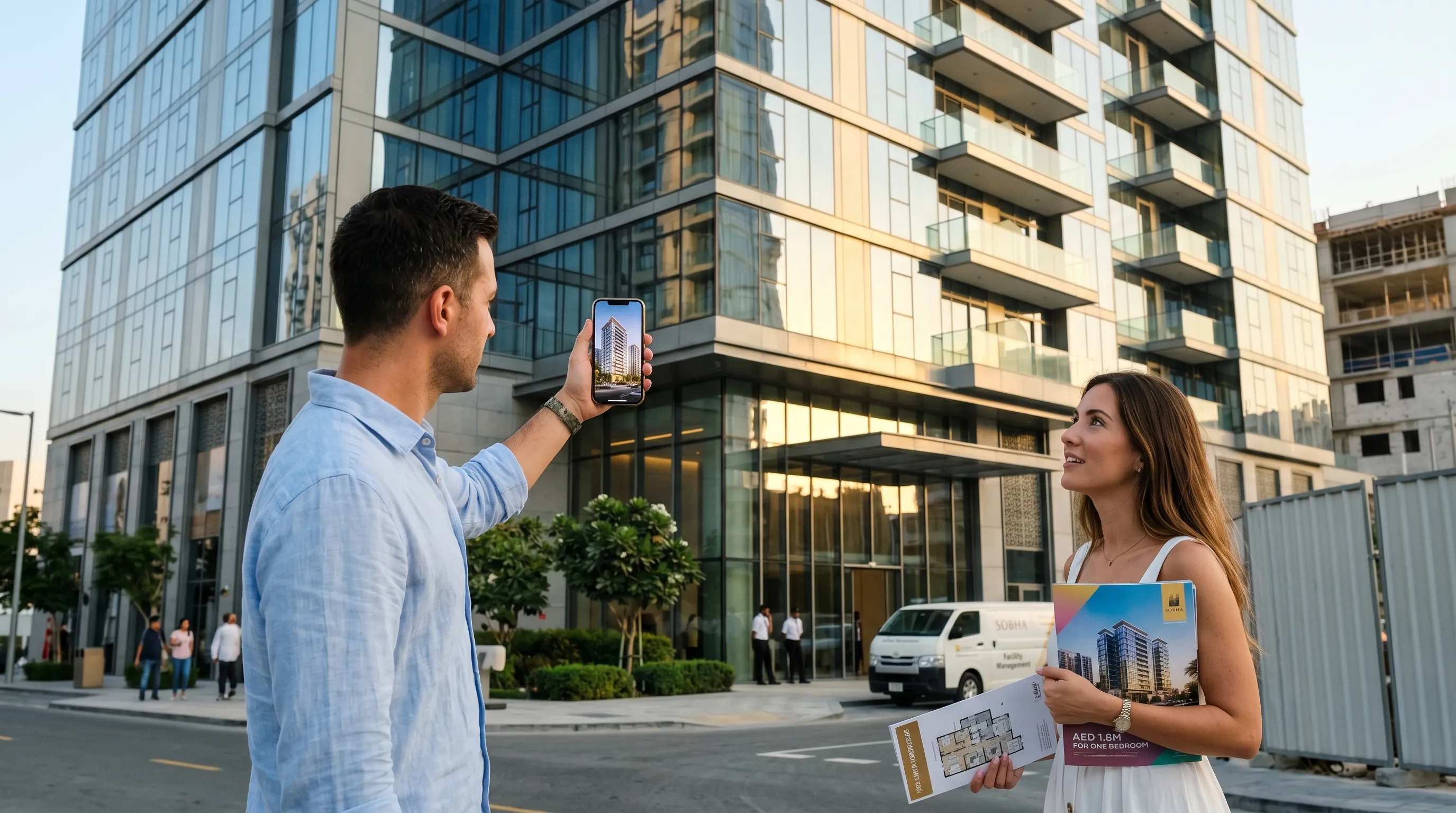
Sobha Hartland: Is This Community Living Up to the Hype
Sobha Hartland has been heavily marketed as a premium green community. Here's whether reality matches the hype.
Sobha Hartland is one of those Dubai communities that came out of nowhere and rapidly became one of the most talked-about residential addresses in the city. Five years ago, the conversation was whether Sobha was actually going to deliver on what they’d promised. Three years ago, the conversation was whether the build quality was as good as the marketing. Two years ago, the conversation was whether the community would mature into something genuinely livable. In 2026, the conversation has shifted again. People aren’t asking whether Sobha Hartland will work. They’re asking whether it’s worth the premium, whether Hartland II is actually different from Hartland I, and whether the second phase has the same quality as the first.
We’ve handled enough Hartland transactions across both phases to have a view. The short version is that Hartland I genuinely delivered on what was promised. The build quality is among the best in the Dubai apartment market. The community has matured well. The residents who moved there in 2019 and 2020 have mostly stayed. Resale velocity is strong. Capital growth has been ahead of the market.
Hartland II is more complicated. The premium pricing assumes that Phase 2 will deliver the same quality, the same amenities, and the same kind of community as Phase 1. Whether it will, and whether early buyers will be rewarded the same way, is a real question worth asking before signing on a Hartland II off-plan unit.
This article walks through what Sobha Hartland actually is in 2026, the differences between Hartland I and Hartland II, the build quality question that buyers should care about, what it costs to live in Hartland today, our research on Sobha Hartland property performance, and the honest read on whether the community lives up to the hype.
A note up front. Sobha Hartland is positioned as a premium master-planned community within MBR City, with green spaces, schools, and a community feel that distinguishes it from typical apartment-tower districts. The brand premium is real and the buyer profile is meaningful. Whether the premium translates into superior financial returns depends on which buildings, which phase, and what your investment horizon looks like.
What Sobha Hartland Actually Is
Sobha Hartland is a master-planned community within Mohammed Bin Rashid City (MBR City), the broader Dubai master plan that includes Meydan, Dubai Hills, and several other newer residential clusters. Hartland sits along the Dubai Water Canal in the central southern section of MBR City, with direct canal frontage on its eastern boundary.
The community is developed by Sobha Realty, the Dubai property arm of the wider Sobha Group. Hartland’s master plan included:
• Hartland Greens apartment buildings (the original mid-rise phase)
• Hartland Estates villa cluster (limited supply, very high-end)
• The Crest towers (high-rise apartment buildings in the eastern part of Hartland)
• Waves towers (mid-rise apartment buildings)
• One Park Avenue and similar boutique apartment buildings
• Sobha Creek Vistas the canal-fronting cluster
• Schools including Hartland International School and others
• Retail and community amenities including small retail nodes, restaurants, and green spaces
The community covers roughly 8 million square feet with around 30% allocated to green spaces and water features. That density-to-amenity ratio is unusual in Dubai’s apartment market and is one of Sobha Hartland’s main selling points.
Build-out started around 2015 and Phase 1 was largely complete by 2022-2023. Phase 2 (Sobha Hartland II) has been launching in stages since 2023 and continues to develop, with significant off-plan supply still coming to market.
PNC Menon, the founder of the Sobha Group, has built his reputation on what he calls a backward-integrated approach to construction. Sobha Realty owns its construction company, its joinery, and many of its finishing trade contractors. The case is that this gives them tighter quality control than developers who outsource everything. We’ve inspected enough Sobha-built apartments to say that the build quality argument has merit. The finish levels at Hartland I exceed most other Dubai master-planned communities in the same price band.
Hartland I vs Hartland II
The distinction between Hartland I and Hartland II matters more than buyers initially realise. They’re often discussed as part of the same community, but the experience of buying into each is meaningfully different.
Hartland I is the mature, delivered phase. Most buildings have handed over. Most residents have moved in. The schools are operating. The retail is open (or close to it). The community amenities are functional. Buyers in Hartland I in 2026 are buying into a working community where most of the variables are known.
Hartland II is the newer phase, largely off-plan or recently handed-over. The masterplan is published. The first buildings are completing. The community amenities are still being built out. Buyers in Hartland II in 2026 are largely buying into the Sobha brand and the assumption that Phase 2 will deliver the same quality as Phase 1.
That assumption is reasonable but not guaranteed. We’ve seen Dubai developers deliver excellent Phase 1 communities and then cut corners on Phase 2 as cost pressures and market dynamics shifted. We’ve also seen Phase 2 deliver better than Phase 1 because the developer learned from the first phase. Sobha’s track record so far on Hartland II is closer to the latter scenario, but it remains early to call definitively.
Key differences buyers should know:
1. Hartland I has a longer track record on delivered build quality. Hartland II is still being assessed unit by unit
2. Hartland I has fully operational community amenities. Hartland II is in the process of building these out
3. Hartland I prices reflect the proven quality. Hartland II off-plan pricing assumes the same outcome will materialise
4. Resale dynamics in Hartland I are established. Hartland II resale will only become meaningful once first owners hold for 3 plus years
5. Service charges in Hartland I are now known and predictable. Hartland II service charges are estimated by the developer and may shift after first year of operation
6. The community feel in Hartland I is real and observable. Hartland II’s community feel will only be established once enough residents move in
For buyers who can wait, picking up resale units in Hartland I is the lower-risk option. For buyers who want newer finishes and can absorb the off-plan timeline, Hartland II offers exposure to the next phase of Sobha’s Dubai development.
The Build Quality Question
The case for Sobha Hartland over alternative Dubai apartment communities rests heavily on build quality. Whether you should pay the premium depends on whether the quality differential is real.
The honest read from inspections we’ve done across Hartland buildings:
The finish levels in Sobha-built apartments are noticeably higher than the typical Dubai mid-market apartment. Joinery is tighter. Tile work is more consistent. Plumbing and electrical specifications are higher than the standards minimum. Marble and stone finishes are higher quality grades.
The structural and construction standards meet or exceed the Dubai building code minimums by a meaningful margin in most Hartland buildings.
The handover quality (the unit condition when delivered to the buyer) is generally cleaner than the Dubai market average. There are fewer punch-list items at handover and the items that do appear get resolved faster.
The aging trajectory looks favourable so far. The earliest Hartland buildings (handed over 2018-2019) are showing wear consistent with much newer buildings in other Dubai communities. Maintenance issues that typically appear in years 3-5 in average Dubai construction have so far been less visible in Hartland units.
Faisal Durrani, Knight Frank’s head of Middle East research, has written about how branded premium developments in Dubai have shown meaningfully different aging characteristics than mid-market supply. Sobha Hartland sits firmly in the branded premium category, and the early data on aging is consistent with that thesis.
The qualifications:
1. Not every Sobha building delivers the same quality. We’ve seen some variance even within Hartland I
2. The premium pricing assumes the quality differential will persist. If aging continues favourably, the premium is justified. If issues emerge in years 7-10, the premium becomes questionable
3. Service charges in Hartland buildings are higher than the Dubai average, partly reflecting the higher quality finishes and amenities. This affects net yields
4. Some of the perceived quality differential is finish materials. Some is construction quality. The two matter differently for long-term performance
5. The Hartland II buildings still need to demonstrate the same construction standards as Hartland I. Early evidence is positive but not yet definitive
For buyers paying a premium, building inspections by an independent third party are worth the cost. The team can recommend inspection options if helpful.
What It Costs to Live in Sobha Hartland
Sale prices in Sobha Hartland vary widely by tower, phase, view, and unit specification. The general picture in 2026:
Apartments in Hartland I mid-rise buildings (Hartland Greens, Waves, similar): one-bedrooms from AED 1.4 million, two-bedrooms from AED 2.1 million, three-bedrooms from AED 3.4 million.
Apartments in The Crest high-rise towers: one-bedrooms from AED 1.6 million, two-bedrooms from AED 2.4 million, three-bedrooms from AED 4.0 million.
Apartments in Sobha Creek Vistas (canal-fronting): premium pricing with one-bedrooms from AED 1.8 million.
Hartland I villas: starting around AED 8 million for the smaller plots and reaching AED 20 million plus for the larger canal-fronting positions.
Hartland II off-plan apartments: pricing comparable to or slightly above Hartland I delivered stock, with payment plans typically 60/40 or 50/50.
Rentals follow the sale price pattern. One-bedroom apartments in Hartland I rent for AED 100,000 to AED 145,000. Two-bedrooms run AED 150,000 to AED 230,000. Three-bedrooms range AED 240,000 to AED 380,000. Villa rentals start around AED 500,000 and climb.
Gross rental yields in Sobha Hartland apartments run between 5.5% and 7.0%, with the higher end achievable in well-positioned units and the lower end in premium canal-fronting buildings. Net yields after service charges (typically AED 18 to 25 per square foot in Hartland buildings) and operational costs land between 4.2% and 5.8%.
The yields are lower than JVC or Dubai South but higher than central Downtown or Palm Jumeirah. Hartland sits in the middle of the Dubai apartment market on yield, with above-average build quality and below-average yield. That’s the trade-off.
Our Research on Sobha Hartland Performance
We pulled data on 70 Sobha Hartland transactions and 110 rental contracts from 2023 and 2024, drawing from our records and Property Monitor. The breakdown:
Hartland I mid-rise apartments (Greens, Waves), average one-bed price AED 1.55 million, average one-bed rent AED 110,000. Gross yield: 7.1%.
Hartland I mid-rise apartments (Greens, Waves), average two-bed price AED 2.25 million, average two-bed rent AED 165,000. Gross yield: 7.3%.
The Crest tower apartments, average one-bed price AED 1.75 million, average one-bed rent AED 118,000. Gross yield: 6.7%.
Creek Vistas canal-fronting, average one-bed price AED 1.95 million, average one-bed rent AED 130,000. Gross yield: 6.7%.
Hartland I premium tower apartments, average two-bed price AED 2.6 million, average two-bed rent AED 175,000. Gross yield: 6.7%.
Hartland I villas: limited transaction sampling but the closed deals indicate gross yields of 4.5% to 5.0%, consistent with premium villa markets across Dubai.
Three-year capital growth across Sobha Hartland, 2022 to 2025:
Hartland I mid-rise apartments: 48%. The Crest tower apartments: 52%. Creek Vistas: 55%. Hartland I villas: 58%.
Cross-referenced against Knight Frank’s Dubai prime residential research and the Dubai Land Department transaction database, the figures broadly track the broader premium Dubai apartment market with a slight outperformance for Hartland buildings. The Sobha brand premium appears to translate into roughly 5 to 10 percentage points of additional capital growth over comparable non-branded Dubai apartment stock over the past three years.
Taimur Khan, CBRE’s research head for the Middle East, has noted that branded residential premiums in Dubai have widened rather than compressed through the recent market cycle. The Hartland data supports that observation. Buyers paying the Sobha premium have generally been rewarded with stronger capital appreciation, though at the cost of lower current yields.
For yield-focused investors, Sobha Hartland is not the area. For total-return investors with a 5 plus year horizon, the brand premium has been earning its keep so far.
One additional pattern from the data worth flagging. Sobha Hartland units have shown notably lower price volatility through cycles than the broader Dubai apartment market. During the 2020 pandemic compression, when many Dubai apartment prices fell 8% to 15%, Hartland I prices held within a 3% to 5% pullback before recovering quickly through 2021 and 2022. That downside resilience matters for investors who care about realised returns rather than peak-to-peak appreciation, and it appears to be one of the more durable features of the Hartland brand premium.
Living Up to the Hype, or Not
The honest verdict on Sobha Hartland in 2026 splits cleanly by what the buyer wants.
If you want an apartment that you’ll actually live in, where the build quality holds up year after year, where the community feel is real, and where the amenities are genuinely in place, Hartland I is one of the strongest options in MBR City and arguably in central Dubai. The premium is real and earned.
If you want pure investment yield, Sobha Hartland is not the right area. The yields are below several alternative Dubai apartment districts, and the brand premium that drives capital growth doesn’t show up in rental income.
If you’re considering Hartland II off-plan, the case is more nuanced. The Sobha track record so far is favourable. Phase 2 is delivering quality consistent with Phase 1 in the early handovers. The brand premium that has rewarded Hartland I owners is plausible for Hartland II buyers. But you’re paying for an outcome that hasn’t fully materialised yet. For buyers who can absorb that uncertainty, Hartland II offers exposure to potentially the strongest period of Sobha brand expansion in Dubai. For buyers who want the lower-risk option, Hartland I resale supply is the better play.
The strongest Hartland picks we’ve watched perform: Hartland Greens for entry-point premium positioning, The Crest tower one and two-bedrooms for balanced yield and growth, Creek Vistas canal-fronting for buyers prioritising views and lifestyle premium, and selected Hartland II off-plan in the better positioned phases. Each of these has a track record we can point to in actual transactions, not just published market data.
The patterns we’ve watched fail: investors buying Hartland units expecting central Dubai-level capital growth (the area is good but not the fastest growing in the city), buyers committing to Hartland II off-plan without verifying the specific tower’s developer commitments, and buyers underestimating the service charge differential against alternative Dubai apartment districts.
For anyone considering Sobha Hartland, the building selection and phase choice matter more than community choice. Live listings across Sobha Hartland and similar branded developments shift regularly, and the team can pull yield, void, and resale data on specific buildings. The Sobha developer page covers the full development track record. Our agents handle Sobha Hartland transactions across both phases. Ready to look at specific units? Reach out and we’ll take it from there.
Related stories
Buying Resale in Dubai vs Abu Dhabi: The Hidden Differences
Buying resale in Dubai vs Abu Dhabi: the hidden differences in fees, land authorities, ownership zones, and process, an
Fujairah Property: The Quiet Emirate Nobody Talks About
Fujairah property, honestly: the UAE's quiet east-coast emirate, its lifestyle appeal, the thin market and limited owne
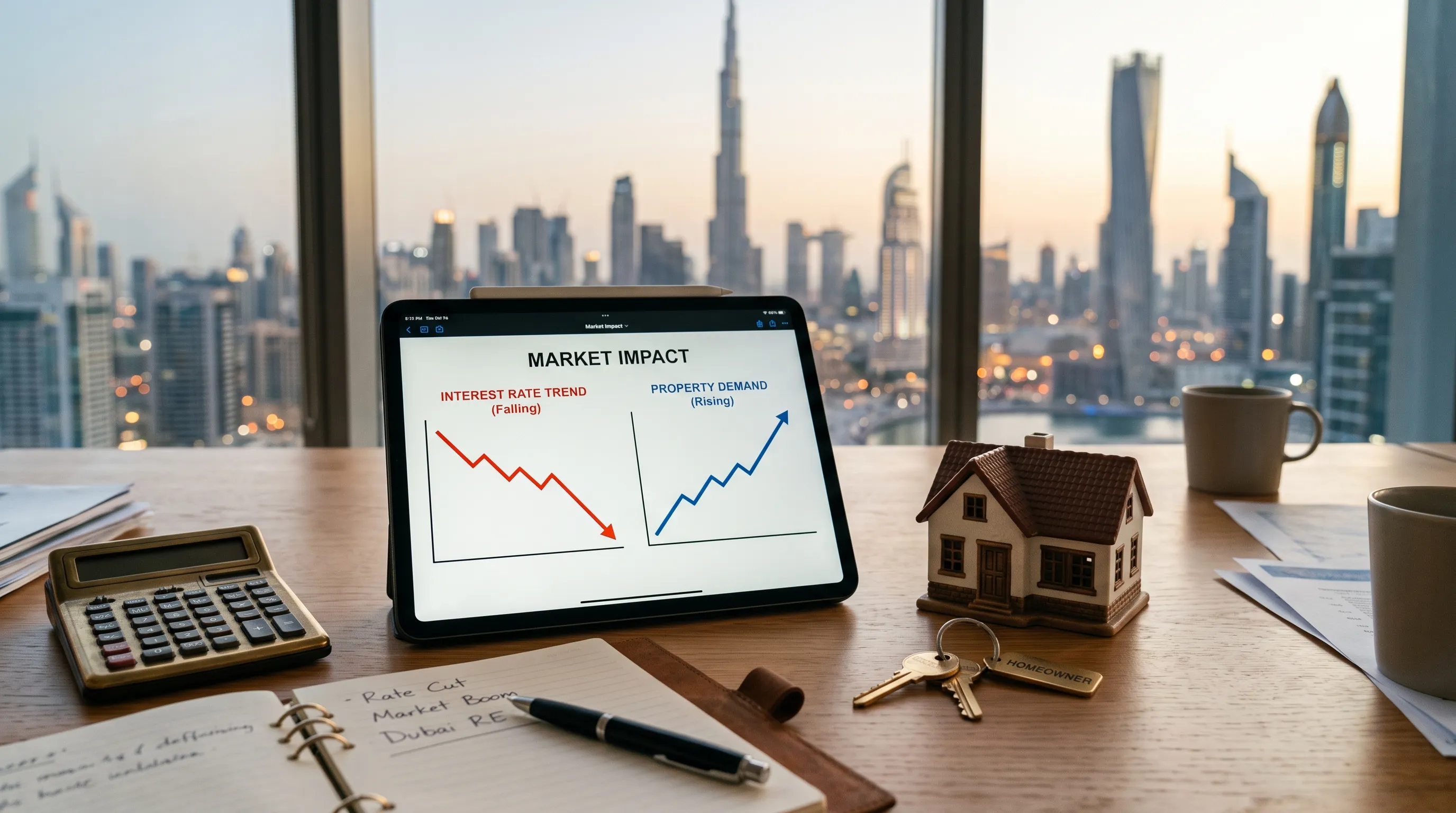
How Interest Rate Cuts Affect Dubai Property: What Buyers Should Know
How interest rate cuts affect Dubai property: why UAE rates track the US, how cheaper mortgages move demand and prices,
Echoes, in your inbox
One thoughtful email a month. Market insight, new launches, no spam.