

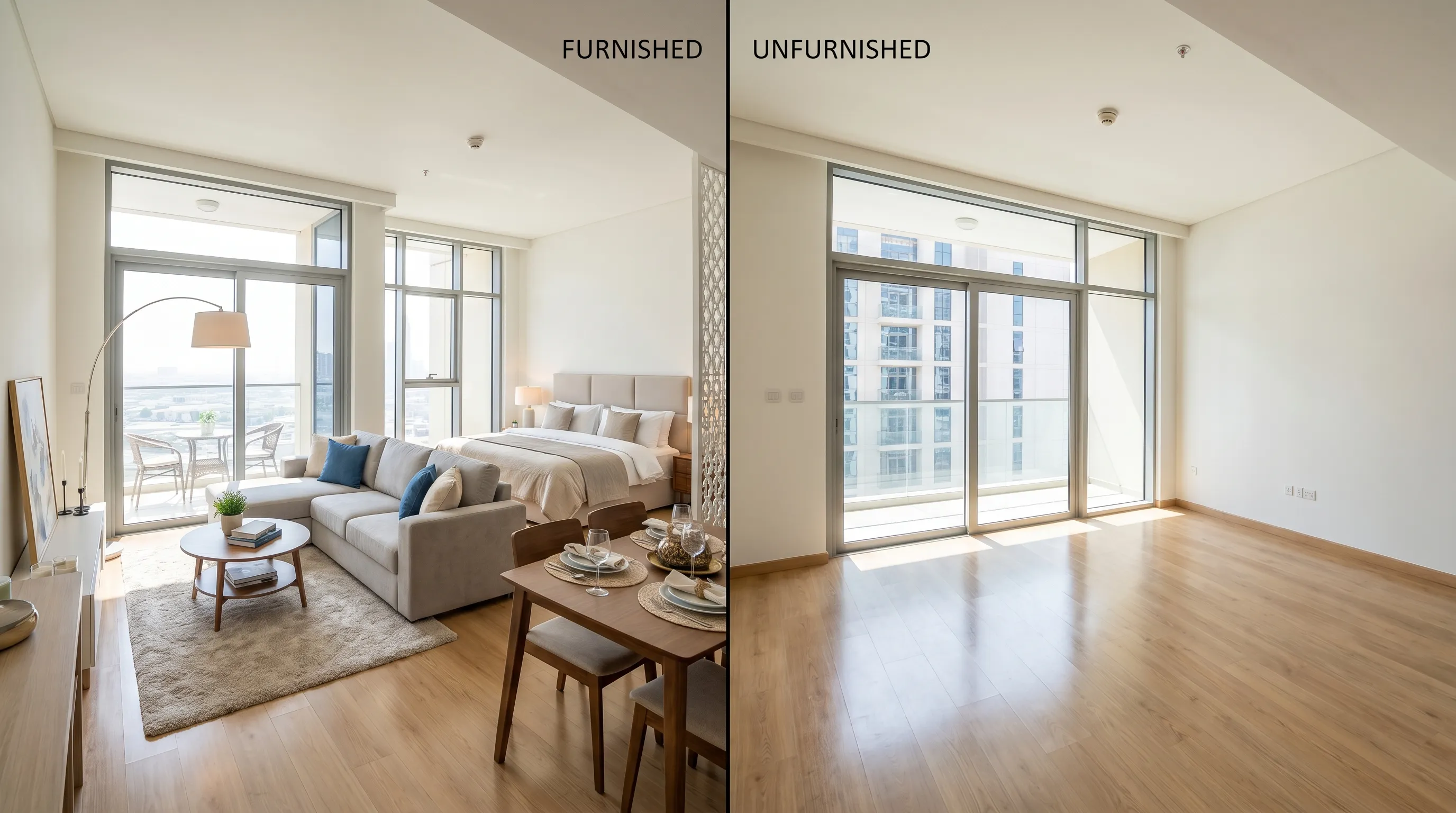
Furnished vs Unfurnished Rentals in Dubai: The Real Cost Difference
Furnished costs more in rent. Unfurnished costs more upfront. Here's the real cost difference between furnished vs unfu
One of the first questions renters ask themselves in Dubai is whether to look for a furnished or unfurnished accommodation. From a surface perspective, this is all about preferences—would you like an apartment ready to move into, or do you want to personalize it. In reality, this is mostly about money, although not everyone gets this quite right.
The difference between renting a furnished apartment and an unfurnished apartment in Dubai comes down to a simple equation. The former is more expensive to rent per month over the entire period of the rental. The latter requires an extra investment upfront due to furnishing, but is cheaper to rent in the long term. Depending on how long you will stay, one solution will be more economic than another.
Our guide covers the issue accurately. It explains what exactly furnishing and unfurnishing entail, which is not always intuitive from a linguistic point of view. It discusses the extra cost of renting a furnished place, compares that to costs of furnishing an unfurnished apartment yourself, calculates when one solution becomes more economical than the other, and evaluates each option based on their suitability for renters and landlords.
Just one more thing regarding the numbers. Rents, furnishing, and premium vary widely depending on location, building, preferences, and change over time. All the numbers stated below are illustrative, not indicative of any particular case. Please find out what the current rent rates are, and get prices for furnishing before basing your decisions on anything said below. Now, let's get started.
Furnished vs Unfurnished: What Each Means in Dubai
Before the money, a quick clear-up, because the words mean slightly different things here than you might assume. In Dubai, unfurnished is the standard for long-term rentals, and furnished is the exception that costs more.
Unfurnished does not always mean bare walls. In a lot of Dubai apartments, an unfurnished unit still comes with built-in wardrobes, kitchen cabinets, and the air-conditioning, and sometimes the white goods like a fridge, oven, and washing machine. What it does not include is the actual furniture, the sofas, beds, tables, and everything that turns an empty space into a home. That part is on you. Always check exactly what is and is not included, because it varies from one unit to the next.
Furnished means the place comes ready to live in, with furniture and usually the appliances, sometimes right down to crockery and linens in fully serviced units. You move in with a suitcase and start living. It is more common in certain buildings, for shorter contracts, and for tenants who do not want to deal with buying and moving furniture.
Here is how the options break down:
- Unfurnished. The standard long-term option, usually with wardrobes and kitchen fittings but no actual furniture.
- Semi-furnished. A middle ground, often with white goods and some fittings included but not the full furniture.
- Furnished. Ready to live in, with furniture and appliances, sometimes fully kitted out down to the kitchenware.
- Check what is included. The exact contents vary by unit, so never assume, always confirm in writing.
- It affects the contract. Furnished lets sometimes come with shorter terms or inventory lists to sign.
- It affects the rent. Furnished almost always costs more per year, which is the heart of this whole comparison.
The general rules around renting and tenancy in Dubai are set out on the UAE government portal, which is a useful starting point if you are new to the market. But the practical point for this article is simpler. Unfurnished is the norm and the cheaper monthly option. Furnished is the convenient, costlier one. Everything that follows is about working out which actually leaves you better off.
The Rent Premium, What Furnished Costs Extra
The first half of the cost difference is the rent itself. Furnished units rent for more, and that premium is the price you pay for the convenience, month after month.
How much more varies, but as a rough guide, a furnished apartment often rents for somewhere in the region of ten to twenty percent above an equivalent unfurnished one, and sometimes more for fully serviced or short-term lets. On a place that rents unfurnished for, say, AED 80,000 a year, the furnished version might run AED 90,000 to AED 100,000 or higher. That extra is not a one-off. You pay it every year you stay.
Here is what to understand about the premium:
- It is paid yearly. The furnished premium recurs every year of your tenancy, which is what makes it add up over time.
- It varies by building. Some buildings and areas command a bigger furnished premium than others, depending on demand.
- Short-term costs more. Fully furnished, flexible, or short-term lets carry the highest premiums of all.
- It reflects convenience. You are paying the landlord for the furniture, the setup, and the ready-to-live-in ease.
- It can be checked. Compare furnished and unfurnished listings in the same building to see the real gap.
- Regulation applies to rent. Dubai's rental market is regulated, with a rent index and rules on increases.
Because rents in Dubai are regulated, you are not guessing in the dark. The market has an official rent index and rules around rent increases, administered under the Dubai Land Department, so you can sense-check whether a furnished asking rent is reasonable against the unfurnished norm. It is worth a look via the Dubai Land Department before you sign anything.
The honest framing is that the furnished premium is a convenience fee you pay over and over. For a single year, it might be modest. Over three or four years, it quietly becomes a large sum, often far more than it would have cost to furnish the place yourself. That is the crux of the whole decision, and it is why the length of your stay matters so much.
The Furnishing Cost, What It Takes to Do It Yourself
The other half of the math is what it costs to furnish an unfurnished place yourself. This is the upfront hit that makes furnished look tempting in the first place, so let's put rough numbers on it.
Furnishing an apartment from scratch can cost anywhere from a few thousand dirhams to a small fortune, depending entirely on size and taste. On a budget, kitting out a one-bedroom with basic, affordable furniture might run somewhere around AED 15,000 to AED 30,000. Go for mid-range quality and a larger place, and you are easily into AED 40,000 to AED 70,000 or beyond. A family villa furnished to a good standard can run well into six figures. The point is that it is a real, lumpy, upfront cost, not a rounding error.
Here is what goes into furnishing a place:
- The big items. Beds, sofas, wardrobes if not built in, dining sets, and the things you cannot live without.
- Appliances, if not included. A fridge, washing machine, and oven, where the unit does not already have them.
- The soft stuff. Curtains, rugs, bedding, kitchenware, and all the small things that add up surprisingly fast.
- Delivery and assembly. Getting it all in and built, which carries its own cost and hassle.
- Quality choices. Cheap furniture costs less but wears out, while better pieces cost more but last and move with you.
- The resale loss. When you leave, used furniture sells for a fraction of what you paid, so part of the cost never comes back.
That last point is the one people forget. Furniture you buy is not money saved, it is money spent, and when you move on you recover only a slice of it second-hand. So the true cost of furnishing yourself is not just the purchase price, it is the purchase price minus whatever you can sell it for later, plus the effort of buying, moving, and eventually offloading it all.
On the other hand, your own furniture is yours, to your taste, and it moves with you to the next place, so the cost is spread across more than one home. If you are furnishing or fitting out a place to a proper standard, our fit-out service can handle the bigger jobs, from a full furnishing to a proper refit.
The Real Math, Which Is Actually Cheaper
Now we put the two halves together, because this is where the real answer lives. The question is simple, does the rent premium you pay on a furnished place add up to more or less than the cost of furnishing an unfurnished one yourself? And the answer depends on how long you stay.
Here is the logic with rough numbers. Say the furnished premium is AED 12,000 a year, and furnishing the unfurnished version yourself would cost AED 30,000 up front. In year one, furnished looks cheaper, you have not had to spend the AED 30,000. But by roughly year three, you have paid AED 36,000 in premiums, more than the furnishing would have cost, and from then on the unfurnished route pulls ahead and keeps pulling ahead every year. By year five, you would have paid around AED 60,000 in premiums against that AED 30,000 of furniture, so unfurnished has effectively saved you the cost of furnishing the place all over again, with money to spare. The longer you stay, the more unfurnished wins.
Here is the math, broken down:
- Short stay. For a year or two, furnished usually wins, because you skip the big furnishing outlay and the resale loss.
- Long stay. For three years or more, unfurnished plus your own furniture usually wins, as the saved premium overtakes the furnishing cost.
- The break-even. Somewhere around two to three years is often the tipping point, though it shifts with the exact numbers.
- Moving costs. Furnished saves you the cost and effort of moving furniture in and out, which is a real, if smaller, factor.
- Setup costs. Either way you set up utilities and the like, but furnished often means less to organise on arrival.
- Your own numbers decide. Plug in the actual premium and the actual furnishing cost for your situation to find your break-even.
There are smaller costs around the edges too. Whichever you choose, you will set up utilities, and a deposit and connection with the Dubai Electricity and Water Authority is part of moving in. Furnished simply means fewer things to buy and move on day one.
The honest takeaway is that there is no universal right answer, only a right answer for your length of stay. Staying a year for a short posting? Furnished almost certainly makes sense. Settling in for the long haul? Unfurnished, furnished to your own taste, will very likely save you money and give you a home that is actually yours. If you are weighing rental options, our rental service can help you find both furnished and unfurnished places and compare them properly.
Who Each One Suits, Renters and Landlords
The numbers point one way, but real life is not only about the cheapest option. Here is who each choice actually suits, for both renters and the landlords on the other side of the deal. We compared furnished and unfurnished across what matters, each on one line:
- Short stays: furnished suits a one or two-year posting, unfurnished rarely makes sense for such a short time.
- Long stays: unfurnished suits settling in for years, furnished slowly becomes the expensive option.
- Upfront cash: furnished suits anyone who cannot or does not want to spend a lump sum up front, unfurnished needs that outlay.
- Flexibility: furnished suits people who may move on quickly, unfurnished ties you to your own furniture.
- Taste and quality: unfurnished suits anyone who wants their own style and better-quality pieces, furnished means living with someone else's choices.
- Landlord appeal: furnished can command higher rent and attract short-stay tenants, unfurnished tends to bring longer, lower-maintenance tenancies.
For renters, the read is straightforward. If you are here short-term, value convenience, or do not want to spend upfront, furnished is for you. If you are settling in, care about your space, and want to save over time, unfurnished is the smarter call. Neither is wrong, they just suit different lives.
For landlords, it is a different calculation. Furnishing a unit costs money and means wear, tear, and replacing furniture over time, but it can command a higher rent and appeals to short-stay and transient tenants. If you are letting short-term to tourists rather than on a yearly contract, furnished is essential, and our holiday homes and short-term rental service handles exactly that kind of let.
For a standard long-term let, many landlords prefer unfurnished, since it brings longer tenancies, less hassle, and nothing to maintain or replace inside. Whichever way you let, keeping the property and the tenancy running smoothly is the real work, and our property management team can handle a furnished or unfurnished let for you either way.
What We Would Actually Do
In conclusion, it all comes down to the matter of time when comparing the two choices of rented accommodations. The furnished choice entails higher rent and lower costs at the outset while being ideal for temporary housing purposes. In contrast, unfurnished accommodations involve lower rent and higher costs at the beginning, which makes them the better choice for longer tenures. The difference in prices depends not on an absolute value but rather the period of use.
When answering the same question posed by a friend, we would advise to consider the tenure period and make a decision based on its expected duration since nothing else matters as much as that. Choosing to reside in furnished premises is a good solution for one-year or a short-term rental contract. Choosing unfurnished accommodations, furnishing them to personal liking and living in for several years is more beneficial from a financial point of view.
Furthermore, we should consider the price of the accommodation. While it may look cheaper at first glance, there could be additional hidden costs that would be higher compared to those of furnished accommodations. Calculating the difference and accounting for the actual furnishing expenses may provide a more accurate idea.
From the standpoint of the landlord, letting his premises to temporary tenants would justify furnished apartments. On the contrary, if he plans to lease it to a permanent family-type household, then furnishing the apartment himself would be advisable.
When you are ready to see what is out there, furnished or unfurnished, our property search lets you compare real options side by side so the cost difference stops being theoretical.
And if you want a straight conversation about which makes sense for your stay or your property, as a renter or a landlord, we are glad to help you run the actual numbers. Get in touch and we will take it from there.
Related stories

Buying Resale in Dubai vs Abu Dhabi: The Hidden Differences
Buying resale in Dubai vs Abu Dhabi: the hidden differences in fees, land authorities, ownership zones, and process, an
Fujairah Property: The Quiet Emirate Nobody Talks About
Fujairah property, honestly: the UAE's quiet east-coast emirate, its lifestyle appeal, the thin market and limited owne

How Interest Rate Cuts Affect Dubai Property: What Buyers Should Know
How interest rate cuts affect Dubai property: why UAE rates track the US, how cheaper mortgages move demand and prices,
Echoes, in your inbox
One thoughtful email a month. Market insight, new launches, no spam.